Framekit templates
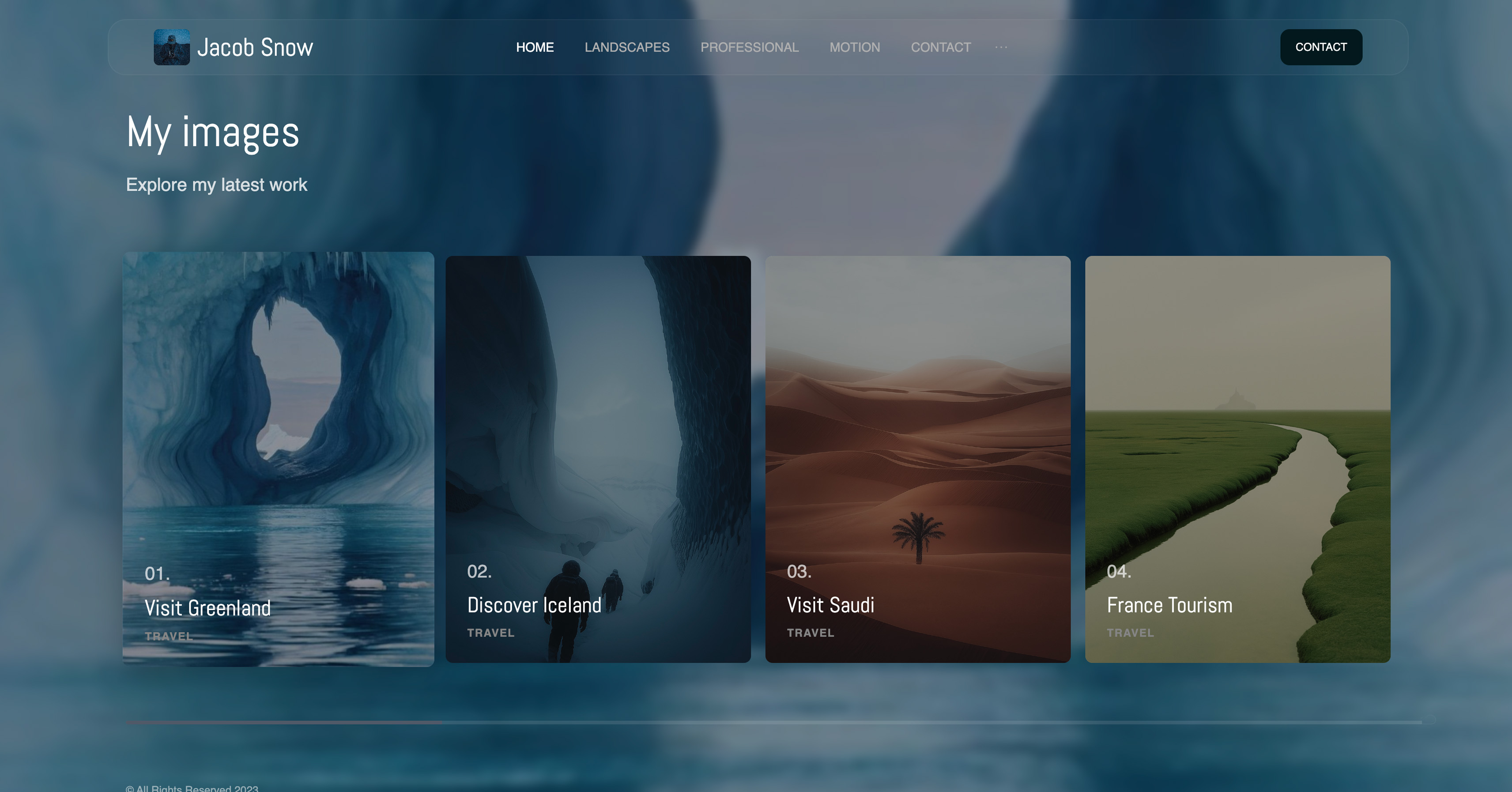
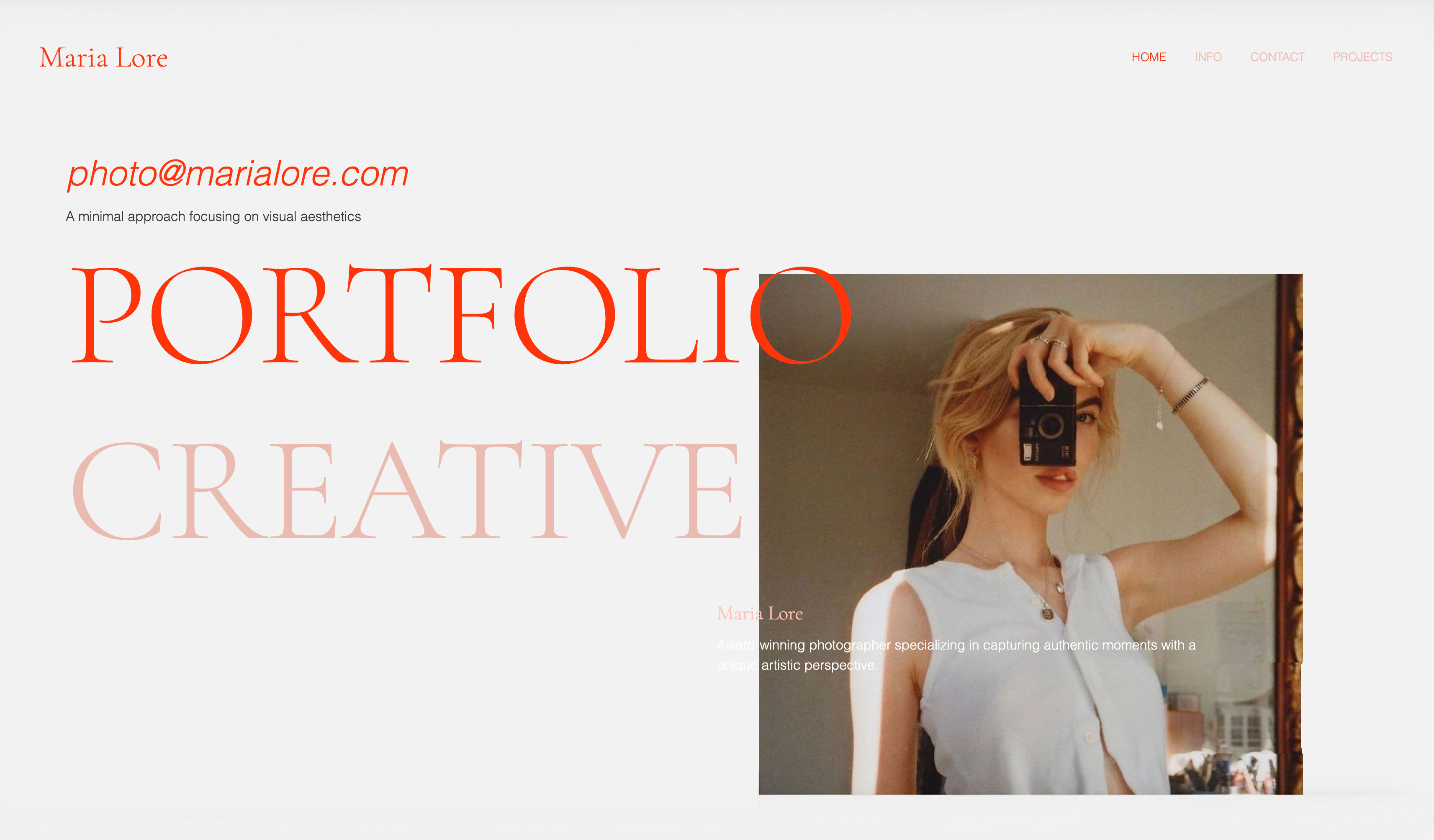
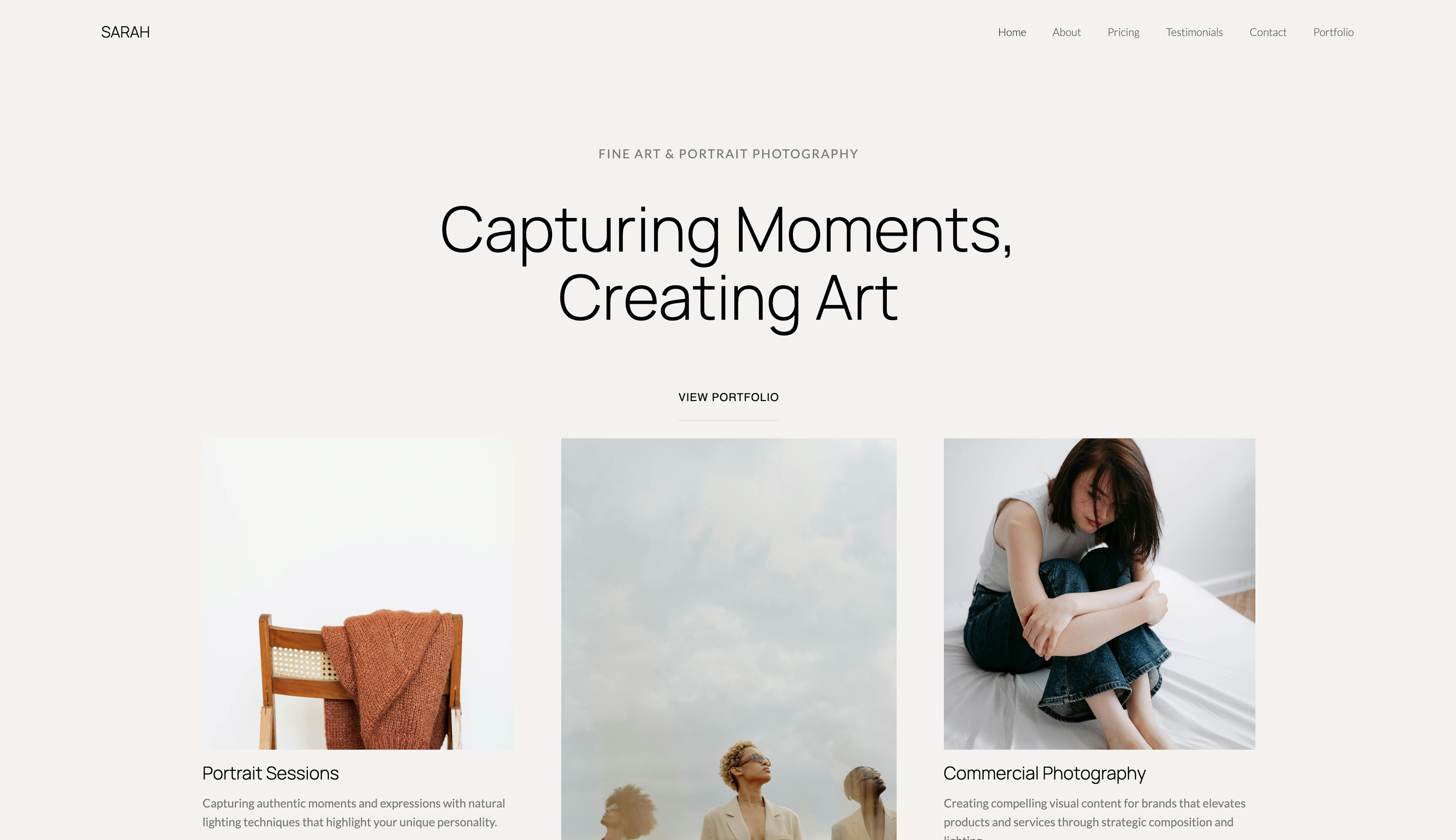
Start from a designer-made template
 Use template
 Use template
 Use template
 Use template
 Use template
 Use template
 Use template
 Use template
Your best work is scattered.
A magazine editorial exists as a tearsheet and a PDF, a brand campaign lives on the brand's site, a celebrity look is a photo someone else posted, and your Instagram is a highlight reel that resets every few days.
When a magazine editor, a brand, or a new client wants to see your book, you send a link to a folder or a feed and hope it reads as professional. It rarely does.
A fashion stylist is only as bookable as their portfolio is easy to trust, and the website builder you choose is what turns scattered tearsheets into a book that gets you hired.
Styling is a portfolio career run on other people's platforms, and the one place it can all live - owned, curated, and professional - is your own site. A feed is borrowed reach; a site is the book you control.
The editorial ran once. The site is where it keeps working for you.
A website builder for fashion stylists is the platform you use to build a professional styling site - your editorials and campaigns, lookbooks, credits and client list, and a way to sell digital lookbooks or styling - ideally on a domain you own, so an editor or a brand finds a curated book instead of a scattered feed.
This guide tests the best website builders for fashion stylists on those jobs.
The best website builder for fashion stylists in 2026 is Framekit, because it turns a prompt into a curated editorial portfolio on your own domain, with galleries for lookbooks and a store to sell digital lookbooks or styling packages - so your book, your credits, and your income live in one professional place you control.
The honest trade-off: for a single cheap page, Carrd is simpler, and if you already pay for Creative Cloud, Adobe Portfolio is free. And an agency, if you have one, handles bookings a site does not.
Framekit builds a curated styling portfolio from a prompt, on your own domain, and the free plan needs no credit card.
Full disclosure: Framekit, ranked #1 below, is our own product, so we have a stake in this. We built a styling portfolio on each tool, took every price from each platform's published pricing in July 2026, and we say plainly where each beats us: Carrd is cheaper for a single page, Adobe Portfolio is free with Creative Cloud, and Squarespace has a bigger editorial template library. Read the ranking knowing that.
How We Compared These Fashion Stylist Website Builders
A stylist's site has a specific job: present editorials and campaigns like a magazine would, make credits and range obvious, and increasingly, sell digital lookbooks or styling - all reading as professional to an editor or a brand.
We put each tool through the five things a styling site has to get right, one section each below.
Editorial presentation. How well the site shows tearsheets, campaigns, and full editorial stories in a curated, magazine-quality layout.
Lookbooks and galleries. How cleanly you present lookbooks and full shoots, and whether you can gate private client work.
Credits and booking. How easily you show publications, brands, and clients, and let an editor or agency reach you.
Selling. Whether you can sell digital lookbooks, style guides, or virtual styling from the site, a growing stylist income.
Ownership and cost. Whether the site is yours on your own domain, and what the plan you need costs.
We built the same thing on each: an editorial portfolio, a lookbook gallery, a credits page, and one digital lookbook for sale.
The stylist we follow through this guide works editorial and commercial jobs and sells the occasional digital lookbook, and wants one professional book online.
Three kinds of finding, kept separate. Hands-on: building the site and the lookbook gallery. Taken from primary sources rather than tested: each plan and price, checked on every platform's own pricing in July 2026 and linked inline.
Community sentiment, and we say when: recurring reviewer themes we did not measure ourselves.
What Testing 6 Fashion Stylist Builders Showed
Here is what comparing the tools showed, with prices checked on each platform's pricing in July 2026.
- 1 of 6 turns a prompt into a curated editorial portfolio with galleries and a store built in (Framekit).
- 2 of 6 include a real gallery system for lookbooks rather than plain image blocks (Framekit and Format), which matters for presenting full editorial stories.
- 4 of 6 put your site on the platform's subdomain until you pay for a custom domain, which is what an editor finds when they search your name.
- Adobe Portfolio is free with any paid Creative Cloud plan, so a stylist already paying for photo editing can build an owned site for nothing more.
- Only a builder with a real store lets you sell a digital lookbook or a style guide directly; a bare portfolio host sends buyers elsewhere.
For a pick matched to how you work, skip to the decision tree. First, the full comparison.
The 6 Best Website Builders for Fashion Stylists in 2026: Full Comparison
How the ratings work: each tool is scored on the five criteria above, weighted for a styling career - ownership 25%, editorial presentation 25%, lookbooks and galleries 20%, selling 15%, credits and cost 15%.
Presentation and ownership share half the score because a stylist is hired on how the book looks and whether it reads as a professional, owned brand.
So Framekit's 9.0 takes a 10 on ownership and selling but only a 7 on cost at the low end, because a single-page tool like Carrd is cheaper if all you need is a card. No tool won every column.
| Tool | Best For | Free Plan | Starting Price | Our Rating |
|---|---|---|---|---|
| Framekit | A curated book that also sells | Yes | $9/mo | 9.0/10 |
| Squarespace | A polished editorial all-in-one | Trial | $16/mo | 8.5/10 |
| Format | A gallery-forward portfolio | Trial | $10/mo | 8.1/10 |
| Wix | Flexible drag-and-drop | Yes | $17/mo | 7.9/10 |
| Adobe Portfolio | Free with Creative Cloud | With CC | Free with CC | 7.7/10 |
| Carrd | A cheap single-page card | Yes | $19/yr | 7.3/10 |
Prices checked on each platform's own pages in July 2026; confirm the latest before buying.
What an editor and a brand see at a glance
The site answers three questions fast: is the work strong, is it curated, and can I book or buy from you. This is how the tools handle them.
| Tool | Editorial layouts | Lookbook gallery | Sell digital lookbooks | Own your name |
|---|---|---|---|---|
| Framekit | Yes, AI-drafted | Yes, gallery system | Yes, store built in | Yes (paid plan) |
| Squarespace | Yes, templates | Image blocks | Yes | Yes |
| Format | Yes, tasteful | Yes | Light | Yes |
| Adobe Portfolio | Basic | Yes | No store | Yes |
| Carrd | One page | Basic | Payment buttons | Yes (Pro) |
See your editorials as a curated book you own. The free plan turns a prompt into a styling site with lookbook galleries and a store - the professional book your scattered tearsheets should live in.
1. Framekit: Best Overall
Our rating: 9.0/10
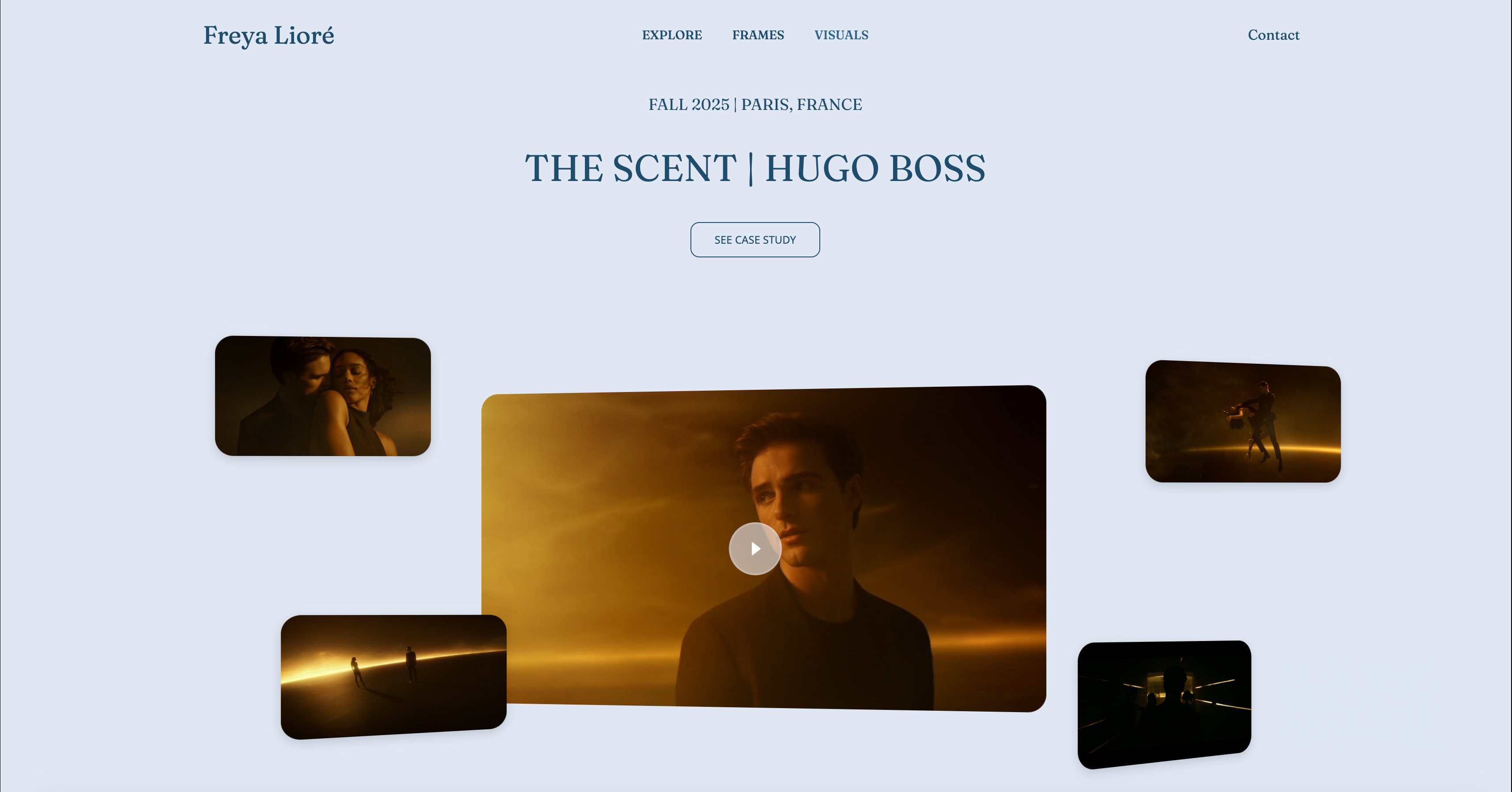
Framekit is an AI website builder that turns a prompt into a fashion stylist's portfolio - editorials, lookbooks, and a store - on a domain they own.
Instead of scattering your work across tearsheets and feeds, you describe yourself as a stylist and Framekit generates the pages - a curated editorial portfolio, lookbook galleries, a credits page, and a place to sell a digital lookbook - which you then edit and connect to your own name as a domain.
We described a working stylist and Framekit returned a clean, editorial-feeling site with a real gallery for the lookbooks and a curated grid for the editorials; adding a digital lookbook to the store and pricing it took minutes.
Because Framekit includes a gallery and a store, the editorials present as considered stories and the lookbook is a real product, not a link out - things a feed and most portfolio hosts cannot do.
Best forStylists who want a curated, professional book they own, with lookbook galleries and a way to sell digital lookbooks or styling.
Key features:
- Generate a curated editorial portfolio from a prompt or a reference screenshot
- A real gallery system for lookbooks and full shoots, with passwords for private client work
- A store to sell digital lookbooks, style guides, or virtual styling at 5% dropping to 0%
- Your editorials, credits, galleries, and shop on one owned domain
- Sites are generated by Cadence, Framekit's model for creative work, with a faster option called Score
The difference from a feed or a folder is curation and control.
On Instagram the work resets and the reach is borrowed; on your Framekit site the editorials sit in the order you chose, the credits are complete, and a client can buy a lookbook - so the site works for you between jobs, and it stays yours between agencies and seasons.
The real numbera digital lookbook sold from a Framekit store nets you 95% of the price on the free plan (5% fee) and the full price minus processing on the $39-a-month Business plan (0% fee) - so a growing digital income lives on a site you own, versus a platform percentage that never falls.
A custom domain starts at $9 a month on Starter.
Pricing:
- Free: $0 (Framekit subdomain, 10GB shared storage, 5% product fee)
- Starter: $9 per month (custom domain, no branding, 50GB, 5% fee)
- Pro: $19 per month (300GB, 3% fee)
- Business: $39 per month (2TB, 0% product fee)
Pros:
- A curated editorial portfolio generated from a prompt
- Real lookbook galleries and a store, not just image blocks
- On your own domain, so it wins the search for your name
Cons:
- Not a booking agency - representation and jobs still come through your agency and network
- More site than you need for a single-page card
- A custom domain starts on the $9 Starter plan
Skip it ifall you want is one static card with a few tearsheets. Carrd does that for less, and if you already pay for Creative Cloud, Adobe Portfolio is free. Framekit wins when you want a curated, owned book that also sells.
Verdict: Framekit is the best pick for a stylist who wants a curated, professional book they control - editorials, lookbooks, credits, and a store at their own name. See how creators pair a portfolio with a shop, or start free at framekit.ai.
2. Squarespace: A polished editorial all-in-one

Our rating: 8.5/10
Squarespace is the tasteful default for a stylist who wants an editorial-feeling site without designing one - its templates suit fashion imagery, the layouts read as magazine-clean, and a store, blog, and email sit under one subscription.
For presenting a book that looks considered, it delivers out of the box.
There is no permanent free plan, only a trial, and design control is template-level, per its published pricing. For a stylist who wants polish over control, that trade is fair.
Best forStylists who want a polished, editorial all-in-one and will pay annually.
The real numberSquarespace runs from about $16 a month (Basic) on annual billing, with a store on the mid tiers - a polished editorial site, priced as a yearly commitment.
PricingBasic about $16 a month, Core about $23, Plus about $39 (annual); trial only.
Pros:
- Editorial-clean templates that flatter fashion work
- A store, blog, and email in one platform
- Forgiving editor
Cons:
- No free plan
- Template-level control
- Recognizable layouts
Skip it ifyou want a free start or a distinctly art-directed book. Squarespace trades control for a safe editorial finish.
Verdict: Squarespace is the pick for a stylist who wants polished and editorial and will pay yearly. If you want that on a site an AI drafts and you own, that is Framekit's lane. See our best Squarespace alternatives for creatives. Visit Squarespace
3. Format: A gallery-forward portfolio
Our rating: 8.1/10
Format is a portfolio builder made for visual creatives, so it presents editorials and lookbooks with real care - clean galleries and tasteful layouts that let a fashion story breathe.
For a stylist whose book is image-led, that gallery focus is worth something, and it handles full shoots better than plain image blocks.
Its store is light, so it suits presentation over selling, and there is no permanent free plan. For a stylist who wants the images to lead, it is a strong, focused choice.
Best forStylists who want editorials and lookbooks in a tasteful, gallery-forward portfolio.
The real numberFormat runs from about $10 a month, a low price for gallery-forward presentation and a custom domain - the trade is lighter selling than an all-in-one.
Pricingfrom about $10 to $12 a month; trial rather than a permanent free plan.
Pros:
- Gallery-forward, tasteful presentation of editorials
- Real galleries for full shoots
- Simple and affordable
Cons:
- Light store
- Portfolio-first
- No free plan
Skip it ifyou want to sell digital lookbooks or a full all-in-one. Format is a gallery-forward portfolio.
Verdict: Format is the pick for a stylist who wants the editorials to lead in a tasteful, gallery-forward book. For a store on the same site, an all-in-one wins. See our best Format alternatives. Visit Format
4. Wix: Flexible drag-and-drop
Our rating: 7.9/10
Wix is the flexible generalist, so a stylist can arrange editorials, lookbooks, credits, and a store however they picture it, with a large template library and an AI generator to start.
It does nearly anything, which suits a stylist with a specific art direction in mind for the site.
The Wix caveats are the usual ones: the free tier shows Wix ads on a Wix subdomain, and a clean custom-domain site needs a premium plan from about $17 a month.
Best forStylists who want maximum flexibility and art direction over the layout.
The real numberWix premium plans start around $17 a month for a clean, ad-free site, so the usable version is a mid-teens monthly cost rather than the free tier.
Pricingfree plan on a Wix subdomain with ads; premium from about $17 a month.
Pros:
- Very flexible layout and a store
- An AI generator to start
- A free tier to try
Cons:
- Free plan carries ads
- The ecosystem upsells
- Can look busy without care
Skip it ifyou want the cleanest ownership or a curated, restrained book. Wix is capable but rarely quiet.
Verdict: Wix is a flexible pick for a stylist who wants to art-direct the site. If the ads and upsells wear on you, a cleaner builder helps - see our best Wix alternatives. Visit Wix
5. Adobe Portfolio: Free with Creative Cloud
Our rating: 7.7/10
Adobe Portfolio is the value pick for a stylist already paying for Creative Cloud - it is included free, gives a clean custom-domain site, and imports from Lightroom and Behance. If you already subscribe to edit and retouch shoot images, the site is effectively free.
It is deliberately simple, with limited templates and no store, so it presents your editorials and stops there. For a clean, free, owned book, that simplicity is the appeal.
Best forStylists who already pay for Creative Cloud and want a clean owned book at no extra cost.
The real numberAdobe Portfolio adds nothing to your bill if you already pay for Creative Cloud, from about $10 a month for the Photography plan - so the owned book is effectively free, with no way to sell lookbooks.
Pricingincluded with any paid Creative Cloud plan; not sold separately.
Pros:
- Free with Creative Cloud
- Clean, custom-domain book
- Lightroom and Behance import
Cons:
- No store for lookbooks
- Limited templates
- Tied to a Creative Cloud subscription
Skip it ifyou want to sell lookbooks or a curated store, or you do not subscribe to Creative Cloud. Adobe Portfolio is a clean, free presentation book.
Verdict: Adobe Portfolio is the easy value pick for a stylist already in Adobe. When you want to sell or go deeper, you will move on - see our best Adobe Portfolio alternatives. Visit Adobe Portfolio
6. Carrd: A cheap single-page card
Our rating: 7.3/10
Carrd is the honest pick for a stylist who wants the simplest possible thing - one clean page with a few key tearsheets, a short bio, and a contact line - for about $19 a year. If a professional card at your own name is the entire brief, nothing here beats it on price or speed.
Its limit is the point: one page, no real gallery for full editorials, no store for lookbooks, so it is a calling card rather than a full book. For a stylist just getting a professional presence online, a card can be enough to start.
Best forStylists who want a single, cheap, professional card at their own name.
The real numberCarrd's Pro Standard is about $19 a year for a custom-domain single page, less than any monthly plan here - the trade is one page, not a full book.
Pricingfree tier; Pro plans from about $19 a year, billed annually.
Pros:
- By far the cheapest owned page
- Fast and simple
- A usable free tier
Cons:
- One page, no real gallery
- No store for lookbooks
- Basic by design
Skip it ifyou want galleries for full editorials, multiple sections, or to sell lookbooks. Carrd is a calling card.
Verdict: Carrd is the pick when a single professional page is all you need. The moment you want galleries or a lookbook store, you have outgrown it - see our best Carrd alternatives. Visit Carrd
Why a Stylist Needs an Owned Book, Not Just a Feed
In one linea feed borrows you reach and resets your work; an owned site curates the book, ranks for your name, and lets you sell a lookbook - which is why the strongest setup is a feed that points to a site you own.
Concede the real point first: Instagram is genuine work for a stylist - it is where brands and editors discover you and where a look can travel. Keep posting. But a feed is a shop window you rent, and three things only an owned site can do.
The curated book. A feed shows your work newest-first, mixed with stories and reposts; a site shows your strongest editorials in the order you chose, as considered stories. When an editor or a brand evaluates you, curation is the difference between a professional and a scroll.
The name search. When a magazine or a brand looks you up, an owned site at your name is the book you control, above the scattered tags and tearsheets. It is your first impression, directed rather than defaulted.
The lookbook income. A feed can point at a link; it cannot hold a real store. On your own site a client or a peer can buy a digital lookbook, a style guide, or a virtual styling session, and you keep almost all of it.
That is a growing stylist income, and it needs a store, not a bio link. Our guide to moving from Instagram to your own website walks the move.
How to Choose a Fashion Stylist Website Builder: A Decision Tree
Two questions get you there, in order, and the first that fits you is your answer.
Start here: do you want a full, curated book - editorials, lookbook galleries, and a way to sell - or just a single professional card?
- A full book with galleries. Choose Framekit for an AI-built site with real lookbook galleries and a store on your own domain, or Squarespace for a polished editorial template you fill in. Go no further; you want a real book.
- Just a clean single card. Choose Carrd for about $19 a year, or Adobe Portfolio if you already pay for Creative Cloud. Stop here.
If you chose a full book, one more: do you want to sell digital lookbooks or styling from it?
- Yes, selling matters. Choose Framekit - the store is built in, so a client buys the lookbook on your own site.
- No, presentation is all I need. Choose Squarespace for a polished all-in-one, or Format if the galleries should lead.
Frequently Asked Questions
What is the best website builder for fashion stylists in 2026?
The best website builder for fashion stylists in 2026 is Framekit, because it turns a prompt into a curated editorial portfolio on your own domain, with lookbook galleries and a store to sell digital lookbooks or styling - so your book, credits, and income live in one professional place you control.
The honest caveats are that Carrd is cheaper for a single page, Adobe Portfolio is free if you already pay for Creative Cloud, and a site does not replace an agency for bookings.
For a polished editorial template you fill in, Squarespace is the strongest alternative.
Do fashion stylists need a website?
Yes, as a professional home that complements social media and any agency.
Editors and brands search stylists by name and evaluate the book, and a personal site at your own domain is the one place your editorials sit curated, your credits are complete, and you control the first impression - none of which a feed does well.
A feed borrows reach and resets your work; your site keeps the book and can even sell a lookbook. The strongest setup is a feed that points to an owned site every other link leads back to.
How do I show editorials and tearsheets on my styling website?
Present editorials as full stories in a gallery rather than single scattered images, so each shoot reads as a considered piece the way it did in print.
Framekit and Format include real gallery systems for this, which handle full editorial sets better than plain image blocks; Squarespace and Wix present them in templates.
Lead with your strongest, most recognizable work, credit the photographer and publication, and keep the book curated to your best rather than everything. A gallery-capable builder lets a tearsheet feel like an editorial, not a snapshot.
Can I sell digital lookbooks or styling from my website?
Yes, if you choose a builder with a real store.
Framekit includes a store to sell digital lookbooks, style guides, or virtual styling sessions from your own site at a fee that starts at 5% and drops to 0%, so a client buys on your domain and you keep almost all of it.
Squarespace and Wix can also sell through their stores. Adobe Portfolio and a bare Carrd page cannot sell properly - they would link out to a platform that takes a cut.
Selling digital lookbooks and styling is a growing stylist income, so if it matters, pick a builder with commerce built in.
See our guide to how to sell art online from your own website.
How much does a fashion stylist website cost?
Entry pricing in 2026 runs from about $19 a year (Carrd, a single page) and free with Creative Cloud (Adobe Portfolio) to about $10 a month (Format), $9 a month (Framekit Starter), $16 a month (Squarespace), and $17 a month (Wix), with free tiers on Framekit and Wix.
The custom domain that ranks for your name almost always sits on the first paid tier, so budget for that rather than the free plan.
For a stylist who sells digital lookbooks, a builder with a store included is worth the small cost, since it keeps that income on a site you own.
Is a website or Instagram better for fashion stylists?
Both matter and do different jobs. Instagram is where brands and editors discover you and where a look travels, so keep posting.
A personal website is where you own the curated book, control how an editor sees your work, rank for your name, and can sell a lookbook - none of which a feed does.
The strongest setup is both: an active feed that points to an owned site as the professional home. If you had to start with one for professional evaluation, the owned, curated book is the one that lasts through platform changes.
See our take on website versus Instagram for creatives.
What should a fashion stylist portfolio include?
A fashion stylist portfolio should lead with your strongest editorials and campaigns presented as full stories, a clear list of credits, publications, and brand clients, an about and contact section for editors and agencies, and - increasingly - digital lookbooks or styling for sale.
Curate ruthlessly to your best work rather than showing everything, credit photographers and publications, and keep the book art-directed and professional, since that is what an editor judges.
Pair the editorials with galleries so full shoots read as stories, and a store if you sell, so the book earns as well as impresses.
Can I use a free website builder as a fashion stylist?
Yes. Framekit and Wix have free plans, Adobe Portfolio is free with any Creative Cloud subscription, and Carrd has a free single-page tier, so a stylist can get online for nothing.
The catch is the custom domain: free plans put you on the platform's subdomain, and a custom domain at your own name is what wins the search an editor runs.
Start free to build the book, then move to the entry paid plan for the domain when you are ready to be evaluated professionally. If you sell lookbooks, choose a free plan that includes a store, like Framekit's.
Final Verdict: The Best Website Builder for Fashion Stylists in 2026
After testing six tools, the pattern is clear: the builders differ mostly in how well they present editorials, whether you can sell lookbooks, and how completely you own the result - and none of them replaces your agency or your network for bookings.
Framekit is the best website builder for fashion stylists in 2026 who want a curated, professional book they own - editorials as stories, lookbook galleries, complete credits, and a store at their own name - built from a prompt in an afternoon.
It wins the search an editor runs, it lets you sell what you produce, and it stays yours through every agency and season.
Who should not use Framekit: if a single static card is all you want, Carrd handles it for about $19 a year, and Adobe Portfolio costs nothing if you already subscribe to Creative Cloud - for a one-line calling card, Framekit is more than you need, and on price at the low end it loses to them, plainly.
And whatever you build, it complements, not replaces, your agency and network.
Squarespace is the polished editorial all-in-one, Format the gallery-forward pick, Adobe Portfolio the Creative Cloud freebie, and Carrd the cheap card. But if you want a curated book that wins your name, sells your lookbooks, and stays yours, build it and point your feed at it.
For more, read our best website builders for creative professionals, the best website builder for makeup artists, our best website builder for models, and website vs Instagram for creatives.
And if you make the clothes rather than style them, see our best website builders for fashion designers.