Framekit templates
Start from a designer-made template
 Use template
 Use template
 Use template
 Use template
 Use template
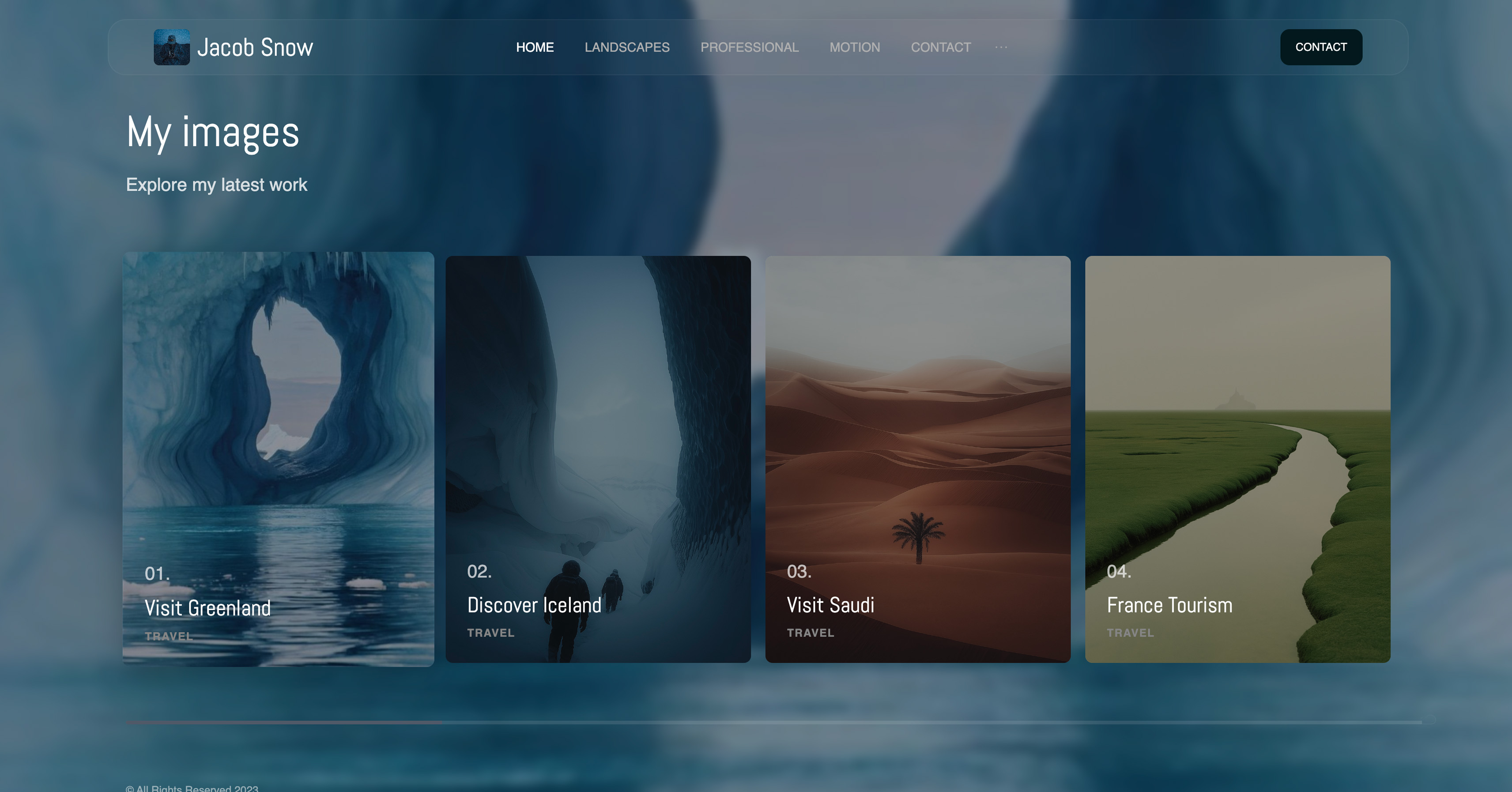 Use template
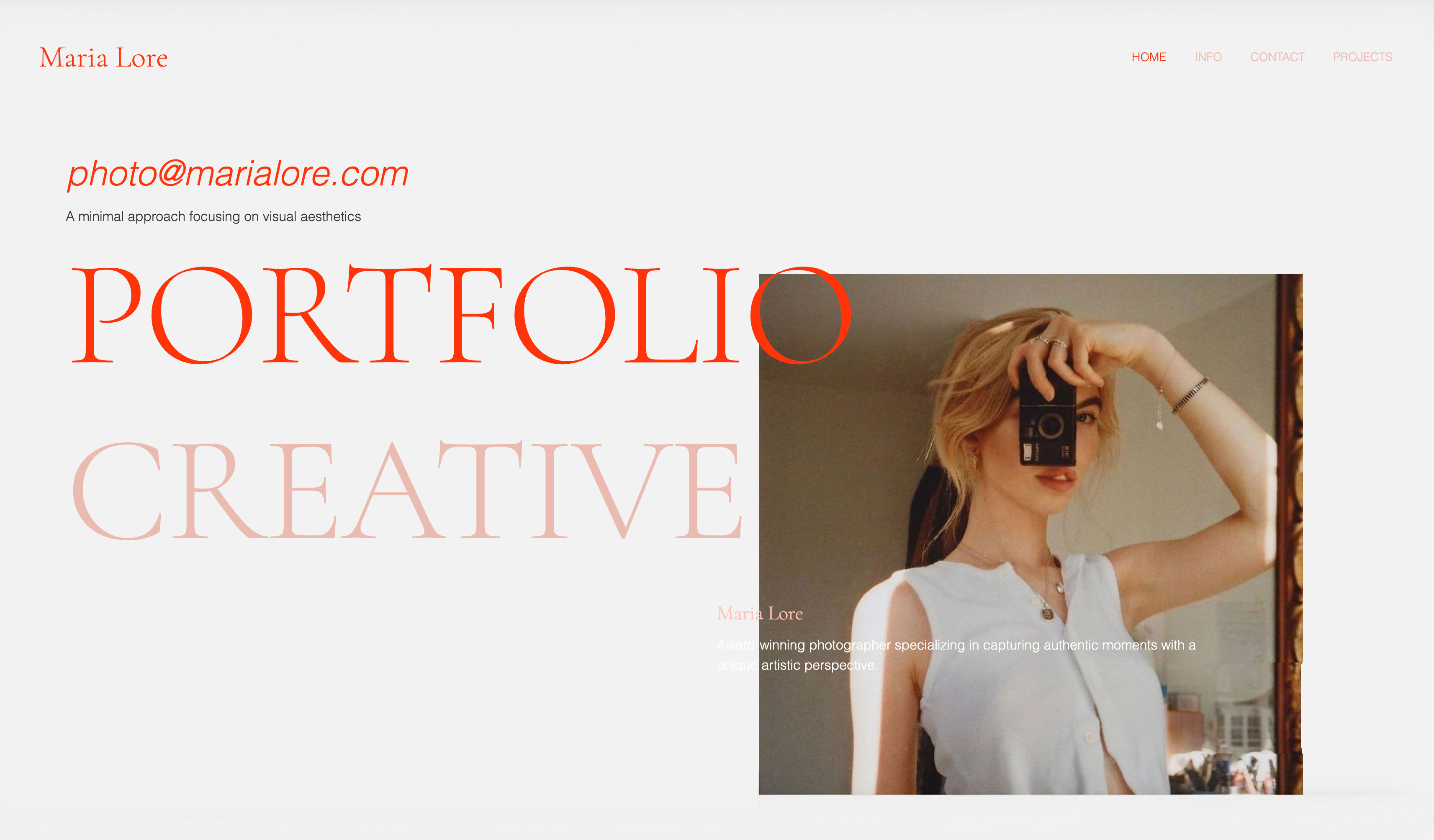 Use template
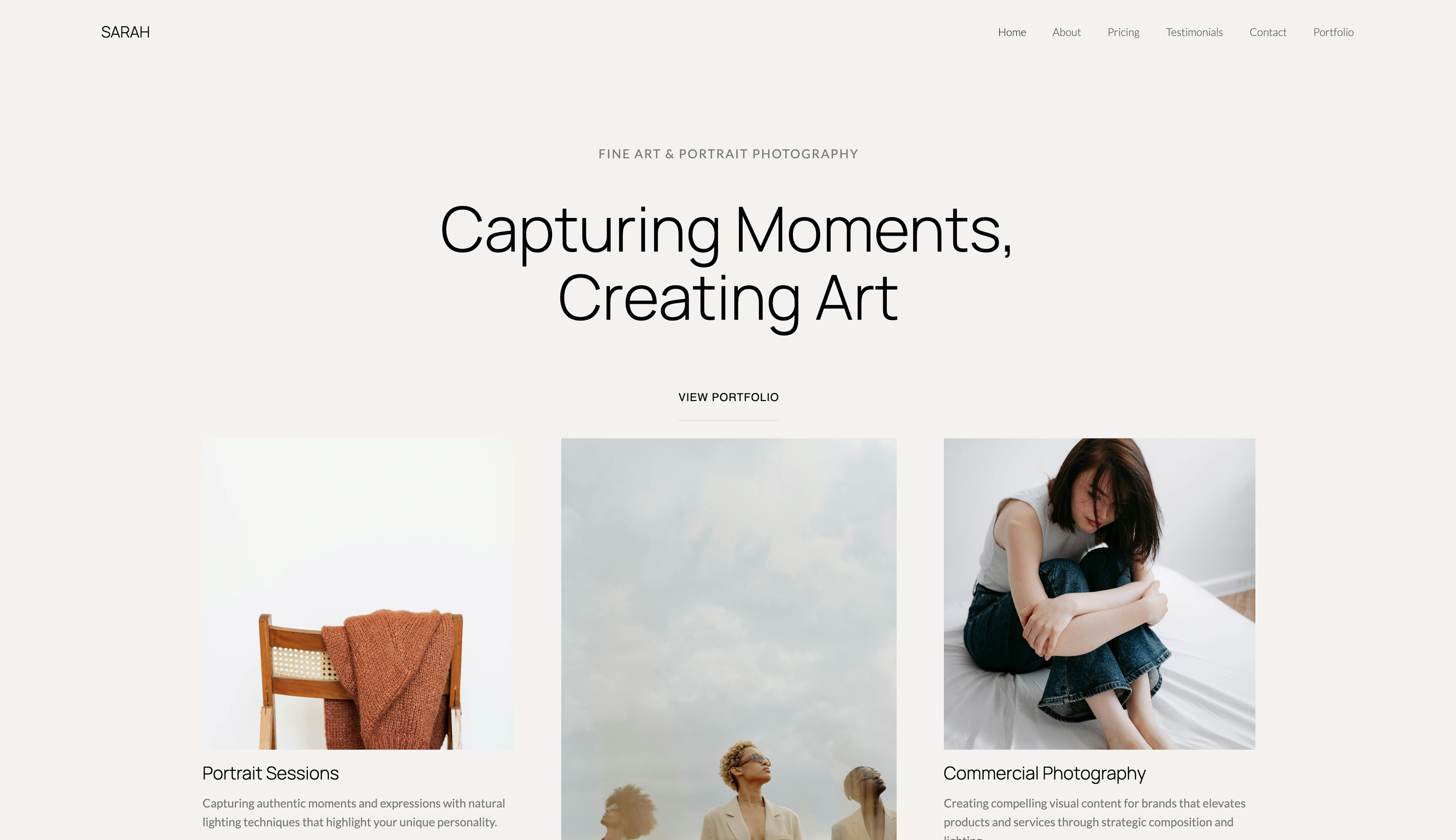 Use template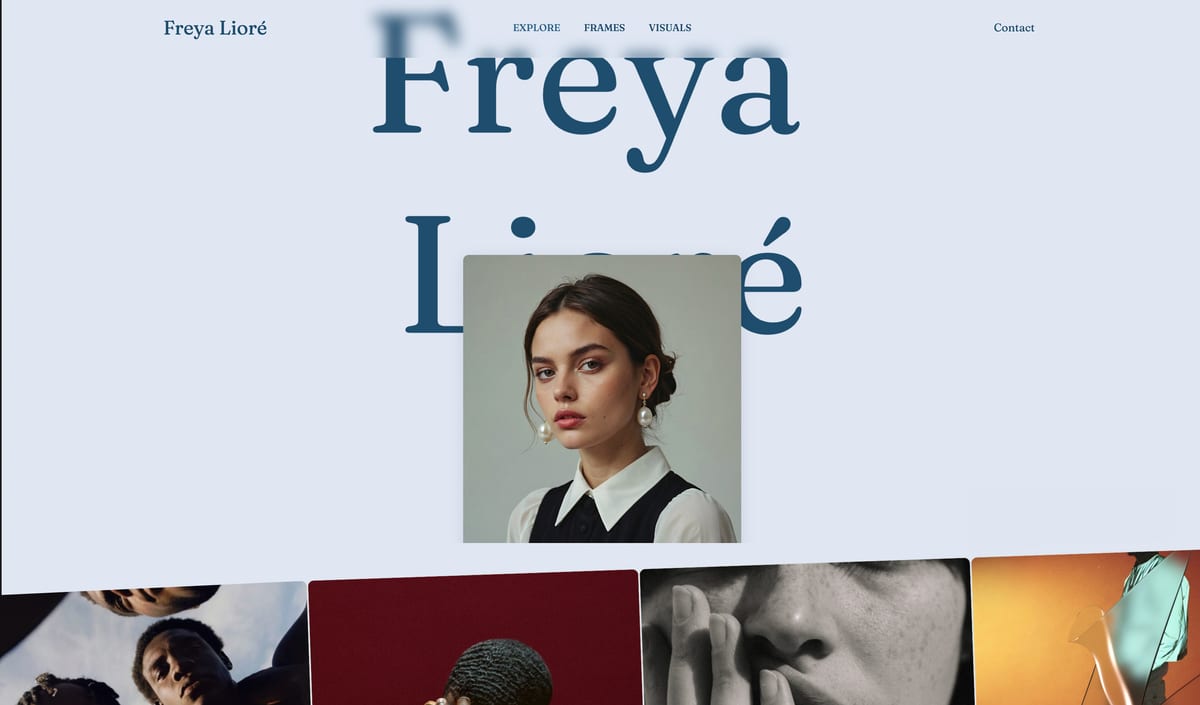
A bride-to-be finds your makeup work on Instagram, loves the soft glam look, and taps your profile. Your link-in-bio sends her to a DM thread.
She has three other artists open in other tabs, two of whom have a real website where she can see a full bridal gallery, read what is included, check the rate, and book a trial in two taps.
By the time you reply to her message, she has booked one of them.
That is what an Instagram-only presence costs makeup artists in 2026. A grid is great for discovery and terrible for closing.
The artists with full calendars have a website doing the work the grid cannot: a curated portfolio split by bridal, editorial, and special-occasion looks, clear service and pricing information, and a path to booking that does not depend on you being awake to answer a DM.
This guide is about building that website.
We tested seven builders on what matters for a makeup artist website: how good the portfolio looks without a designer, how well it presents services and pricing, how it loads on a phone where most clients find you, how booking is handled, and what it costs.
Framekit, an AI website builder trained by senior designers, is the tool we kept coming back to, and the free plan needs no credit card.
The best website builder for makeup artists in 2026 is Framekit, because its designer-trained AI builds a polished beauty portfolio fast, with an embedded scheduler for bookings.
Squarespace is the runner-up for built-in booking, and GlossGenius is best if you want all-in-one salon software. Start free at framekit.ai.
Full disclosure: Framekit, ranked #1 below, is our own product, and one competitor here beats us on something central. GlossGenius handles booking, deposits and payments for beauty professionals and Framekit does not do any of those at any tier. Squarespace carries the broader ecosystem, Carrd is cheaper for a single page, and every alternative is linked.
How We Compared These Builders
A makeup artist's site has to do two jobs that rarely live in one product, so here is what each judgement below is based on.
- Verified from primary sources: pricing, plan limits and booking capability were read from each vendor's published pages in September 2026, using renewal rather than promotional rates.
- Assessed hands-on: how a portfolio of close-up work is presented, and how many steps stand between a visitor and an enquiry.
- Not assessed: payment processing rates inside the booking-specific tools, which vary by region.
This guide contains no load-time claims or performance scores for any builder.
What to Look For in a Makeup Artist Website
A makeup artist website has one job: turn someone who likes your look into a booked client. Four things decide whether it does that.
Does the portfolio look as good as your work?
Makeup is a visual craft, and your site is judged on its presentation the moment it loads.
You need large, well-framed images, galleries split by type, bridal, editorial, special occasion, and a layout that feels art-directed rather than templated. If the site looks generic, it undersells looks you spent years perfecting.
Is it fast on a phone?
Almost every client finds you on a phone, often on mobile data between other things. A slow, image-heavy site loses them before your portfolio loads. Look for a builder with fast hosting, image optimization, and a CDN, so your photos are sharp and the page is quick.
Can it present services and pricing clearly?
Brides and event clients want to know what is included and what it costs before they reach out. A site that lays out service tiers, bridal packages, trial details, and travel terms cleanly removes friction and filters out mismatched inquiries. Vague sites generate vague DMs.
How does it handle booking?
This is where you must be honest with yourself about the tool. Some platforms include native booking; others do not.
A makeup artist website needs a reliable way for a client to request or book a slot, whether that is a native calendar or a cleanly embedded scheduler like Acuity, Calendly, or a beauty-specific tool.
Quick Comparison: Makeup Artist Website Builders
The weighting to read this with: how well the portfolio presents close-up work carries the most weight, then how directly a visitor can enquire, then cost.
Under the opposite weighting, where booking and taking deposits is the priority, GlossGenius wins outright and Framekit does not place, because we have no scheduling or payment collection for services.
| Tool | Best For | Booking | Portfolio Quality | Starting Price |
|---|---|---|---|---|
| Framekit | Designer-grade portfolio | Embed a scheduler | Strong | Free / $19 mo |
| Squarespace | Built-in scheduling | Native (Acuity add-on) | Strong | $19 mo |
| Wix | Third-party integrations | Native (Wix Bookings) | Moderate | $17 mo |
| GlossGenius | All-in-one salon software | Native, core feature | Moderate | Around $24 mo |
| Format | Photo-led portfolios | Embed only | Strong | $10 mo |
| Pixpa | Budget creative portfolios | Embed only | Moderate | $5 mo |
| Carrd | One-page starter sites | Embed only | Basic | Free / $19 yr |
1. Framekit: Best Overall Makeup Artist Website

Our rating: 9.0/10
Framekit is an AI website builder, and a makeup artist is exactly the kind of visual professional it was built for.
You describe your work, or hand it a screenshot of a beauty site whose mood you like, and the designer-trained AI returns a laid-out starting point with real hierarchy and spacing rather than a blank template you have to fight.
The payoff for a makeup artist is presentation: your bridal and editorial images are framed like an editorial spread, so the soft-glam look a bride fell for on Instagram lands even harder on the page where she actually decides to book.
Best forMakeup artists who want an editorial-grade portfolio and clear service pages on their own domain, paired with an embedded scheduler for bookings.
Key features:
- Designer-trained AI that lays out bridal, editorial, and special-occasion galleries with real hierarchy
- Service and pricing sections that spell out packages, trials, and travel terms before a client ever sends a DM
- Fast hosting with a Cloudflare CDN, SSL, and automatic image optimization for mobile
- A booking section that cleanly embeds Acuity, Calendly, or a beauty-specific scheduler
- New galleries inherit your existing fonts, colors, and spacing, so the site stays polished as it grows
The honest part is booking, because it matters for a makeup artist. Framekit has no native calendar, CRM, or scheduling engine of its own.
What you do instead is drop a dedicated scheduler into a booking section, and the client books through that in the same visual flow as the rest of the site.
It works well and looks clean, but it is a two-tool setup, and you should choose Framekit knowing that up front rather than expecting a built-in salon calendar.
The real numbera custom-domain makeup portfolio with your own branding and no Framekit mark starts at $9 a month on Starter, and because the free $0 plan needs no credit card, you can build and publish the whole site to see how your looks are framed before you pay anything.
PricingFree $0 (no credit card, Framekit branding), Starter $9 per month (custom domain, no branding), Pro $19 per month, Business $39 per month.
Pros:
- The most editorial, art-directed portfolio in the roundup without hiring a designer
- Fast on mobile, where nearly every bride and event client finds you
- Service and pricing pages that filter out mismatched inquiries before they reach your inbox
Cons:
- No native booking, scheduling, or CRM, so you embed a scheduler
- A smaller third-party app marketplace than Wix
- No integrated payments or salon inventory, unlike a beauty-specific system
Skip it ifyou need an all-in-one calendar, payments, and client management inside one login; GlossGenius is purpose-built for that, with the site as a secondary feature.
Verdict: Framekit is the best makeup artist website in 2026 because it produces a polished, fast, editorial-grade portfolio without a designer and pairs cleanly with an embedded scheduler for bookings. See the wider field in our best website builders for photographers guide, or start free at framekit.ai.
2. Squarespace: Best for Built-In Scheduling

Our rating: 8.6/10
Squarespace is the strongest runner-up, and the reason is ownership: it owns Acuity Scheduling, so a makeup artist can run a polished portfolio and native online booking under one company.
Add Acuity and clients get intake forms, automated confirmations, deposits, and reminders without a third-party embed, which is genuinely convenient when a bridal trial needs a deposit to hold the date.
The templates are refined out of the box, so a beauty site looks professional quickly.
Best forMakeup artists who want their website and booking under one roof and will pay for Acuity on top.
Key features:
- Acuity Scheduling for native bookings, deposits, and reminders
- Polished, professional templates suited to a beauty portfolio
- Reliable hosting and a mature, stable editor
- Built-in commerce if you also sell gift cards or products
- One vendor handling both the site and the scheduling
The real numberthe base Basic plan is $19 a month billed annually, but Acuity is a separate line item on top, so the tidy all-in-one pitch actually costs the site plan plus a scheduling plan once you are taking real bookings.
Pricingfrom $19 a month billed annually on Basic, plus an Acuity plan, per Squarespace pricing.
Pros:
- Native booking through Acuity, with no embed to manage
- Polished templates with a professional finish
- Site and scheduling billed through one company
Cons:
- Acuity is an added cost stacked on the site plan
- The design ceiling takes manual work to push past
- Its AI features are lighter than Framekit's
Skip it ifyou want the most distinctive, art-directed portfolio without manual template wrangling, where a designer-trained AI does more of the work for you.
Verdict: Squarespace is the best pick if you want site and booking inside one company through Acuity and will pay for it, accepting some manual design effort to stand out. We weigh design and speed in our Framekit vs Squarespace for photographers guide, which applies closely to beauty portfolios. Visit Squarespace
3. Wix: Best for Third-Party Integrations
Our rating: 8.2/10
Wix earns its place on breadth.
It includes Wix Bookings, a native scheduling system, so clients can book a makeup appointment directly on your site with no external tool, and its app marketplace is the largest here, covering forms, reviews, upsells, and more workflows than any rival in this list.
For a makeup artist who wants to bolt a lot of functionality onto one dashboard, that flexibility is real.
Best forMakeup artists who want native booking plus the widest catalog of add-on apps in one editor.
Key features:
- Wix Bookings for native, on-site appointment scheduling
- The largest third-party app marketplace in the roundup
- Drag-and-drop editing with fine control over placement
- Built-in marketing and contact-form tools
- A wide template library to start from
The real numberthe Light plan is $17 a month billed annually, and while that undercuts little here, the value sits in the app marketplace rather than the base price, since you assemble the workflows you want from add-ons.
Pricingfrom $17 a month billed annually on Light, per Wix pricing.
Pros:
- Native Wix Bookings with no embed required
- The broadest app ecosystem of any tool here
- Granular drag-and-drop layout control
Cons:
- AI output carries a template sameness
- Performance trails the field on an image-heavy beauty site
- Building a genuinely editorial portfolio means manual layout work
Skip it ifportfolio polish and mobile speed matter more to you than app breadth, where a designer-trained builder frames beauty work better and loads faster.
Verdict: Wix is a reasonable all-in-one for native booking plus a website, but the portfolio itself is less impressive because design output and speed lag. See our Framekit vs Wix comparison for the fuller breakdown. Visit Wix
4. GlossGenius: Best All-in-One Salon Software
Our rating: 8.0/10
GlossGenius is the only tool here built specifically for beauty professionals, and it shows on the business side.
Booking, payments, client management, deposits, and marketing all live in one subscription designed around how makeup artists and stylists actually run their days.
If your priority is running the whole business - the calendar, the card reader, the client history - from a single purpose-built app, nothing else in this roundup is as tailored to the work.
Best forMakeup artists who want booking, payments, and client management in one beauty-specific system, with a simple site attached.
Key features:
- Native booking built for beauty appointments and deposits
- Integrated payments and a card reader
- Client management with history and notes
- Marketing and reminder tools aimed at rebooking
- A simple included website
The real numberGlossGenius starts around $24 a month and bundles the booking, payments, and client tools a makeup business needs, so you are buying a whole operating system for the studio rather than a portfolio, with the site thrown in as a bonus.
Pricingfrom around $24 a month, per GlossGenius pricing.
Pros:
- Purpose-built for beauty booking, payments, and clients
- Everything for running the business sits in one app
- Native scheduling with deposits and reminders
Cons:
- The included website is template-based and functional, not art-directed
- The portfolio is the weakest part of an otherwise strong tool
- You are paying for business software, not presentation
Skip it ifthe site is the thing that wins your bookings and it has to look editorial, where a design-led builder produces a far stronger portfolio.
Verdict: GlossGenius is the best choice when booking and business management are the priority and a basic site is acceptable, but it will not give you a standout portfolio. Visit GlossGenius
5. Format: Best for Photo-Led Portfolios
Our rating: 7.9/10
Format is a portfolio builder made for photographers and visual creatives, and its galleries are genuinely strong.
For a makeup artist who thinks of the website first as a visual showcase, a place where the work is the whole point, Format presents images cleanly and is simple to run day to day.
It carries client-proofing galleries too, which can help if you shoot and share your own looks.
Best forMakeup artists who treat the site as a pure visual showcase and are happy to embed booking.
Key features:
- Strong, photo-led galleries built for visual creatives
- Client-proofing galleries included
- A clean, simple editor to maintain
- Password-protected client access
- Affordable photographer-specific plans
The real numberFormat's Basic plan runs around $10 a month billed annually, which makes it one of the cheaper ways to get a genuinely photo-led portfolio, though its services, pricing, and booking presentation is thinner than a general builder's.
Pricingfrom around $10 a month billed annually on Basic, per Format pricing.
Pros:
- Genuinely strong gallery presentation
- Cheap for a dedicated portfolio tool
- Simple to run once it is set up
Cons:
- No native booking, so you embed a scheduler
- Services and pricing presentation is thinner than a general builder's
- It is a portfolio tool, not a business hub
Skip it ifyou want clear service and package pages plus AI to build the site, rather than a gallery-first tool you lay out yourself.
Verdict: Format is a solid pick for a clean, photo-led portfolio if you are happy embedding booking, but it does less beyond the gallery. Visit Format
6. Pixpa: Best Budget Creative Portfolio
Our rating: 7.4/10
Pixpa is one of the most affordable creative portfolio builders, bundling galleries, a blog, and basic store tools at a price that suits a makeup artist just getting started.
For someone who wants more than a link-in-bio without committing real money, it is a reasonable, low-risk entry point that covers the basics of showing work online.
Best forMakeup artists on a tight budget who want galleries and basic pages cheaply.
Key features:
- Galleries, a blog, and basic store tools bundled together
- Low monthly pricing
- A range of templates to start from
- Client galleries and basic client tools
- A simple, all-in-one feature set for the price
The real numberthe Essentials plan is around $5 a month billed annually, about the lowest entry price in this roundup, which is the whole appeal, though the finish looks more templated than the stronger tools here.
Pricingfrom around $5 a month billed annually on Essentials, per Pixpa pricing.
Pros:
- One of the cheapest ways to start
- Galleries plus a basic store and blog included
- Low commitment for a new artist
Cons:
- Output looks more templated than the stronger tools
- No native booking, so you embed a scheduler
- The editor is less refined
Skip it ifyou want a finished result that looks genuinely considered, where a design-led builder reads as far more premium for a similar price.
Verdict: Pixpa is fine for a budget-first start, but the finished site will not look as art-directed as Framekit, Squarespace, or Format. Visit Pixpa
7. Carrd: Best for One-Page Starter Sites
Our rating: 7.0/10
Carrd builds single-page sites for a few dollars a year, and for a makeup artist who just wants something cleaner than a link-in-bio while starting out, that is a fair trade.
One tidy page can hold a short bio, a small gallery, a few service highlights, and an embedded booking button, enough to look intentional before you invest in a full site.
Best forMakeup artists who want a cheap, tidy one-page site to replace a link-in-bio.
Key features:
- Single-page sites at a very low yearly price
- A free tier to start
- Simple embedded booking buttons
- Fast to build and publish
- Clean, minimal templates
The real numberCarrd's Pro plans start at $19 a year, not a month, so the cost of replacing a link-in-bio with a real one-page site is trivial, but one page is the hard ceiling.
Pricingfree tier; Pro plans from $19 a year, per Carrd pricing.
Pros:
- Extremely cheap on a yearly basis
- Quick to set up
- Cleaner and more credible than a link-in-bio
Cons:
- One page only, with no room for separate bridal and editorial galleries
- No full services breakdown or testimonials section
- Basic design tooling
Skip it ifyour portfolio needs real depth, split galleries, full service pages, and testimonials, which a one-page site cannot hold.
Verdict: Carrd is a cheap, tidy way to start, but you will outgrow it the moment your portfolio needs more than a single page. Visit Carrd
Which Makeup Artist Website Is Right for You?
Choose Framekit if
You want the most polished, editorial-grade portfolio that loads fast on mobile, and you are happy to embed a dedicated scheduler like Acuity or Calendly for bookings. This is the right pick for most makeup artists who care how their work is presented.
Choose Squarespace if
You want your website and booking inside one company through Acuity Scheduling, and you accept paying for Acuity on top and doing manual design work.
Choose Wix or GlossGenius if
You want native booking built in, Wix for a general site with Wix Bookings, GlossGenius for full beauty-business management with the site as a secondary feature.
Choose Format, Pixpa, or Carrd if
You want a photo-led portfolio tool, the cheapest creative builder to start with, or a simple one-page site, and you are comfortable embedding booking separately.
Frequently Asked Questions
What is the best website builder for makeup artists in 2026?
The best website builder for makeup artists in 2026 is Framekit, because its designer-trained AI builds a polished, fast, editorial-grade beauty portfolio without a designer.
Squarespace is the runner-up for built-in booking through Acuity, and GlossGenius is best if you want all-in-one salon software.
Does Framekit have booking for makeup appointments?
No, Framekit does not have a native booking, scheduling, or CRM system. Makeup artists using Framekit embed a dedicated scheduler such as Acuity Scheduling or Calendly into a booking section of the site, and clients book through that.
The setup is clean and works well, but it uses two tools.
Do makeup artists need a website if they have Instagram?
Yes. Instagram is excellent for discovery but poor for closing, because it cannot present full galleries by service type, clear pricing, or a real booking path.
A website gives a potential client everything they need to book without waiting on a DM reply, which is why artists with full calendars have both.
How much does a makeup artist website cost?
A makeup artist website costs $0 to start on Framekit's free plan, and $19 per month on Pro for a custom domain and no branding. Squarespace starts at $19 per month plus an Acuity plan, and Wix starts at $17 per month, billed annually.
What should a makeup artist website include?
A makeup artist website should include galleries split by look type such as bridal, editorial, and special occasion, a clear services and pricing section, an about page, client testimonials, and a booking or contact path.
Travel and trial terms are worth stating plainly to filter inquiries.
Can I build a makeup artist website without coding?
Yes. Framekit, Squarespace, Wix, Format, and others all let you build a makeup artist website with no code.
Framekit goes furthest by generating a real designed, editorial-grade layout from your description, so your portfolio looks professionally art-directed without any front-end work.
Makeup Artist Websites in 2026: Final Verdict
An Instagram grid finds you clients. A website books them. The makeup artists with full calendars have stopped relying on DMs and built a site that presents their looks like an editorial, states what is included, and lets a bride book a trial in two taps.
Framekit is the best website builder for makeup artists because its designer-trained AI produces a polished, fast, editorial-grade portfolio without a designer, and pairs cleanly with an embedded scheduler for bookings.
Squarespace is the runner-up if you want booking inside one platform through Acuity, Wix and GlossGenius offer native booking, and Format, Pixpa, and Carrd cover photo-led, budget, and starter needs.
If you also shoot or work alongside photographers, our guides to the best website builders for photographers and the best website builder for wedding photographers are closely relevant, the easiest portfolio website builder to use ranks tools on simplicity, and our best website builders for creative professionals guide goes wider.
The fastest way to decide is to build a draft and see how your work looks.
_Pricing and information accurate as of May 18, 2026._