Framekit templates
Start from a designer-made template
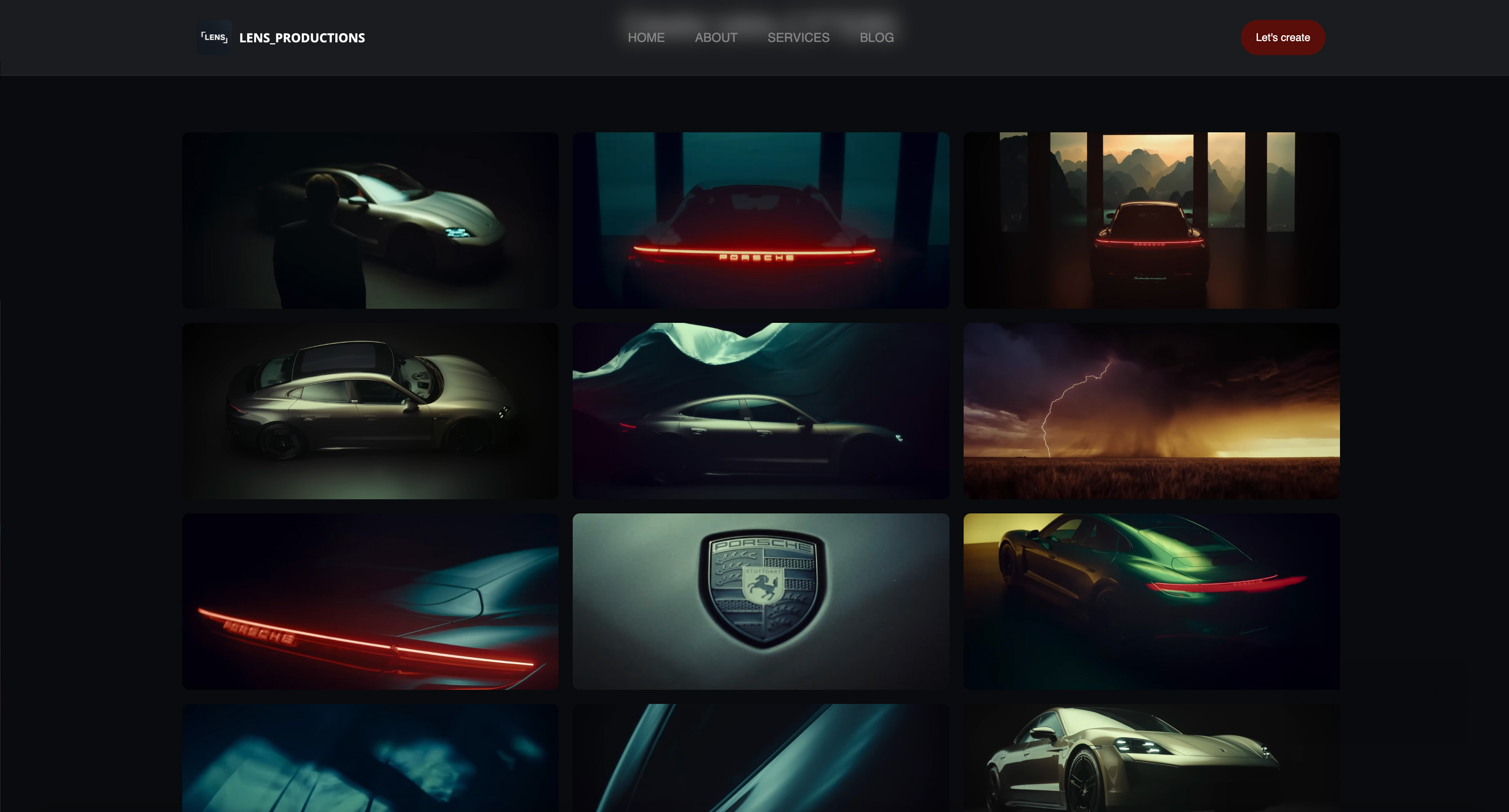 Use template
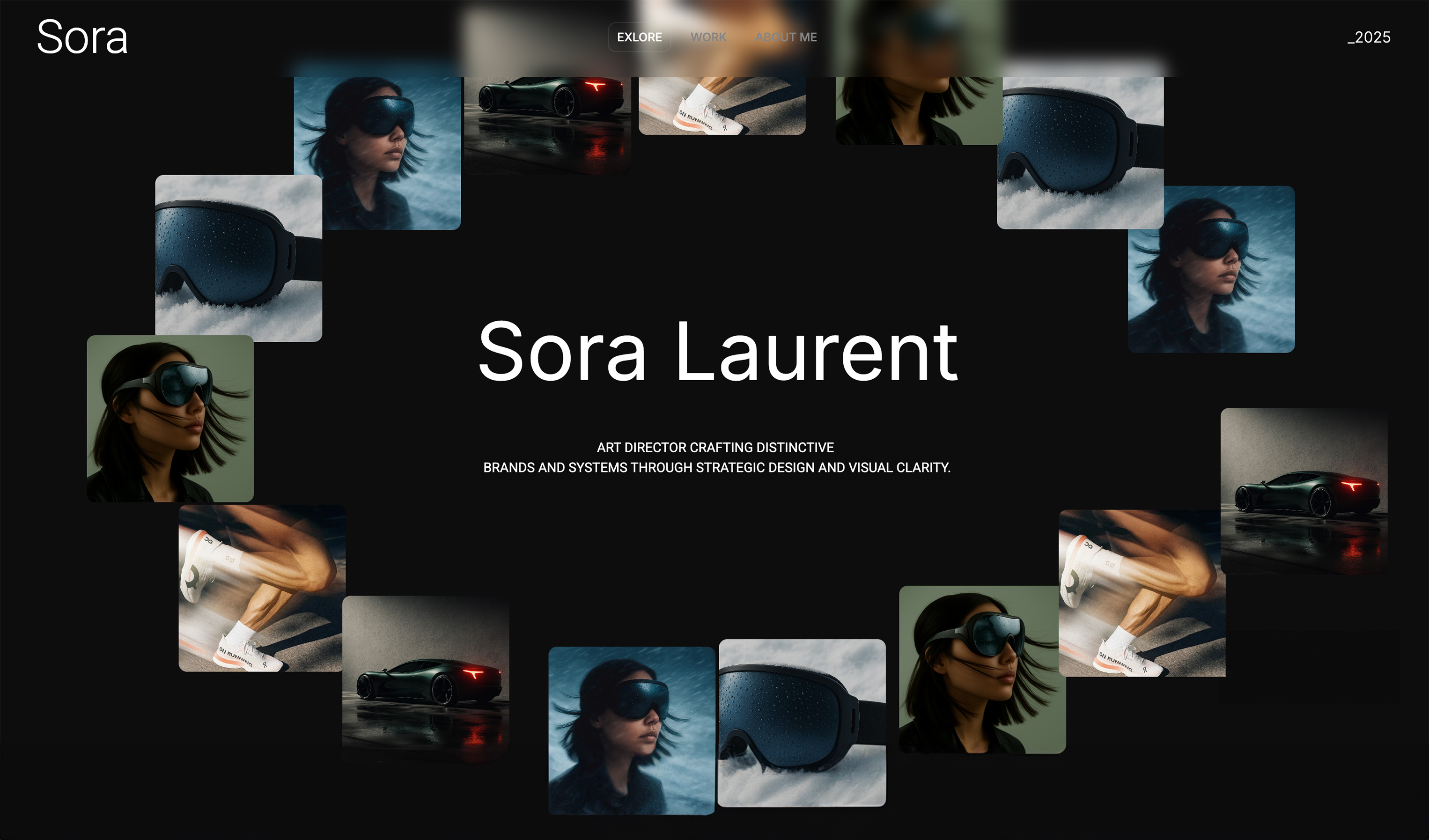 Use template
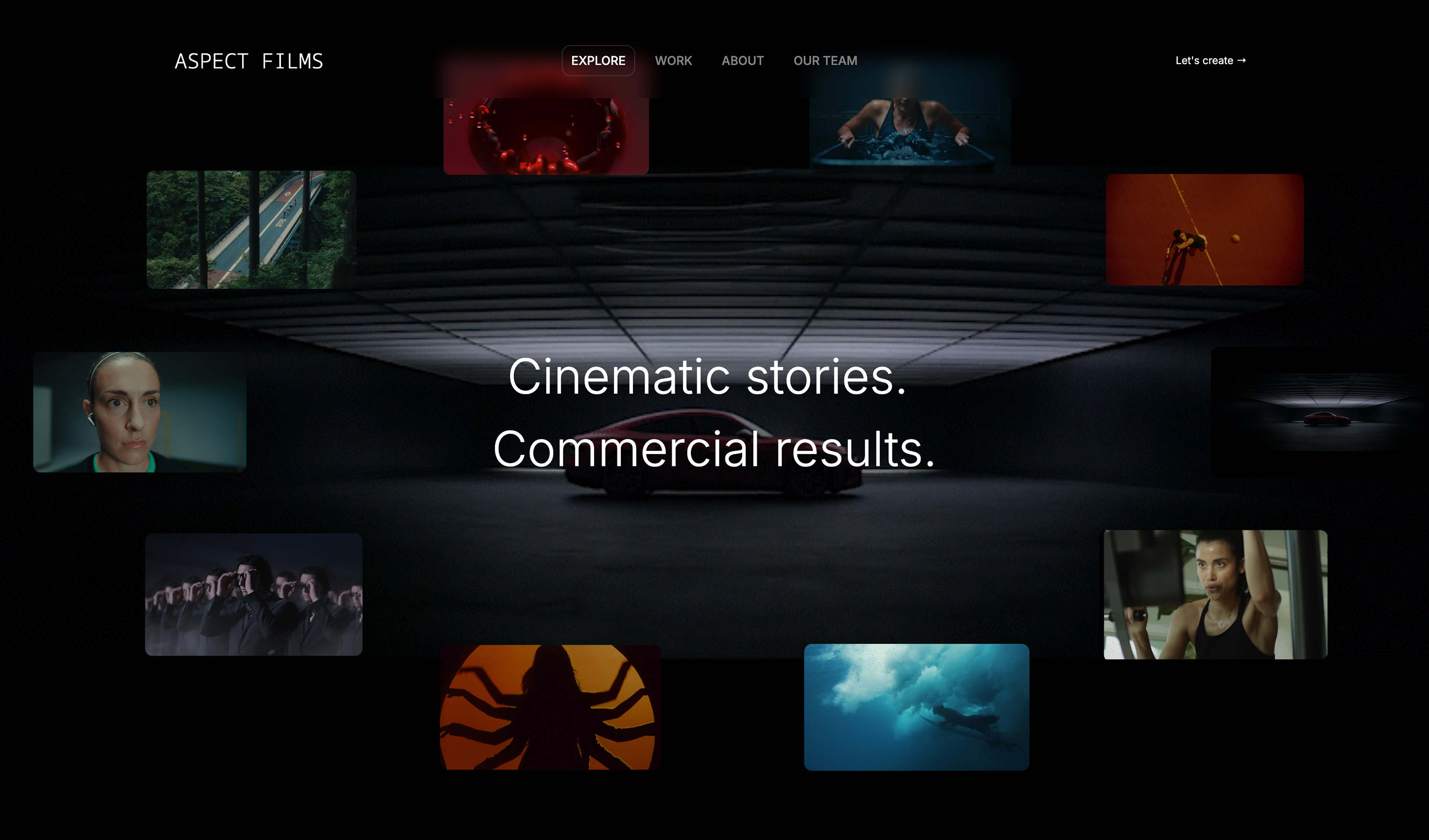 Use template
 Use template
 Use template
 Use template
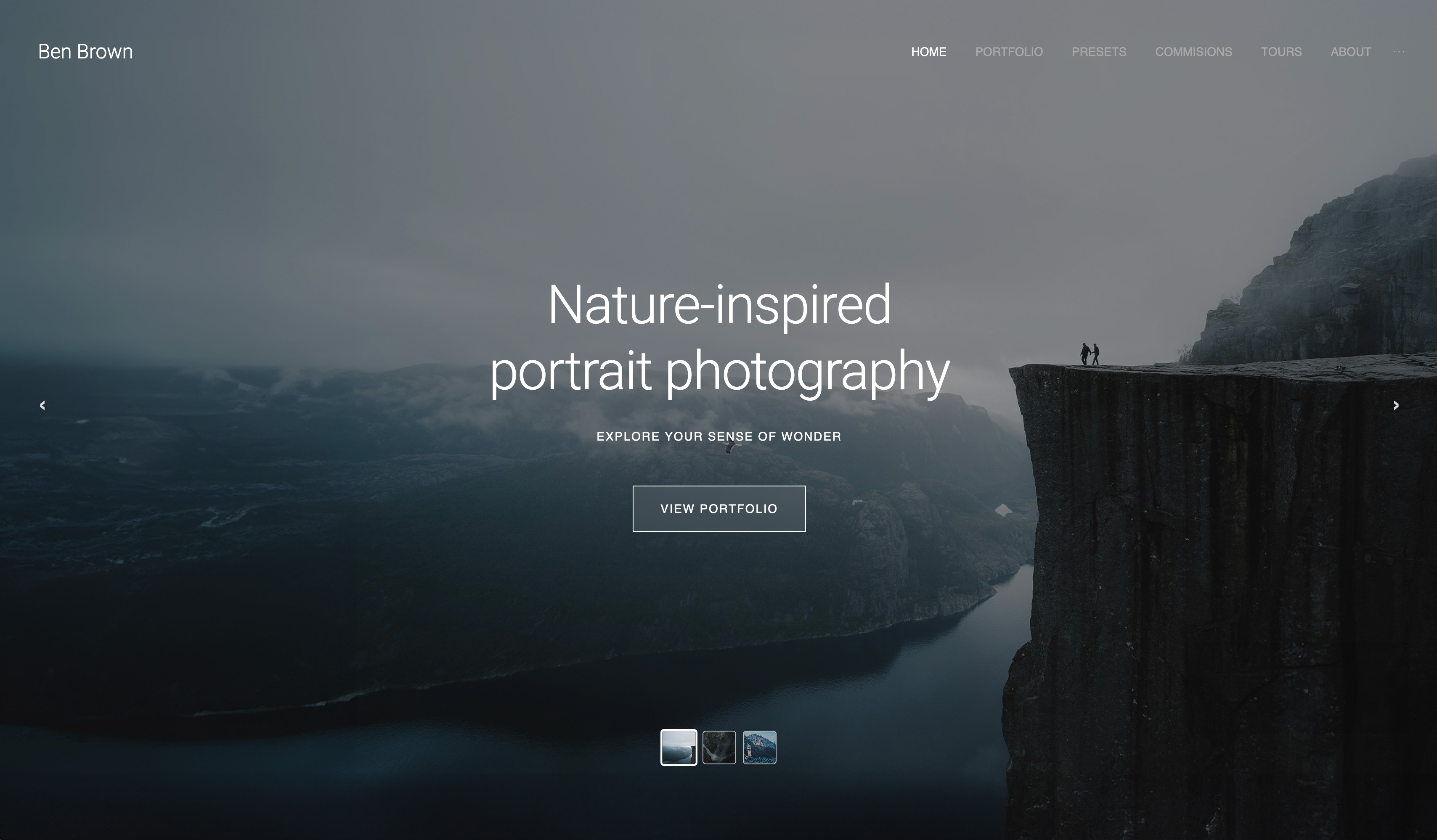 Use template
 Use template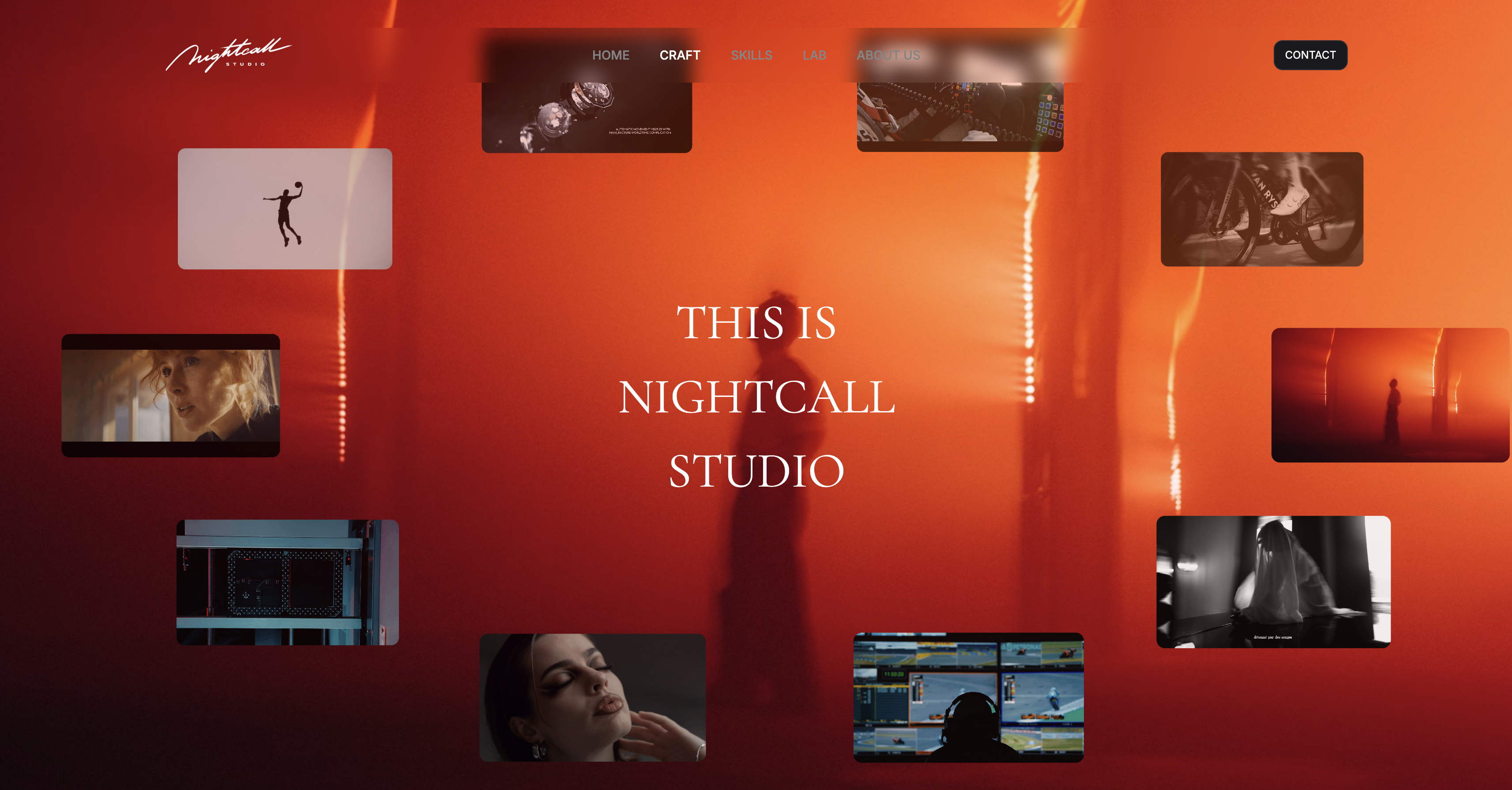
A brand producer with a shortlist of six videographers gives each portfolio about ten seconds before deciding whether to press play.
Adobe's own guide to video reels calls those first 10 seconds crucial, and the producer is not judging taste in those seconds. They are checking one thing: can this person make the kind of film I need?
The best videographer portfolio examples answer that question before the reel loads.
They sort the work by role, by niche, by credit or by price, so a wedding couple, an agency producer and a documentary commissioner each find their own door.
The sites below were chosen because each one shows a single, copyable way of doing that.
A videographer portfolio is a website that shows a filmmaker's best work, says plainly what kind of projects they take and for whom, and makes the next step (an enquiry, a booking call, a rate card) one click away from the reel.
The videographer portfolio examples most worth copying in 2026 are the ones that sort their work for one kind of buyer: Sandwich names its niche (launch films for tech companies) in its first sentence, Trim Editing credits the director, editor, production company and agency on every project, Rachel Morrison splits directing from cinematography, and Jason Magbanua puts rates, an FAQ and wedding playlists in the main menu.
Among sites built on Framekit, Nightcall Studio's Montblanc case study (client and year above the film) and Eline van Hoeydonck's three client-labelled categories are the clearest models.
The trade-off in every case is focus: each site gives up some breadth to be obvious to one buyer.
Full disclosure: Framekit is our product, and five of the 19 examples are real sites built on Framekit by customers, shown with screenshots and described only from what those screenshots show. The other 14 are independent filmmakers, editors and production companies with no connection to Framekit; we link to each, show no screenshots of them, and describe only what their homepages said when we read them on 19 September 2026. Where a builder beats Framekit for a particular kind of portfolio, the "Build yours" section says so.
How These 19 Portfolios Were Picked
The shortlist started from the sites that working filmmakers, editors and producers actually point to, and was cut down to 19 that each teach one lesson clearly, with every example checked live on the same day so nothing below describes a site that has since gone dark.
Read at the source. Each of the 14 independent sites returned a working page (HTTP 200) on 19 September 2026, and its description here comes from the text of its own homepage that day: the menu, the headline, the project list, the contact details.
If a site's menu or copy has changed since, trust the site over this page.
Shown from real screenshots. The five Framekit customer sites are shown with screenshots supplied for Framekit's testimonials and described only from what those images show.
Not claimed. Nothing here says how many enquiries any of these sites produce, how they rank, or what their owners charge beyond what is published on the page. We counted what the homepages show, not what they earn.
What 14 Independent Portfolios Have in Common
Counting what appears on the homepages of the 14 independent sites gives a more useful picture than any single example, because the patterns show which choices filmmakers who are in demand keep making when nobody is telling them what to do.
- 5 of 14 name brand clients or brand projects on the homepage itself: Sandwich, Park Pictures, Smuggler, Trim Editing and Whitehouse Post.
- 5 of 14 teach or sell something alongside their services, from Sam Kolder's masterclass and LUT pack to Jake Weisler's mentoring and Roger Deakins's members' forum.
- At least 4 of 14 split the work into roles or formats in the main menu, such as directing versus cinematography, or commercials versus music videos.
- 3 of 14 link to rates, pricing or packages from the menu or homepage, and all three are wedding filmmakers.
- 2 of 14 offer separate contact routes for different kinds of enquiry, with Breakwater Studios listing four email addresses: general, business, press and licensing.
- None of the 14 opens its homepage with a long biography. Each leads with work or with a single line about the work.
| # | Site | Who it is | The lesson worth copying |
|---|---|---|---|
| 1 | Rachel Morrison | DP and director | Split the work by role |
| 2 | Philip Bloom | DP, director, filmmaker | Three words and a blog |
| 3 | Roger Deakins | Cinematographer | Teach, and the authority follows |
| 4 | Sam Kolder | Filmmaker and creator | Sell the look as a product |
| 5 | Brandon Li | Filmmaker and YouTuber | Two doors for two kinds of enquiry |
| 6 | Sandwich | Production company for tech brands | Name the niche in sentence one |
| 7 | Breakwater Studios | Short documentary studio | Let the awards do the sorting |
| 8 | Park Pictures | Commercial production company | Credit every film to a director |
| 9 | Smuggler | Commercial and music video company | Categories that match how buyers shop |
| 10 | Trim Editing | Editing company, London | Four credits on every project |
| 11 | Whitehouse Post | Editing and post house | Put the cities in the headline |
| 12 | Jason Magbanua | Wedding filmmaker | Rates and FAQ in the menu |
| 13 | Jake Weisler Films | Wedding filmmaker | Films, pricing, education, in that order |
| 14 | Films by Em | Wedding videographer, NYC | A voice that filters couples |
| Framekit | Nightcall Studio | Creative production agency | Client and year above the film |
| Framekit | Eline van Hoeydonck | Photographer, videographer, editor | Categories labelled with the client |
| Framekit | A creative producer's site | Creative producer | Brand name above every project |
| Framekit | Justkay | Filmmaker with a store | The portfolio that sells LUTs and SFX |
| Framekit | Vertakl | Creative marketing agency | Case studies with results |
1. Rachel Morrison: Split the Reel by Role
Rachel Morrison's site solves the problem every hybrid filmmaker has: she works as a director and as a director of photography, and a producer hiring for one does not want to wade through the other.
The menu does the sorting. Directing and Cinematography are separate top-level sections, and each one splits again into Narrative and Commercials, with its own Contact link.
What to copyif you shoot and direct, or shoot and edit, give each role its own section and its own reel. A commercial producer looking for a DP clicks Cinematography, then Commercials, and sees only the work that answers their question.
The detail most people missthe contact link repeats inside each role. Representation often differs by role, and even for a solo videographer it means the enquiry arrives already labelled.
Who should skip ita videographer with fewer than about six strong projects. Splitting a thin body of work into four buckets makes every bucket look empty.
2. Philip Bloom: Three Words and a Blog
Philip Bloom's site introduces him in three words, DP, Director, Filmmaker, and then offers two doors: Work and Blog.
His site description calls him a British DP, director and filmmaker known for DSLR filmmaking, his blog and workshops, and the site structure mirrors that exactly.
What to copythe discipline of a three-word identity line. "DP, Director, Filmmaker" tells a producer what to hire you for faster than a paragraph of adjectives.
Why the blog matters herea long-running blog is what makes a name searchable. For a videographer who writes about kit, locations or technique, the blog brings in the people who later hire you.
Who should skip itanyone who will not publish regularly. An abandoned blog with a last post from two years ago tells a client you have gone quiet.
3. Roger Deakins: Teach, and the Authority Follows
Roger Deakins's site is not a sales site at all, and that is the lesson.
It describes itself as a place to encourage a dialogue on cinematography, with forums, a members-only area and a "Looking at Lighting" section organised by film: Sicario, Skyfall, No Country for Old Men, Blade Runner 2049 and others, broken down scene by scene.
What to copyone teaching page per project. A short breakdown of how you lit an interview or blocked a product shot shows a client how you think, which a reel cannot.
The honest caveatthis works for Deakins because the films are famous. For a working videographer, one breakdown per case study beats a separate forum nobody visits.
Who should skip itanyone whose next client needs to book them this month. Put the enquiry path first and the teaching second.
4. Sam Kolder: Sell the Look as a Product
Sam Kolder's site is a portfolio, a shop and a course in one.
The menu reads Home, Work, Masterclass and Cart; the work list tags each film by client (Insta360, DJI) or as personal work, with a date; and a "Shop assets" section sells a Cinematic LUT Pack for $99, FPV drone footage, and free DaVinci Resolve camera presets.
An FAQ on the homepage answers the questions fans ask most, from film school to gear.
What to copytag every project as client or personal. A brand producer wants to know the Insta360 film was a real commission, not a spec piece.
The business lessona signature look can be sold. A LUT pack turns a style people already recognise into income between shoots.
Who should skip ita videographer selling mainly to corporate clients. A shop and a masterclass can make you look like a creator rather than a crew member to a procurement team.
5. Brandon Li: Two Doors for Two Kinds of Enquiry
Brandon Li's site is almost all menu: Portfolio, Film School, YouTube, Business Enquiries and General Enquiries.
It is a small design decision with a large effect, because a brand with a budget and a fan with a gear question are sent through different routes before either writes a word.
What to copyseparate "hire me" from "ask me". If you have any audience at all, the business enquiries are the ones you most need to find in your inbox, and a dedicated route keeps them from drowning in general questions.
The detail most people missFilm School and YouTube sit next to Portfolio as equals. For a creator-filmmaker, the channel is part of the pitch, so it belongs in the menu rather than as a footer icon.
Who should skip ita videographer with no audience. With no general enquiries to filter, one clear contact button is better than two.
6. Sandwich: Name the Niche in Sentence One
Sandwich is a Los Angeles production company that says who it is for before anything else: its site description reads as a company making launch and explainer films for technology companies since 2009, and the homepage names Slack, Airbnb and Square in the same breath.
The work filters by format: TV Spots, Explainers, Testimonial, Brand and Animation. It even jokes about its own SEO sentence ("That sentence is for the robots").
What to copya first sentence that names the client type and the film type. "Launch and explainer films for technology companies" rules out everyone Sandwich does not want and pulls in everyone it does.
Why it works for searcha niche sentence is also the phrase a buyer types into Google. "Explainer video production company for SaaS" is a search; "cinematic storyteller" is not.
Who should skip ita generalist who is still finding a niche. Pick one for the homepage anyway and keep the rest on a secondary page.
7. Breakwater Studios: Let the Awards Do the Sorting
Breakwater Studios introduces itself as a two-time Academy Award-winning filmmaking company focused on humanist short documentaries, then shows the films: The Last Repair Shop (2024 winner), The Queen of Basketball (2022 winner) and newer shorts, each with a Watch Now link.
The footer lists four separate email addresses for general, business, press and licensing enquiries.
What to copyput your strongest proof on the film card itself. A festival laurel, a broadcaster or a view count next to the title saves the visitor from hunting for it.
The detail most people missa licensing address. Documentary and short-film makers get licensing requests, and giving them their own route signals that the films are assets, not just samples.
Who should skip itnobody, in principle, but only list proof you can back up. One real festival selection beats five vague "award-winning" claims.
8. Park Pictures: Credit Every Film to a Director
Park Pictures runs its homepage as a list in the format commercial producers think in: brand and title, then director.
NFL "I Am Somebody" by Savanah Leaf, Apple "iPhone Air" by Jungle, Nike "Chance" by Yann Mounir Demange. The menu separates Directors, Work and Film and Television, and a dated press list runs underneath with entries from August 2026.
What to copy"Brand, title, your role" as the caption on every project. It is how agencies write credits, so it reads as professional to the people who hire.
The detail most people missthe dates. A press list with this month's entries tells a visitor the company is busy now, which is the question behind every portfolio visit.
Who should skip itsolo videographers with no press. Use a "Recent work" strip with dates instead; the signal of recency is what matters.
9. Smuggler: Categories That Match How Buyers Shop
Smuggler describes itself as a film, TV, commercial and music video production company, and its menu uses exactly those buckets: Commercial, Music Video, Theatre and Live, Film and TV, then Work and About.
The homepage news is dated to the week, including a 14 September 2026 post on a Barbour campaign directed by Shannon Murphy, and the footer names three cities: Los Angeles, New York and London.
What to copycategories named after budgets, not moods. A music video commissioner and a brand producer have different money and different expectations, and a menu that names both lets each self-select.
The detail most people missthe city list. For a videographer, naming where you are based and where you travel is the most practical line on the site, because location decides whether you get the call.
Who should skip ita videographer who only does one format. One strong category is better than four half-empty ones.
10. Trim Editing: Four Credits on Every Project
Trim Editing, an editing company in Whitechapel, East London, is the clearest example here of a video editor portfolio done properly.
Every project on the homepage carries four credits: director, editor, production company and agency.
Foot Locker, directed by Kim Gehrig and edited by Tom Lindsay for Somesuch; Squarespace, directed by Yorgos Lanthimos and edited by Tom Lindsay for Superprime Films.
What to copythe full credit block. An editor's work is judged partly by who trusted them with it, and naming the director, production company and agency answers that at a glance.
Why it matters for editorsa reel alone cannot show who cut what. A credit line naming you as editor on a named project is the only proof that travels.
Who should skip itnobody, but check your agreements. Some clients do not allow their name on your site, and a credit you were not allowed to publish is worse than a blank.
11. Whitehouse Post: Put the Cities in the Headline
Whitehouse Post opens with one sentence that does the job of a whole About page: editing and post-production is what they do, and London, New York, Chicago and Los Angeles is where they do it.
The work list below credits each piece to an editor, with the brand beside it: KFC, Samsung, Toyota, UNICEF, Coca-Cola and more.
What to copya headline that states the service and the location together. "Wedding films in Tuscany and the Lake District" is a better opening line than any tagline about emotion.
The detail most people missthe editor's name on each project turns a company site into a roster of individual portfolios, which is how clients book: by person, not by logo.
Who should skip ita solo videographer who works anywhere. Say "based in Bristol, working across the UK" rather than inventing a list of cities.
12. Jason Magbanua: Rates and FAQ in the Menu
Jason Magbanua's site is a wedding videographer's portfolio built like a small channel.
The menu covers Featured, Films, Blog, About, Learn, Corporate, Press, Contact, Rates, FAQ and a newsletter, and the homepage groups films into playlists: a 4K playlist, "JMag Classics" and a celebrity playlist.
Blog posts introduce individual weddings in Spain, Paris and Salzburg, and one marks the business's 20th year.
What to copyRates and FAQ as top-level menu items. Couples comparing wedding filmmakers want to know if you are in budget before they fall in love with a film, and a Rates page filters enquiries before they reach you.
The detail most people missplaylists. Grouping films by theme (classics, 4K, destination) lets a couple binge the kind of wedding they are planning.
Who should skip ita new wedding filmmaker with three films. Eleven menu items only work with twenty years of work behind them.
13. Jake Weisler Films: Films, Pricing, Education, in That Order
Jake Weisler Films is a Salt Lake City wedding filmmaker whose menu reads Home, Films, Pricing, Education and Mentor.
The homepage offers "View collection" first, then a short "Meet Jake" section in the first person about why he films weddings, then an email address.
What to copythe order. Films first, pricing second, and the teaching business after that, so couples and students each find their path without the two audiences colliding.
The detail most people missthe email address printed on the homepage. For a wedding filmmaker, the enquiry is the conversion, and a plain address removes one more form between a couple and a message.
Who should skip itanyone uncomfortable publishing prices. The alternative is a "packages from" line, which filters almost as well.
14. Films by Em: A Voice That Filters Couples
Films by Em is a New York City wedding videographer whose homepage copy does the filtering.
The headline promises wedding films for people who hate wedding films, and the copy rejects slow-motion dress shots and formula drone openers in favour of the jokes, the dancing and the real moments of the day.
A link to the wedding video packages sits in the first screen.
What to copywriting that sounds like you. A couple who laughs at the homepage is already a good fit; a couple who winces has saved you both a consultation call.
The detail most people missthe packages link right under the opening line. A strong voice gets attention and the packages link turns it into an enquiry.
Who should skip ita videographer whose clients are conservative corporate buyers. Voice still matters, but it should sound like a safe pair of hands.
Built on Framekit: Five Real Customer Portfolios
These five sites were built by Framekit customers, and each shows a different way to sort video work for a buyer; they are described only from the screenshots shown, which is why no traffic or booking figures appear for them, since those numbers are not ours to publish.
Framekit is an AI website builder for filmmakers and videographers that also puts client galleries, video review, a store for digital files and Slides decks on the same account as the portfolio, which is why several of these sites do more than show a reel.
Nightcall Studio: client and year above the film
Nightcall Studio is a creative production agency whose site opens on a full-screen cinematic homepage with its script logo and a menu of Home, Craft, Skills, Lab and About Us, plus a Contact button.
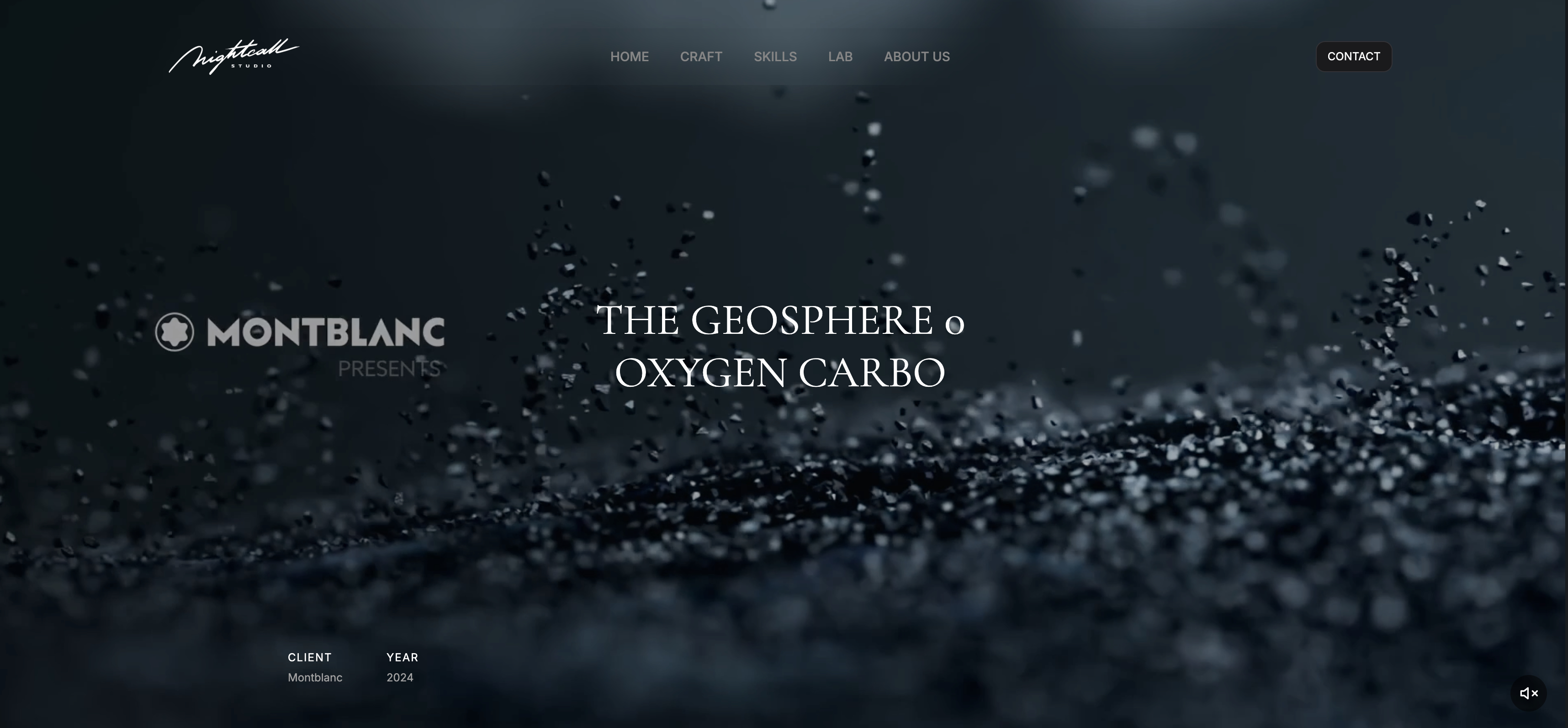
Its Montblanc case study is the model worth copying: the film title across the frame, the Montblanc name beside it, and two plain labels underneath, Client: Montblanc and Year: 2024. Below that sits a playable film and a grid of stills.
On Framekit's Video Review page, Nightcall says it works with brands like Montblanc and Red Bull.
The lessona case study page is a film plus three facts: client, year and what you did. Nightcall shows the first two before the viewer even presses play.
Eline van Hoeydonck: categories labelled with the client
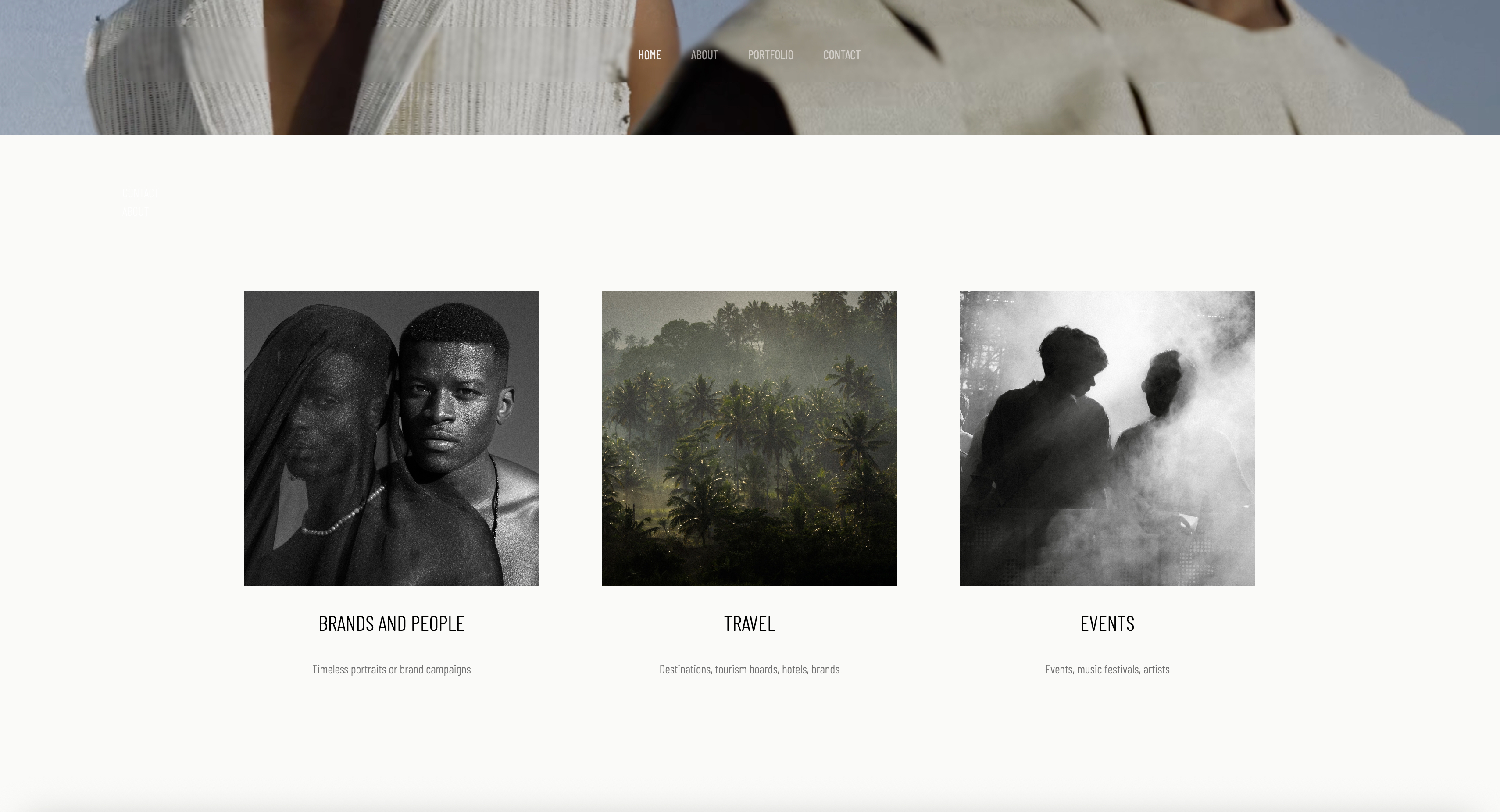
Eline van Hoeydonck's homepage names her in the centre of a full-bleed slider with the line Photographer, Videographer, Editor.
Scroll down and the work splits into three categories, each with a one-line description of who it is for: Brands and People (timeless portraits or brand campaigns), Travel (destinations, tourism boards, hotels, brands) and Events (events, music festivals, artists).
The Eline image higher up this page shows that section.
The lessonlabel categories by client, not by genre. "Tourism boards, hotels, brands" tells a hotel marketer they are in the right place; "Travel" alone does not.
A creative producer's site: the brand above every project
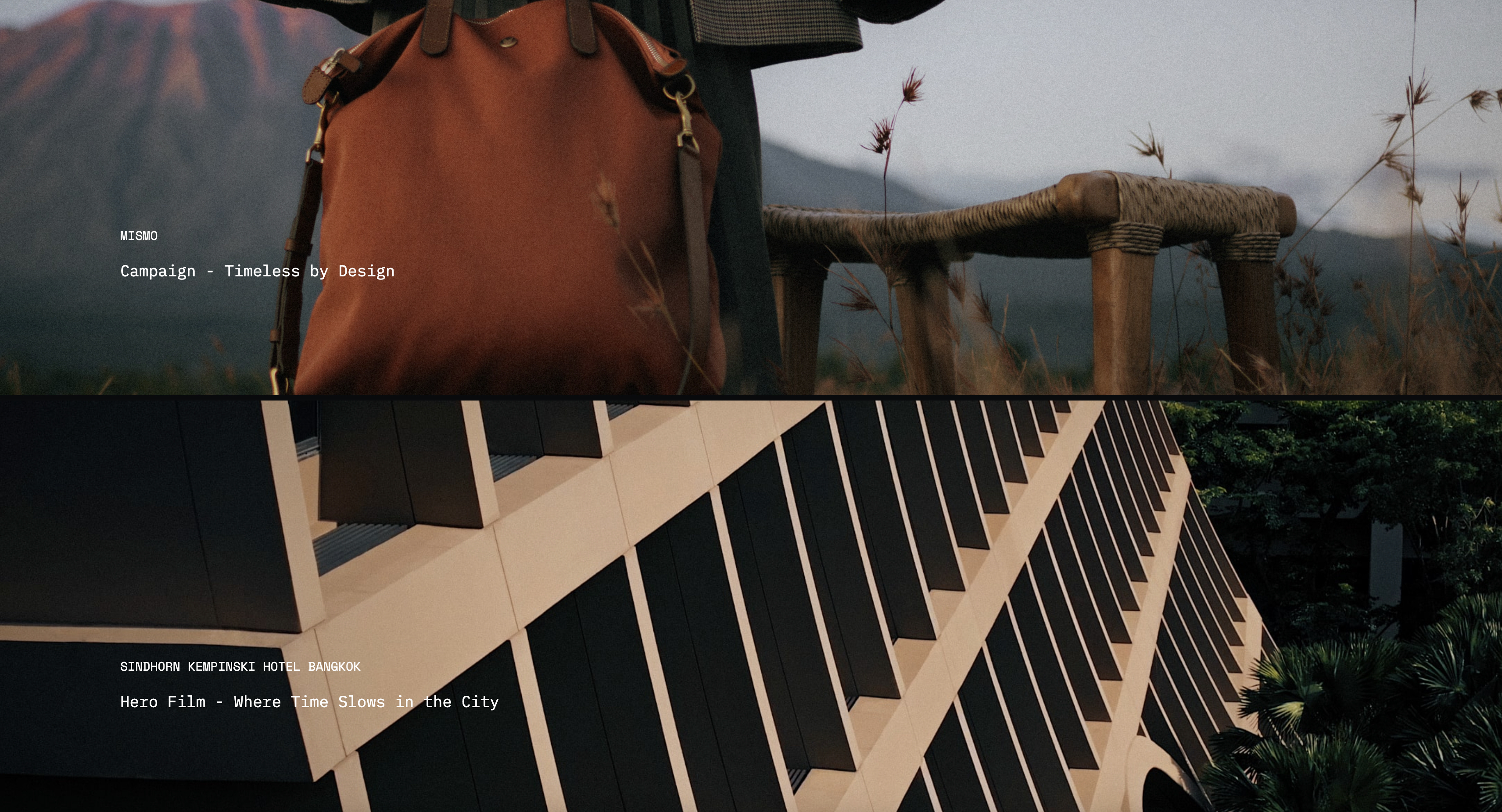
This cinematic site for a creative producer lists its projects as full-width bands, each captioned with the brand in small capitals and the film beneath: MISMO, "Campaign - Timeless by Design"; Sindhorn Kempinski Hotel Bangkok, "Hero Film - Where Time Slows in the City".
The menu reads Home, Portfolio, Contact, About and Our Approach, and each film page opens on a large player with the brand name underneath.
The lesson"Our Approach" as a menu item. Producers and brand managers hire process as much as pictures, and a page that explains how you work answers the question a reel cannot.
Justkay: the portfolio that sells the look
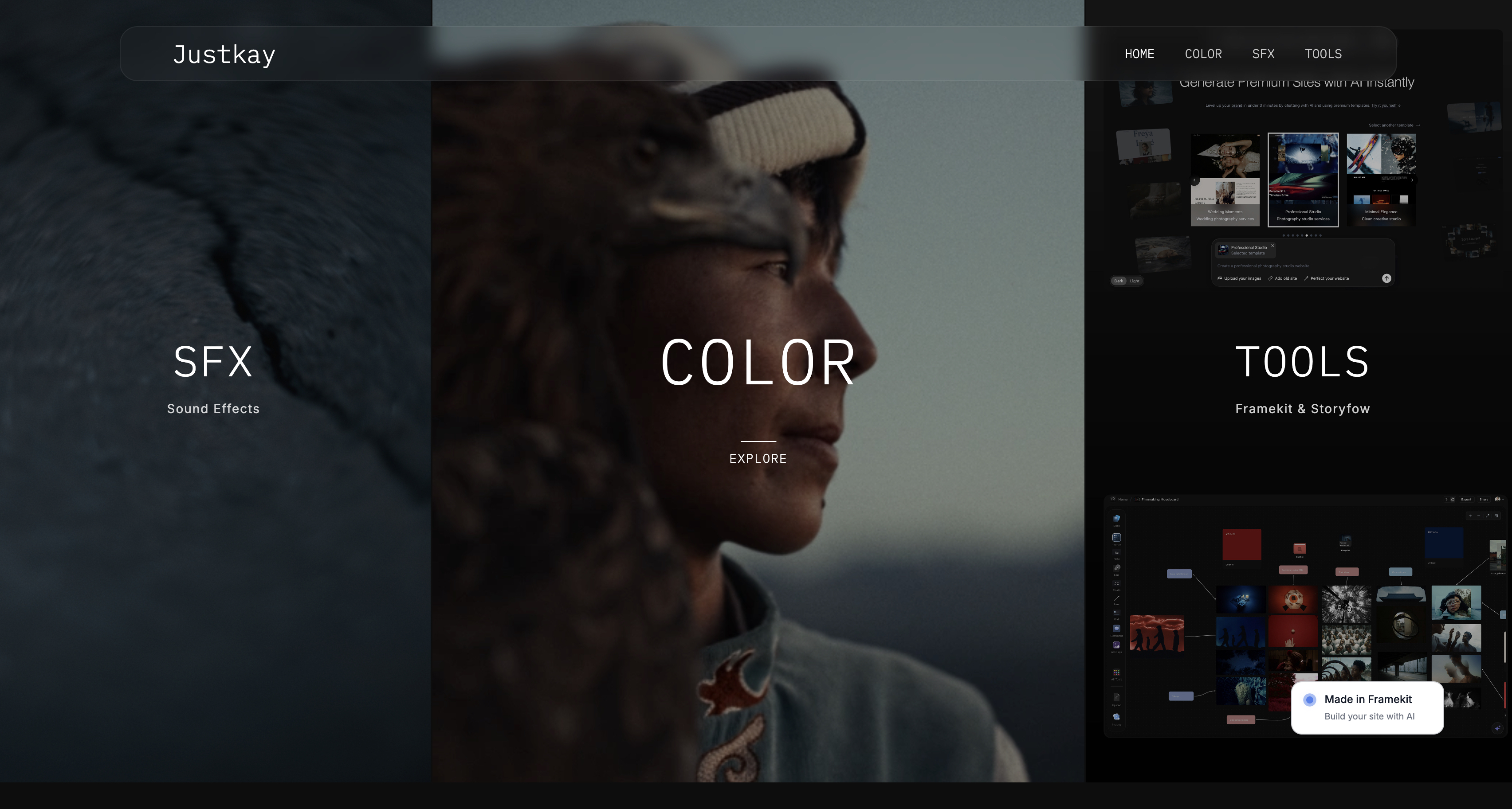
Justkay is a filmmaker's site whose homepage splits into three panels: SFX (sound effects), Color and Tools, matching a menu of Home, Color, SFX and Tools.
Behind those panels sit products: LUT and Powergrade packs for colour, sound effect packs with audio previews, and before-and-after grade comparisons, sold through Framekit's store.
The lessonlike Sam Kolder's LUT pack, this turns a recognisable style into a product, but on your own site. Framekit's store sells digital files only, and the platform fee starts at 5% on Free and Starter and drops to 0% on Business.
Vertakl: case studies with results
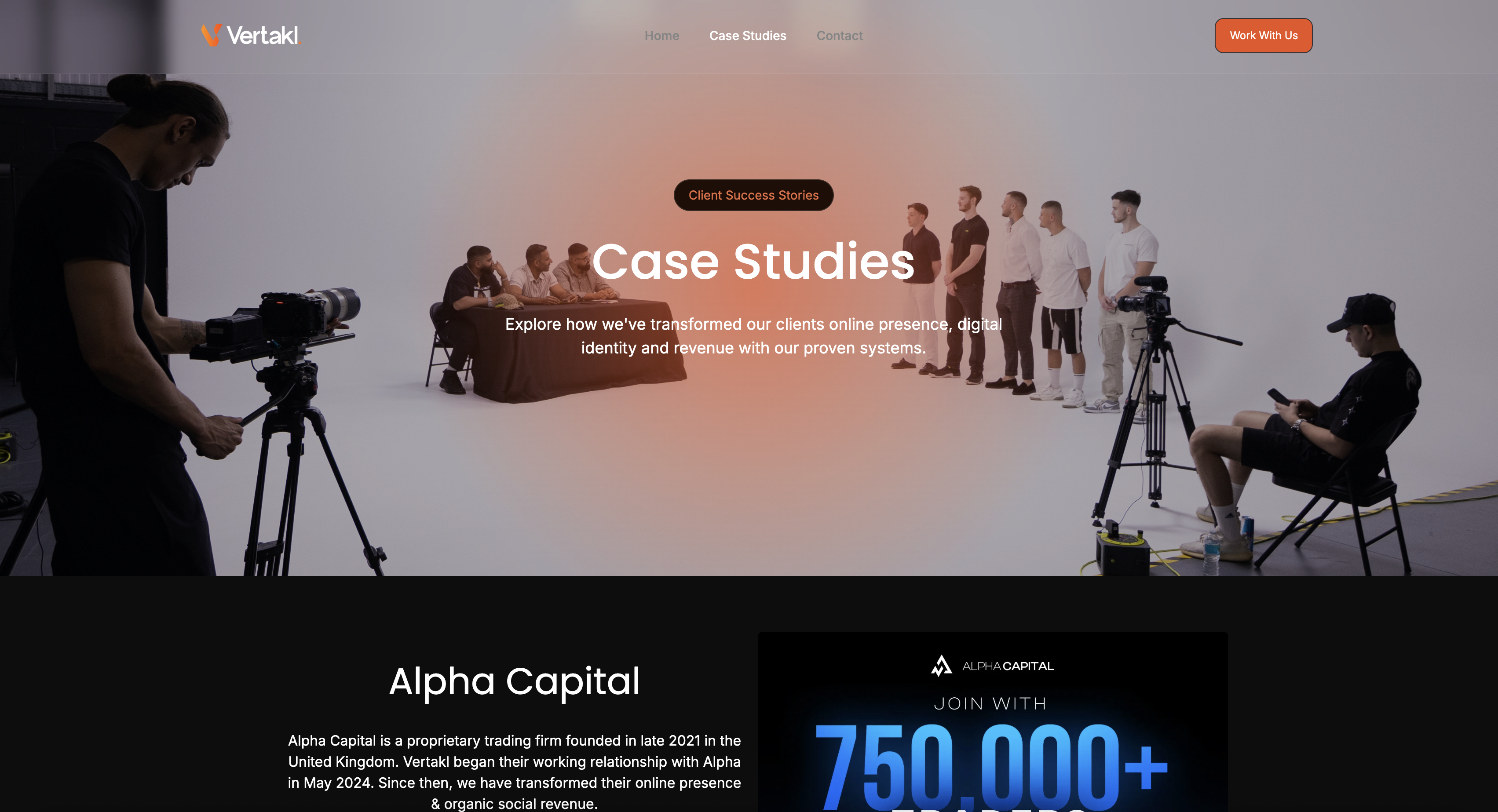
Vertakl is a creative marketing agency by Josh Thornalley.
Its Case Studies page, shown here, opens on a behind-the-scenes photo of a crew filming in a white studio under the label Client Success Stories, then tells each client's story: who they are, when the relationship started, and the results.
The menu is short (Home, Case Studies, Contact) with a Work With Us button.
The lessona behind-the-scenes photo on the case studies page shows the crew and the scale of a shoot, which a finished film hides.
Anatomy of a Videographer Portfolio Website That Gets Enquiries
In one lineacross the 19 examples, a working videographer portfolio website has the same seven parts in roughly the same order, and the order matters more than the design, because each part answers the next question a buyer has before they think to ask it.
| Part | What it does | Rule of thumb | Best example above |
|---|---|---|---|
| Identity line | Says what you are hired for | 3 to 8 words, role plus niche or place | Philip Bloom, Whitehouse Post |
| Hero or reel | Proves the claim in seconds | Strongest shot in the first 10 seconds | Nightcall Studio |
| Sorted work | Sends each buyer to their kind of film | 2 to 4 categories named after clients or formats | Rachel Morrison, Eline van Hoeydonck |
| Case studies | Shows one project in depth | Film, client, year, your role, 3 to 6 stills | Nightcall Studio, Park Pictures |
| Credits and clients | Proves who trusted you | Full credit line per project | Trim Editing |
| Price signal | Filters budgets before the call | Rates page, packages or "from" line | Jason Magbanua, Jake Weisler |
| Enquiry route | Turns interest into a message | One click from every page, split if you have an audience | Brandon Li, Breakwater Studios |
How long should the reel be? Adobe's guide to video reels suggests about two minutes and stresses that the first 10 seconds decide whether anyone keeps watching; it also recommends ending with your name and contact details.
Many working editors cut shorter, and a 60 to 90 second reel of only your best shots is safer than two minutes with one weak clip in it. The rule that matters is the first 10 seconds.
How many projects? Our editorial rule of thumb, not a published standard, is 6 to 9 projects on the main work page, enough to show range and few enough that every one is strong. Past that, split into categories the way Rachel Morrison and Smuggler do.
What goes on a case study? The Nightcall and Park Pictures pattern: the film, the client, the year, your role and a handful of stills. A short line on the brief ("launch film for a new product, three shoot days") adds context that the film alone cannot.
If you want a checklist version of this, our guide to what a filmmaker portfolio should include walks through each section in more detail.
Seven Portfolio Mistakes the Examples Avoid
In one linethe fastest way to improve a videographer portfolio is to remove the things none of the 19 examples do, because most weak portfolios fail on sorting, proof and next steps rather than on the quality of the footage itself.
- A reel that starts with a logo sting. The first 10 seconds belong to your best shot. Put the logo at the end with your contact details.
- One undivided grid of everything. A wedding couple should not scroll past corporate interviews to find a wedding. Sort by client type, as Eline van Hoeydonck and Rachel Morrison do.
- No credits. "Commercial, 2025" says nothing. "Brand, title, your role" is how Park Pictures and Trim Editing caption every piece.
- A contact form buried on one page. Every example keeps the enquiry route one click away, and several print an email address outright.
- Hiding price entirely for consumer work. Couples filter by budget. The three wedding filmmakers above all link to rates or packages.
- Vague claims. "Award-winning" with no award named reads as padding. Breakwater names the award and the year.
- A site that only works on a laptop. Producers open links from a phone between meetings. Check every page, especially the reel, at phone width.
For the wider list of portfolio errors across disciplines, see portfolio mistakes that cost creatives clients.
Build Yours: Where to Make a Videographer Portfolio
In one linethe right builder depends on what the site has to do besides play a reel, so choose by whether you also need client review, delivery galleries, a store or decks, and not by template count, which every option below has plenty of.
| Builder | Best for | Price read on 19 September 2026 | Worth knowing |
|---|---|---|---|
| Framekit | Filmmakers who also deliver, review and sell | Free; Starter $9, Pro $19, Business $39 a month ($7, $15, $31 billed yearly) | Galleries, video review, store and Slides on the same plan |
| Squarespace | Template-led sites with mature blogging and commerce | EUR 11, 17 and 29 a month billed yearly, as listed for European buyers | Plans renamed Basic, Core and Advanced |
| Format | Photographers and filmmakers who want proofing tools | Two-week free trial; prices load in the browser | Sells digital downloads, proofing and contracts |
| Vimeo | A video library that doubles as a showcase | Free with 3 showcases and 1GB total; Starter $12 a month billed yearly | Branded galleries and showcase SEO start on Standard |
| Adobe Portfolio | Creative Cloud subscribers | Included with Creative Cloud, Single App and Photography plans | Custom domains and Behance sync |
| Wix | Broad customisation and add-ons | Light $17.77, Core $29.77, Business $39.77 a month billed yearly | Light includes 2GB of storage |
Framekit: portfolio plus the work around it
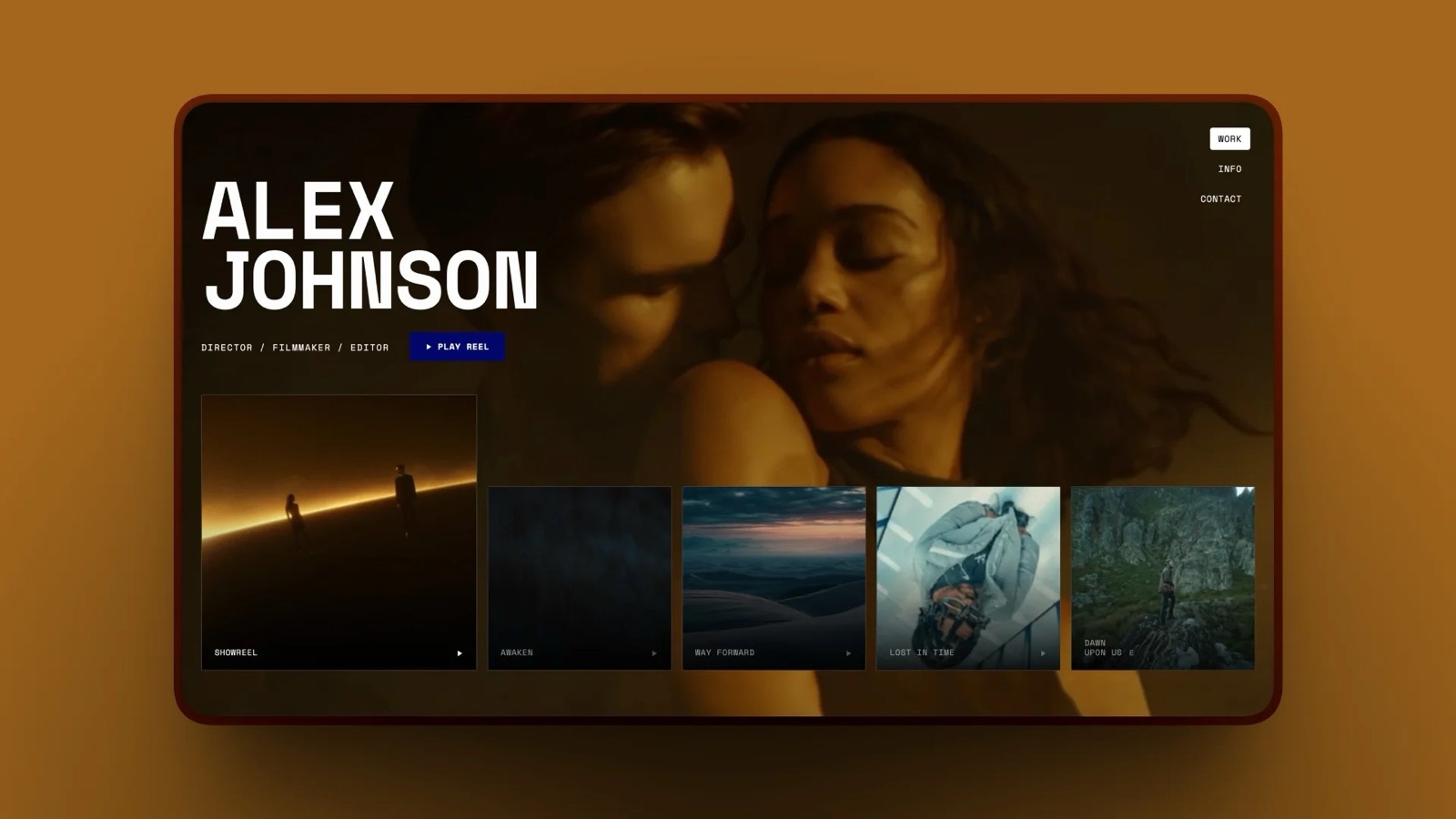
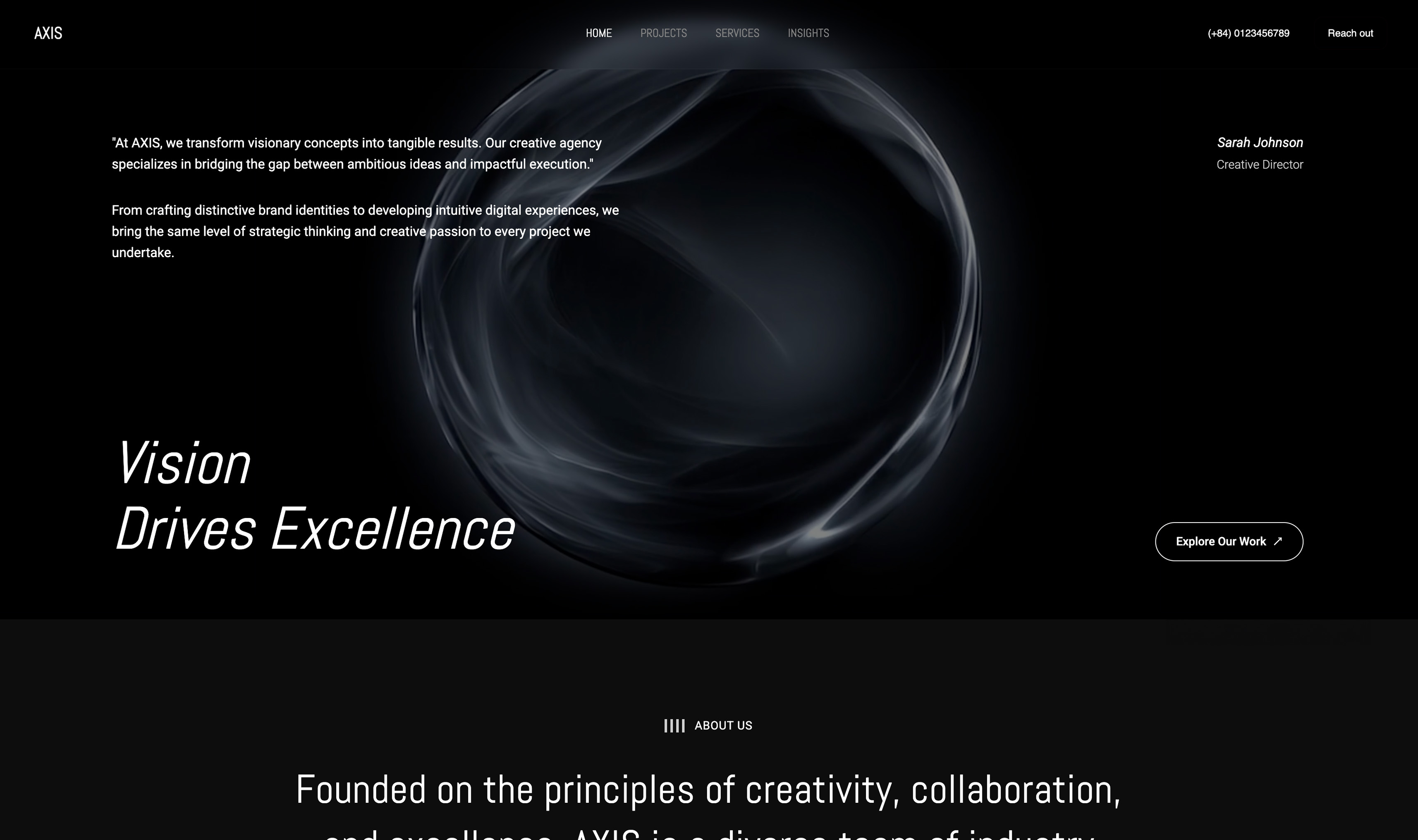
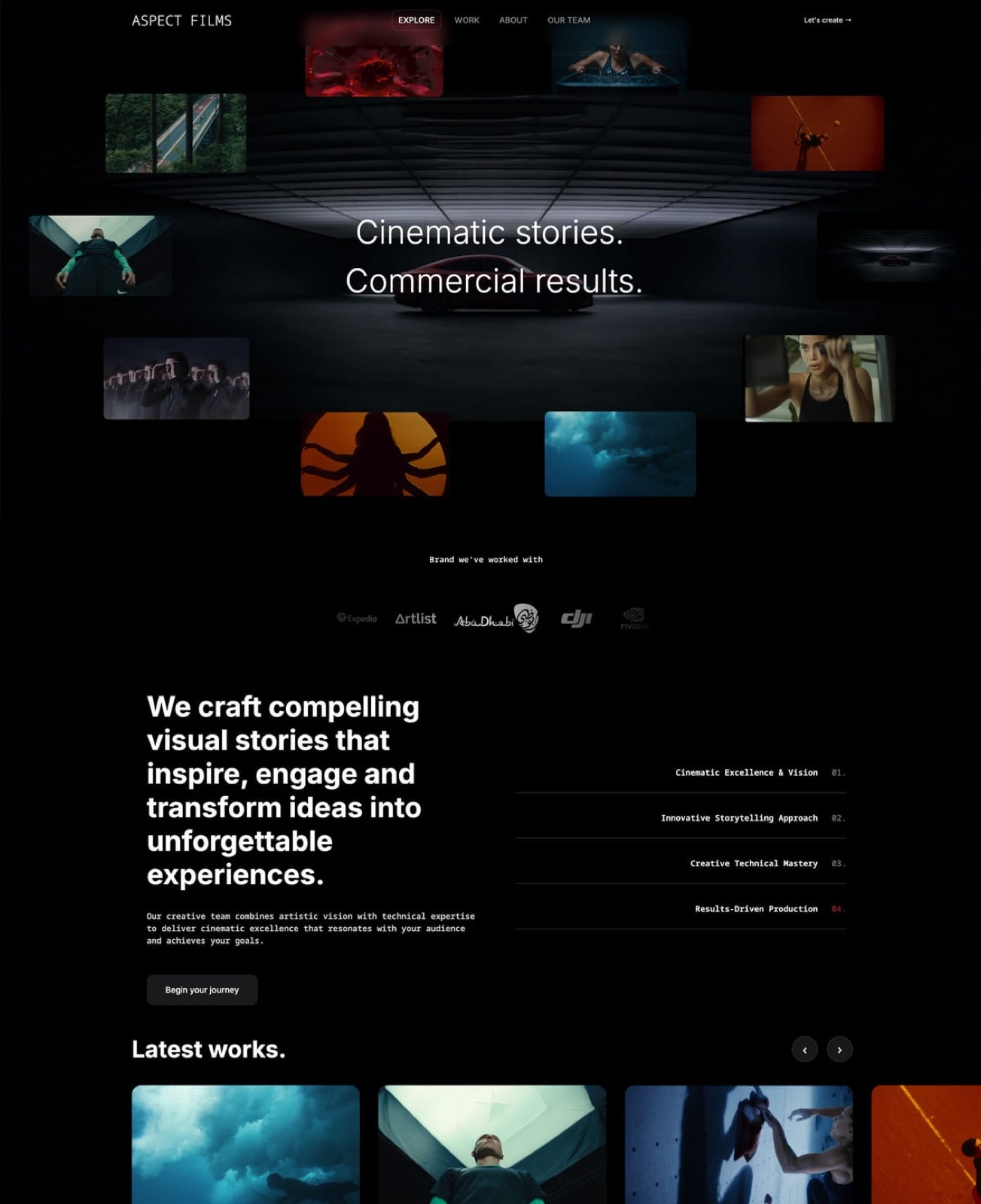
Framekit builds the site with AI in your fonts and colours from a description or a reference image, starting from templates made for filmmakers such as the showreel layout on this post's cover.
Hosting, SSL, SEO controls, analytics and contact and booking forms (submissions land in your dashboard and inbox) come on every plan, including Free; a custom domain needs a paid plan.
What sets it apart for videographers is what sits on the same account: client galleries for photo and video delivery, Video Review for timecoded client notes, a store for LUTs and presets, and Slides for treatments and rate cards.
Where it falls shortstorage is one pool shared across site, galleries and reviews (10GB on Free, 300GB on Pro with 150GB for video), per-video uploads top out at 3GB on Business, and there is no print store, booking calendar or invoicing.
Framekit is not a public video host with an embeddable player for other people's sites; keep Vimeo or YouTube for that.
Squarespace

Squarespace is the familiar template-led choice, with mature blogging and commerce.
Its pricing page showed Basic at EUR 11, Core at EUR 17 and Advanced at EUR 29 a month billed yearly to European buyers in September 2026, with a 14-day free trial.
It is a good fit if the site is mostly a reel, an about page and a blog.
Format
Format is built for photographers and filmmakers, with film portfolio examples, a proofing and client workflow (proofing, contracts, file transfers) and digital download sales.
Its plans page offers a two-week free trial; plan prices load in the browser, so check them there.
Vimeo
Vimeo is not a website builder, but many videographers use a Vimeo showcase as a stopgap portfolio.
The Free plan includes 3 showcases but only 1GB of storage in total, and branded video galleries and showcase SEO start on Standard at $25 a month billed yearly, per Vimeo's pricing.
It is the best place for the video files; it is a thin substitute for a site.
Adobe Portfolio
Adobe Portfolio is included with Creative Cloud, Single App and Photography plans, according to Adobe's Portfolio FAQ, and supports custom domains, password-protected pages and Behance sync.
If you already pay for Premiere Pro, the marginal cost is zero; our review of whether Adobe Portfolio is worth it covers the limits.
Wix
Wix offers the widest customisation of the group.
Its plans page listed Light at $17.77, Core at $29.77 and Business at $39.77 a month billed yearly, with 2GB, 50GB and 100GB of storage respectively, and a 14-day money-back guarantee.
Video-heavy portfolios should watch that 2GB figure on Light.
For a ranked comparison, see the best portfolio website builders for videographers and the best website builders for filmmakers.
Which Portfolio Model Should You Copy?
In one linepick your model by who pays you most often, because the examples above work for their owners precisely because each one is built around a single dominant buyer rather than trying to please every visitor equally.
- Do couples book you directly for weddings? If yes, copy Jason Magbanua or Jake Weisler: films first, rates in the menu, an FAQ. If you want a sharper filter, add a voice like Films by Em. If no, go to question 2.
- Do agencies or production companies hire you as crew (DP, editor, operator)? If yes, copy Trim Editing's credit block and Rachel Morrison's role split. If no, go to question 3.
- Do brands commission you directly? If yes, copy Sandwich's niche sentence and Nightcall's case study page (client, year, film). If no, go to question 4.
- Do you have an audience that buys from you? If yes, copy Sam Kolder or Justkay: portfolio plus a store for the look, and Brandon Li's split enquiries. If no, go to question 5.
- Do you make documentaries or festival shorts? If yes, copy Breakwater: awards on the film card and a licensing contact.
Whichever model you copy, our guide to building a filmmaker website that books clients covers the pages around the portfolio, and showreel hosting platforms covers where the reel file itself should live.
Frequently Asked Questions
What should a videographer portfolio include?
A videographer portfolio should include a one-line identity (role plus niche or location), a short reel with the best shot in the first 10 seconds, work sorted into two to four client-facing categories, case studies with client, year and role, credits, a price signal for consumer work, and an enquiry route one click from every page.
The 19 examples above all follow some version of that order.
How many videos should be in a videographer portfolio?
A videographer portfolio works best with about 6 to 9 projects on the main work page, which is our editorial rule of thumb rather than a published standard. That is enough to show range without diluting quality.
If you have more strong work, split it into categories by client type, as Rachel Morrison and Smuggler do, rather than growing one long grid.
How long should a videographer's showreel be?
Adobe's guide to video reels suggests about two minutes and says the first 10 seconds are crucial, while many editors cut 60 to 90 seconds.
The safe rule is to stop before the first weak shot: a shorter reel of only strong work beats a longer one with filler. Put your name and contact details at the end.
What is the best website builder for a videographer portfolio?
The best builder depends on what else the site must do. Framekit suits videographers who also deliver files, collect client feedback on cuts or sell LUTs, because galleries, video review and a store share one plan from $0.
Squarespace suits template-led sites with a blog, Adobe Portfolio is free for Creative Cloud subscribers, and Format adds proofing tools.
Should videographers put prices on their portfolio?
Wedding and consumer videographers usually should: all three wedding filmmakers in this list link to rates, pricing or packages from the menu or homepage.
Commercial and crew videographers usually quote per job, so a "projects from" line or a rate card sent on request works better than a public price list.
Can I use Vimeo as my videographer portfolio?
Vimeo works as a video library and a stopgap showcase, and its Free plan includes 3 showcases with 1GB of storage in total.
It is not a full website: a showcase is a page of videos, not a multi-page site with an about page, a blog and your own domain structure. Most videographers host the files on Vimeo or a similar service and embed them on their own site.
What is the difference between a video editor portfolio and a videographer portfolio?
A video editor portfolio has to prove who cut what, so credits carry more weight: Trim Editing lists director, editor, production company and agency on every project.
A videographer or DP portfolio leads with images and the reel, and sorts by shoot type. Editors should also show before-and-after or versions where clients allow it.
Do I need a separate site for weddings and commercial work?
Not necessarily. One site with separate sections works if each section has its own reel, examples and enquiry route, as Rachel Morrison's split between directing and cinematography shows.
Separate sites make sense only when the audiences and prices are so different that sharing a homepage confuses both.
What are good videographer portfolio examples to learn from?
Good videographer portfolio examples include Sandwich for niche positioning, Trim Editing for credits, Rachel Morrison for role separation, Jason Magbanua for wedding rates and playlists, Breakwater Studios for award-led proof, and Framekit customer sites such as Nightcall Studio for case study pages and Eline van Hoeydonck for client-labelled categories.
How do I make a videographer portfolio with no clients yet?
Make three to five self-initiated films that look like the work you want to be hired for, label them honestly as personal or spec work (Sam Kolder tags personal films the same way he tags client ones), and write a niche sentence as if you already had clients.
One sharp category beats a scattered grid.
Final Verdict
The best videographer portfolio examples in 2026 are not the most elaborate sites; they are the ones that sort their work for one buyer.
Copy Sandwich for the niche sentence, Trim Editing for credits, Rachel Morrison for splitting roles, Jason Magbanua for putting rates in the menu, and Nightcall Studio for a case study that states client and year before the film plays.
Then check the first 10 seconds of your reel and the enquiry route on a phone.
For building the site itself, Framekit is the better fit when the portfolio also has to deliver files, collect timecoded feedback, sell a look or send a treatment.
Where Framekit loses: it is not a public video host, its video storage is modest next to a dedicated platform, and it has no print store, booking calendar or invoicing, so Framekit is not for a videographer who wants one platform to run bookings and contracts.
Squarespace remains the stronger choice for a blog-first site, and Adobe Portfolio costs nothing extra if you already pay for Creative Cloud.
Related readingwhat a filmmaker portfolio should include, the best portfolio website builder for videographers, the best website builder for video editors, and how to get clients as a videographer.
Build the reel those sites open with using how to make a demo reel, then price the work with the videographer rate card template.