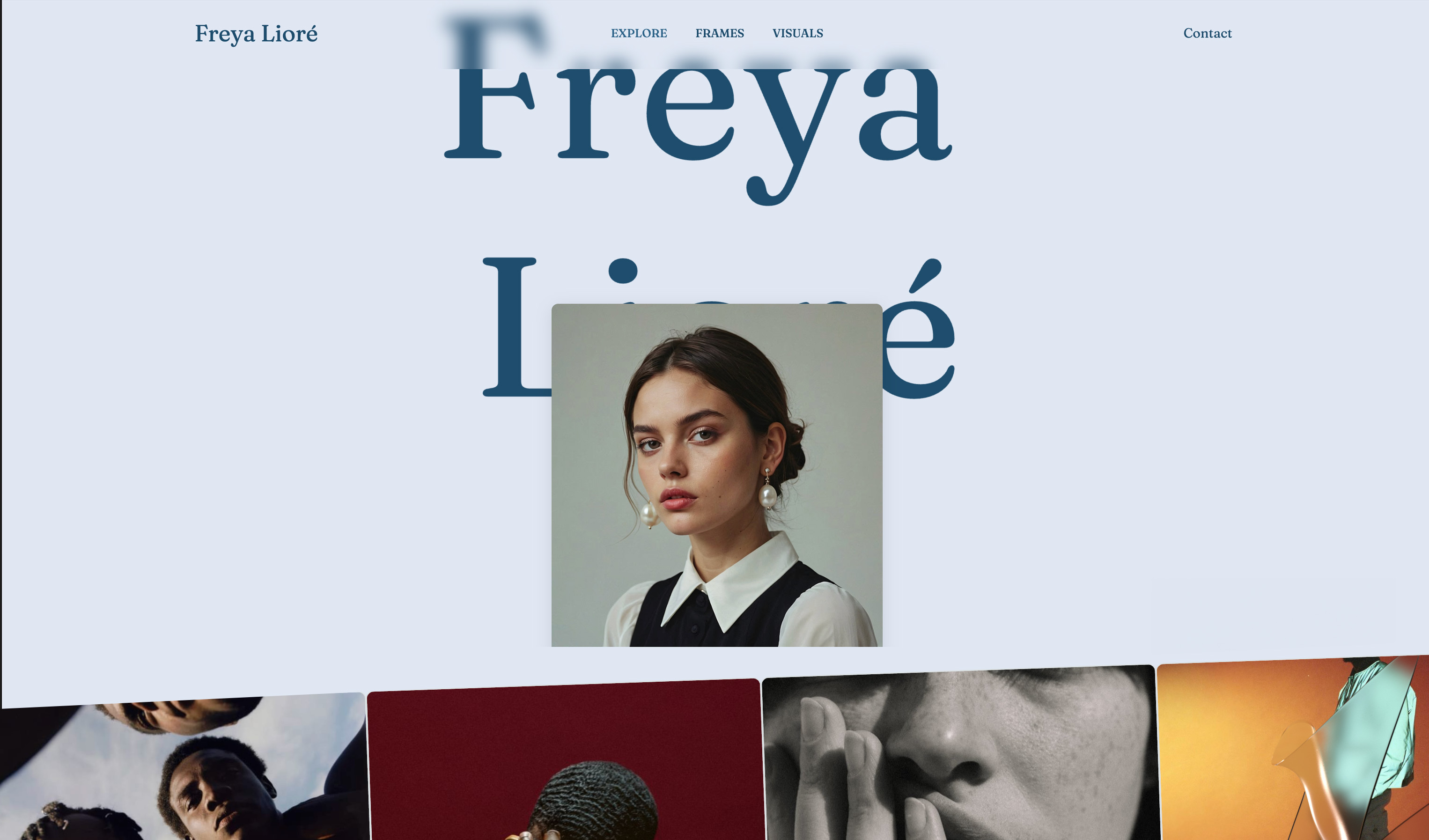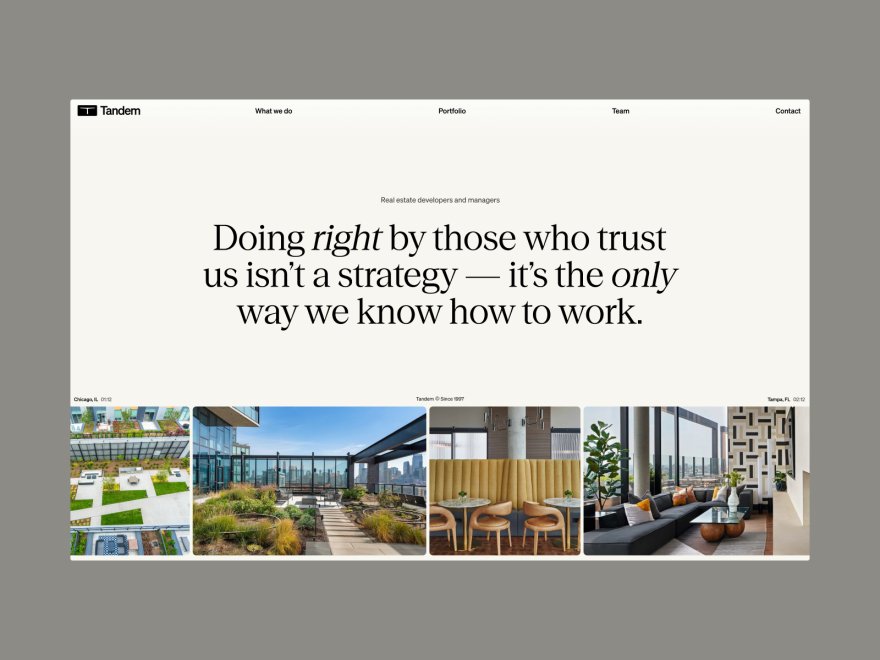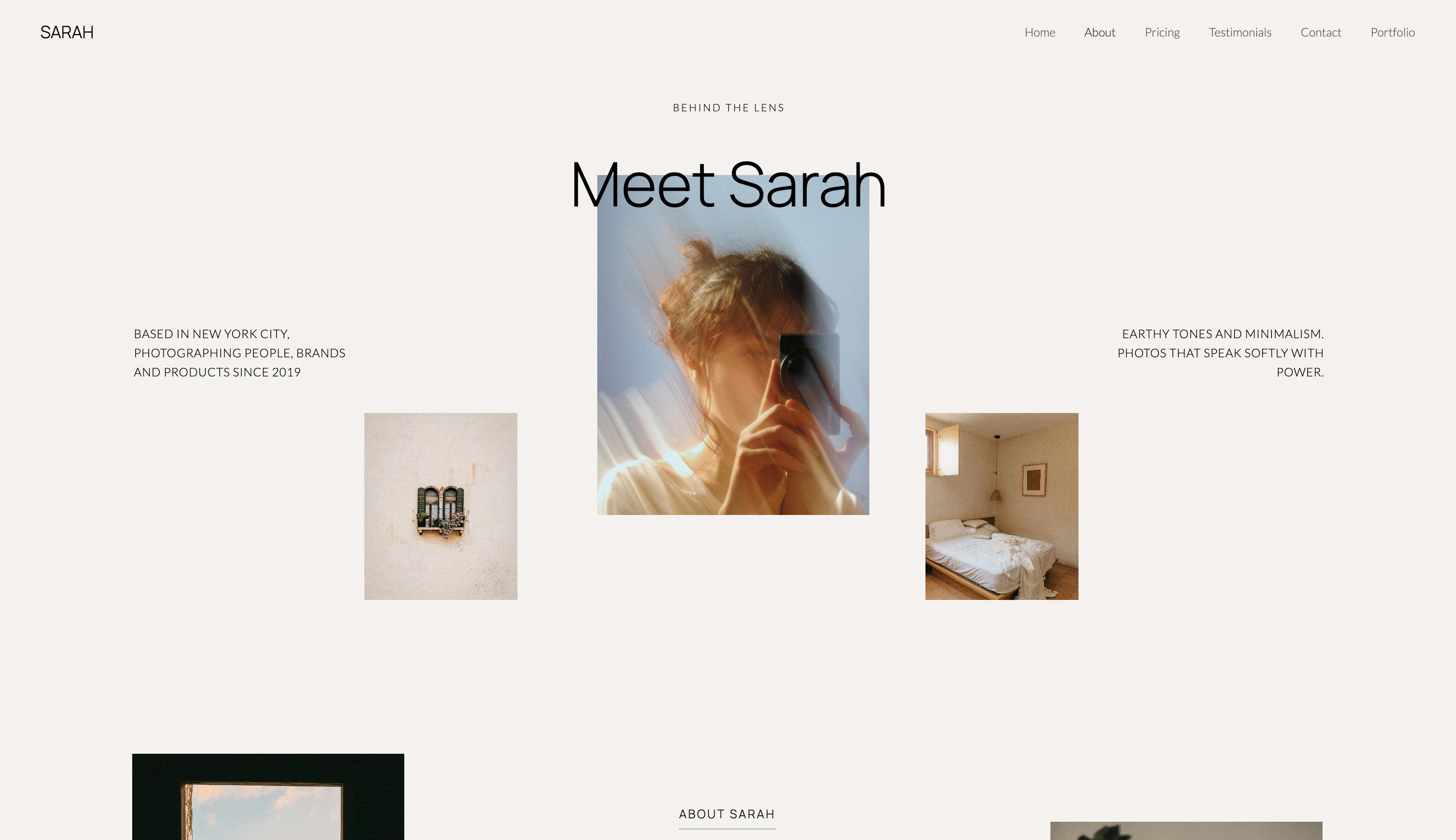
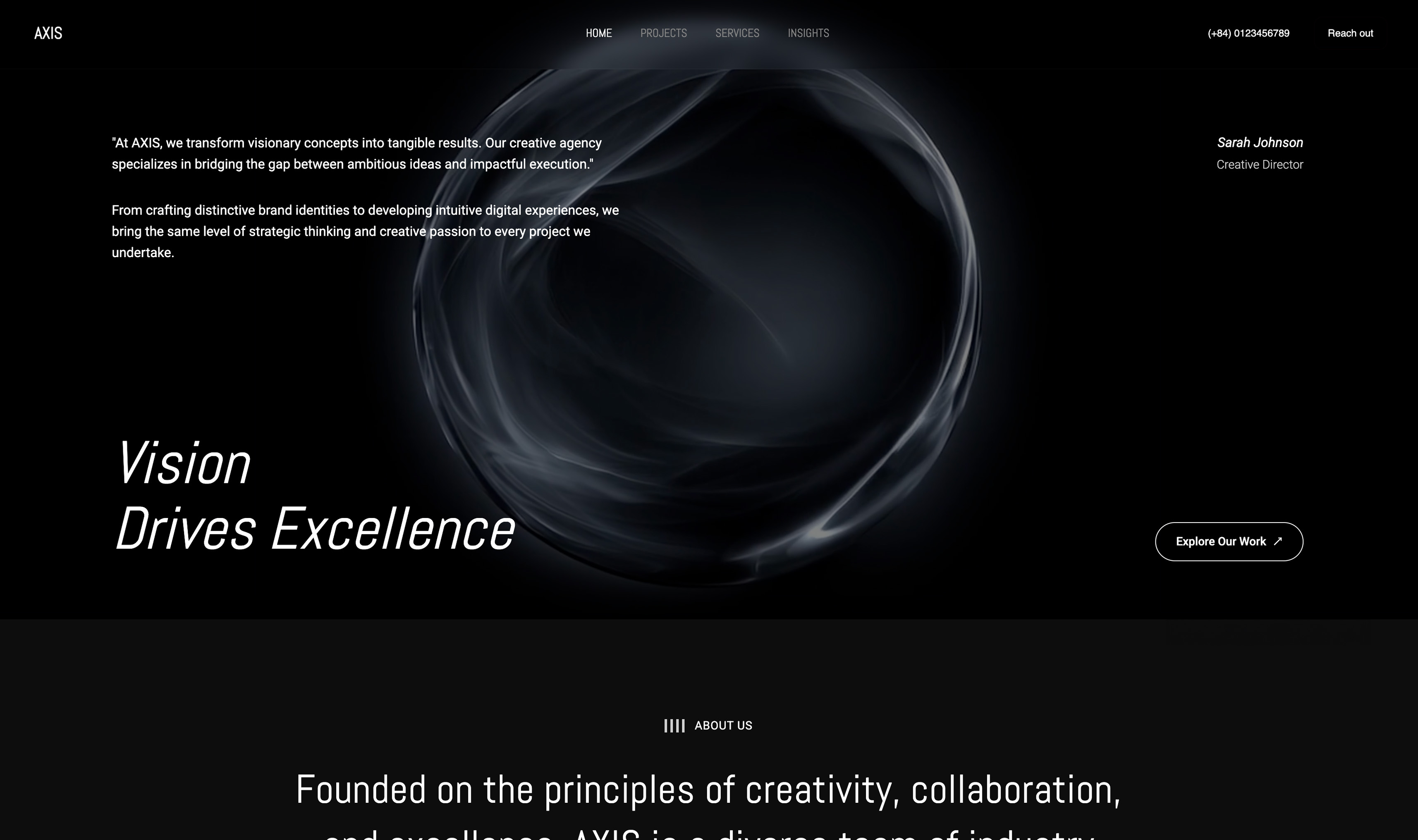
Framekit templates
Start from a designer-made template
 Use template
 Use template
 Use template
 Use template
 Use template
 Use template
 Use template
 Use template
You already pay Adobe every month, so when you noticed Adobe Portfolio was included at no extra cost, building a quick portfolio there felt like the obvious move. It looked clean, it went live fast, and it cost nothing more.
Then the work grew. You wanted to sell a print or a preset pack, and there was no store. You wanted to deliver a client gallery, and there was nowhere to do it.
You wanted a layout the handful of themes did not offer, and you hit the edge of what a bundled tool is willing to do. Free was generous right up until you needed the site to do a job.
That is the honest shape of this comparison: one tool is a free bonus that presents your work, and the other is a paid platform that runs a creative business. Which one wins depends entirely on whether presentation is the whole job.
Included is a wonderful price for a portfolio and a poor reason to cap what your site can become.
Adobe Portfolio is a website builder included free with a Creative Cloud subscription; Framekit is an AI website builder that generates your whole site from a prompt and adds a store and client galleries, where Adobe Portfolio presents a simple portfolio and stops.
Framekit wins for a creative who wants the site to do a job - sell products, deliver client galleries, or grow past a presentation portfolio - because it includes a real store, client galleries, and AI site generation on your own domain.
Adobe's tool wins for a Creative Cloud subscriber who only needs a clean, simple site and nothing more, because it is effectively free and imports straight from Lightroom and Behance. The deciding question is whether you need to sell or deliver, or only to show.
Framekit generates a full site with a store and galleries from a prompt, and the free plan needs no credit card.
Full disclosure: Framekit is our own product, so we have a stake in this comparison. We built the same portfolio on both, checked Adobe Portfolio's features and inclusion against Adobe's own pages in July 2026, and we say plainly where Adobe Portfolio wins: if you already pay for Creative Cloud and only need presentation, it is effectively free and we are not. Read on knowing that.
How We Compared Framekit and Adobe Portfolio
We built the same thing on each - a three-project portfolio, a place to sell one $30 product, and a client gallery to deliver a shoot - and judged them on the five things that decide whether a creative site earns its keep.
What we checked against primary sources rather than tested: Adobe Portfolio's Creative Cloud inclusion and feature limits, read from Adobe's own pages in July 2026 and linked below.
Design and flexibility. How much you can shape the site, and how modern and distinctive the result looks.
Ownership. Whether the site and content are yours on your own domain.
Selling. Whether you can run a real store for prints, downloads, or products.
Client galleries and delivery. Whether you can deliver client work from the same site.
Cost. What each actually costs, including the Creative Cloud subscription Adobe Portfolio rides on.
Framekit vs Adobe Portfolio at a Glance
The short version: Adobe's tool does presentation, cleanly and for free-with-Creative-Cloud; Framekit does presentation plus the parts of a creative business it leaves out.
| Feature | Framekit | Adobe Portfolio |
|---|---|---|
| Type | AI website builder | Portfolio builder bundled with Creative Cloud |
| Site generation | From a prompt or a screenshot | From templates |
| Custom domain | Yes, on the $9 Starter plan | Yes |
| Online store | Yes, digital products at 5% to 0% | No |
| Client galleries | Yes, on every plan | No |
| Templates and control | AI-drafted, editable, flexible | A handful of clean themes |
| Best for | A creative business that sells or delivers | A simple Creative Cloud portfolio |
| Price | Free, then $9/mo | Free with a paid Creative Cloud plan |
Inclusion, features, and limits confirmed against Adobe's Creative Cloud plans and the Adobe Portfolio site in July 2026.
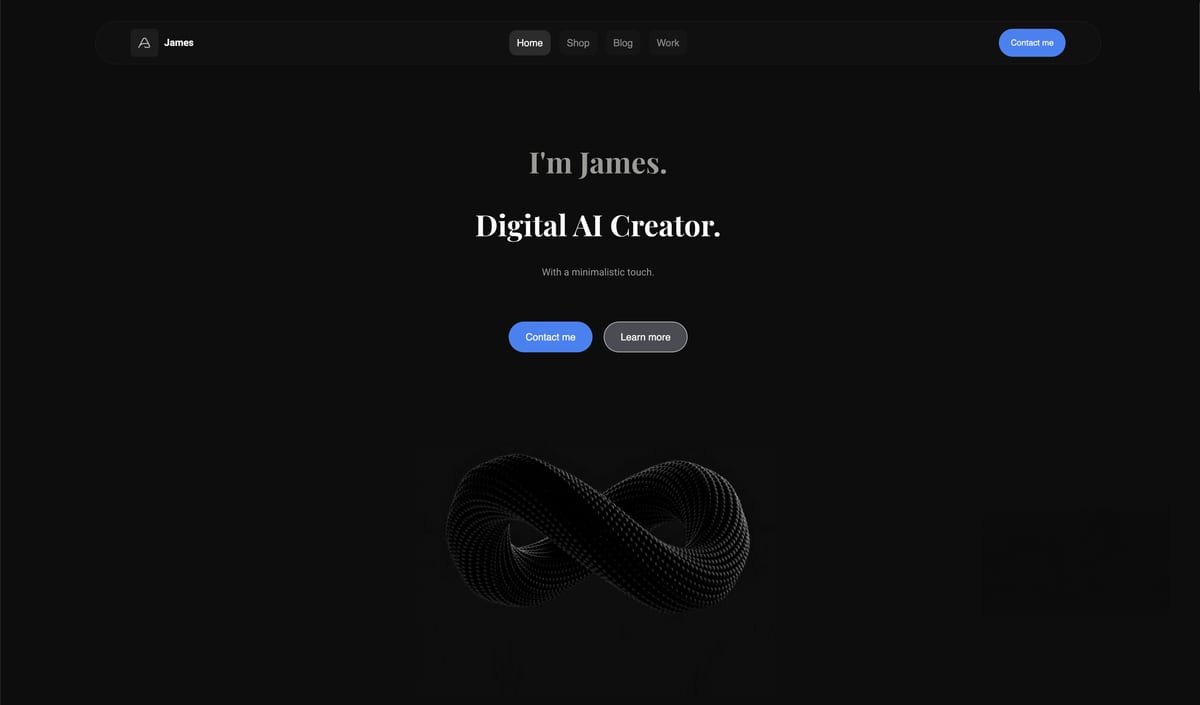
Design and Flexibility: AI Drafts vs. a Handful of Themes
In one lineAdobe Portfolio gives you a few clean themes to fill in; Framekit generates a full, editable site from a description, so you start from something closer to what you wanted and can shape it further.
Adobe Portfolio's design is deliberately narrow.
It offers a small set of tasteful themes, you pick one and drop your work in, and the result is clean but recognizably an Adobe-made site - which is fine when you want simple and safe, and limiting when you want distinctive or specific.
There is little room to shape layout beyond the theme's rules.
Framekit starts differently: you describe the site you want, or upload a screenshot of a look you like, and it drafts the whole thing - pages, layout, structure - which you then edit block by block.
The ceiling is higher and the starting point is closer to your intent, so a site that needs to look like your brand rather than a template has somewhere to go.
The trade is that it is a paid tool, where Adobe Portfolio rides on a subscription you may already have.
Ownership: Both Give You a Domain, One Gives You a Business
In one lineboth let you use a custom domain, so both are more owned than a social profile - but Framekit owns the whole creative business, where Adobe Portfolio owns only the presentation.
On the narrow question of the domain, the two are even: Adobe Portfolio supports a custom domain, and so does Framekit on the Starter plan, so with either your site reads as yours rather than a subdomain.
That already puts both ahead of a Behance or Instagram profile for owning your name.
The difference is what lives on that domain. With Adobe's tool, it is a presentation - your work, shown.
With Framekit, it is your work plus a store plus client galleries, so the domain hosts the whole operation: showing, selling, and delivering.
If your site is only ever a presentation, that extra scope is unused; the moment it needs to transact or deliver, Adobe Portfolio sends you to other tools while Framekit keeps it on your domain.
Selling: A Real Store vs. No Store
In one lineFramekit includes a real store for digital products at a fee that starts at 5% and drops to 0%; Adobe Portfolio has no store at all, so selling means leaving the site.
This is the starkest gap. Adobe Portfolio does not sell.
There is no cart, no product pages, no checkout - if a visitor loves your work and wants to buy a print or a preset pack, the best Adobe Portfolio can do is link them to a separate platform, where you pay that platform's cut and hand your customer to someone else's brand.
Framekit includes a store on the same site. A $30 preset pack sold through Framekit nets about $28.50 on the free plan (5% fee) and the full $30 minus processing on the Business plan (0% fee), and the buyer never leaves your domain.
For a creative who sells anything - presets, templates, downloads, digital art - this alone decides it: a site that sells beats a site that only shows.
See our guide to selling art online from your own website.
Client Galleries: Delivering Work vs. Only Showing It
In one lineFramekit includes client galleries to deliver shoots with passwords and downloads; Adobe Portfolio has no client-delivery system, so photographers pair it with a separate gallery tool.
If you photograph clients, delivery is half the job, and Adobe Portfolio does not do it. It can password-protect a page, but it has no client-gallery workflow - no proofing, no favorites, no full-resolution downloads or ZIPs built for handing a shoot to a paying client.
Framekit includes client galleries on every plan, so the same site that shows your work also delivers the wedding, the headshots, or the branding shoot, on your own domain.
For a photographer, that turns two subscriptions and two brands into one. See how photographers use client gallery platforms.
Cost: Free-With-Something vs. Free-Then-Cheap
In one lineAdobe Portfolio is free only if you already pay for Creative Cloud, which starts at about $10 a month; Framekit is free to start and $9 a month for a custom domain, so the real cost depends on what you already subscribe to.
Adobe Portfolio's price is the honest hook here.
It is genuinely free - but only as part of a Creative Cloud subscription, which starts around $10 a month for the Photography plan and more for the full suite, per Adobe's published pricing.
If you already pay for Creative Cloud to edit, the portfolio truly costs nothing extra. If you do not, then it is not a free website - it is a reason to pay for Creative Cloud.
Framekit is free to start on a subdomain, and $9 a month on Starter for a custom domain, which is roughly the same as the Creative Cloud Photography plan Adobe Portfolio rides on - except Framekit's plan is the whole site, store, and galleries, not a portfolio bundled with photo-editing you may or may not use.
The honest way to compare is by what you already pay: if Creative Cloud is a sunk cost, Adobe Portfolio's portfolio is free; if it is not, the two cost about the same, and Framekit does far more.
Who Should Pick Which
In one linepick Adobe Portfolio if you are a Creative Cloud subscriber who needs a simple portfolio and nothing more; pick Framekit if you need the site to sell, deliver, or grow.
Choose Adobe Portfolio if all four of these are true: you already pay for Creative Cloud, you only need to present your work, you are happy within a handful of clean themes, and you will never sell or deliver from the site.
For that person, it is a genuinely good, genuinely free portfolio, and paying for anything else would be waste.
Choose Framekit if any one of these is true: you want to sell prints, presets, templates, or downloads; you deliver client galleries; you want a more distinctive or flexible site than a theme allows; you do not subscribe to Creative Cloud; or you expect the site to grow into a business.
For that person - which is most working creatives - the store, the galleries, and the flexibility are worth the $9 a month, because Adobe Portfolio simply cannot do those jobs.
Frequently Asked Questions
Is Framekit or Adobe Portfolio better in 2026?
It depends on what the site has to do.
Framekit is better for a creative business that needs to sell products, deliver client galleries, or grow past a presentation portfolio, because it includes a store, client galleries, and AI site generation on your own domain.
Adobe Portfolio is better for a Creative Cloud subscriber who only needs a clean, simple portfolio, because it is effectively free with that subscription and imports from Lightroom and Behance.
The deciding question is whether you need to sell or deliver, or only to show your work.
Is Adobe Portfolio really free?
Adobe Portfolio is free only as part of a paid Creative Cloud subscription - it is not sold separately and there is no standalone free tier.
So if you already pay for Creative Cloud to use Photoshop or Lightroom, the portfolio costs nothing extra, which is a genuinely good deal.
If you do not subscribe to Creative Cloud, Adobe Portfolio effectively costs the price of the cheapest plan that includes it, around $10 a month for the Photography plan.
Framekit, by contrast, has a standalone free plan and a $9-a-month plan for a custom domain.
Can you sell products on Adobe Portfolio?
No. Adobe's tool has no built-in store, cart, or checkout, so you cannot sell prints, downloads, or products directly from it - you would link out to a separate platform and pay that platform's fee.
This is the biggest functional gap versus a builder like Framekit, which includes a store for digital products at a fee that starts at 5% and drops to 0%.
If selling from your site matters at all, Adobe Portfolio is the wrong tool, and a builder with commerce built in is the right one.
See our guide to how to start selling digital products.
Does Adobe Portfolio have client galleries?
No. Adobe Portfolio can password-protect a page, but it has no client-gallery system for delivering shoots - no proofing, favorites, full-resolution downloads, or ZIP delivery built for paying clients.
Photographers who use Adobe Portfolio for their public site pair it with a separate gallery tool for delivery, which means two subscriptions and two brands.
Framekit includes client galleries on every plan, so the same site presents your portfolio and delivers client work from one owned domain.
Framekit vs Adobe Portfolio: which is better for photographers?
For photographers who deliver client work or sell prints and downloads, Framekit is better, because it pairs the portfolio with client galleries and a store on one owned domain, which Adobe Portfolio cannot do.
For a photographer who only wants to present a portfolio and already pays for Creative Cloud to edit, Adobe Portfolio is a fine, free choice.
The split comes down to delivery and selling: if your photography business needs either, Framekit does it in one place; if it needs neither, Adobe Portfolio's free portfolio is enough.
See our best website builders for photographers.
Can I move my Adobe Portfolio site to Framekit?
Not with a one-click import, because the two tools build sites differently, so moving means rebuilding the pages in Framekit and pointing your domain at it.
In practice this is quick, because Framekit generates a draft site from a prompt or a screenshot, so you can recreate your portfolio's structure fast and then add the store and galleries Adobe Portfolio never had.
Keep your images and copy, describe the site to Framekit, and refine the draft. It is a natural moment to add selling and delivery to a site that could only present before.
Is Adobe Portfolio good for a simple portfolio?
Yes, for a simple portfolio Adobe Portfolio is a solid, clean choice, especially if you already pay for Creative Cloud.
Its themes are tasteful, it imports directly from Lightroom and Behance, and it gets a presentation site live quickly at no extra cost.
Its limits - no store, no client galleries, few themes, little design control - only matter when you need the site to do more than present.
If simple presentation is genuinely all you want and Creative Cloud is already in your budget, it is hard to beat on price. If you want room to sell, deliver, or grow, a full builder is worth the small cost.
Which has better design, Framekit or Adobe Portfolio?
Framekit offers more design flexibility, because it generates an editable site from your description and lets you shape layout block by block, where Adobe Portfolio limits you to a handful of clean but fixed themes.
Adobe Portfolio's designs are tasteful and safe, which suits people who want simple and are happy to look like a well-made template.
Framekit suits people who want a site that looks like their brand rather than a theme, and who will edit the AI draft to get there. For distinctiveness and control, Framekit; for clean-and-simple with zero effort, Adobe Portfolio.
The Verdict: Framekit vs Adobe Portfolio in 2026
Framekit and Adobe Portfolio are not really competing for the same job. Adobe Portfolio is a free bonus that presents your work cleanly; Framekit is a paid platform that runs a creative business - showing, selling, and delivering from one site you own.
Framekit wins for most working creatives, because most creatives eventually need the site to do more than show: to sell a product, deliver a client gallery, or look like their own brand rather than a template.
It does those on your own domain, from a site an AI drafts for you, starting free and $9 a month for a custom domain.
Where Framekit loses: if you already pay for Creative Cloud and only ever need a simple portfolio, Adobe Portfolio is effectively free and we are not, and paying for a fuller builder would be spending for capability you will not use.
We will not pretend otherwise - for pure, free, Creative-Cloud presentation, Adobe Portfolio is the right call.
So the honest rule: only to show, and already paying Adobe, choose Adobe Portfolio. Anything more - sell, deliver, grow, or stand out - choose Framekit.
For more, read our best Adobe Portfolio alternatives, the best website builders for creative professionals, our best Behance alternatives, and best Cargo Collective alternatives.
Or compare more head-to-heads: Framekit vs Framer, Framekit vs Format, and Framekit vs Pixieset.