Framekit templates
Start from a designer-made template
 Use template
 Use template
 Use template
 Use template
 Use template
 Use template
 Use template
 Use template
You spent three weekends recording a modular rig, editing 240 one-shots, tuning every kick, and designing artwork that does not look like a stock template. The pack is genuinely good.
Then you list it, and the platform takes a slice you never see itemised, hands the buyer's email address to nobody, and the whole thing is over in one transaction that teaches you nothing about who bought it.
Sample packs are close to the ideal digital product. No inventory, no shipping, no support burden, infinite copies, and a buyer who comes back when the next one drops. The only variable that matters is where you sell them, and that decision quietly sets your margin for years.
The pack is the hard part. The platform is the part you can change on a Tuesday.
A sample pack platform is a marketplace or storefront that licenses a bundle of audio files, loops, one-shots, MIDI, or presets to producers on your behalf.
The two species work in opposite directions: a marketplace supplies the buyers and keeps a share, while your own storefront keeps nearly all of the money and supplies no buyers at all.
The best place to sell sample packs in 2026 is your own storefront if you have any audience at all, and Framekit is the cheapest way to run one, where a $29 pack nets about $26.41 on the free plan and $27.86 on the $39 Business plan against $25.60 on Gumroad and $23.20 on Bandcamp.
If you have no audience, Splice has by far the most producers, though its per-download rate is not published and has been publicly disputed.
BeatStars is the best producer marketplace, Gumroad is the simplest at 10% plus $0.50 a sale, and Lemon Squeezy is the right pick if you want VAT handled for you.
The honest trade-off with selling direct: Framekit brings you no buyers at all.
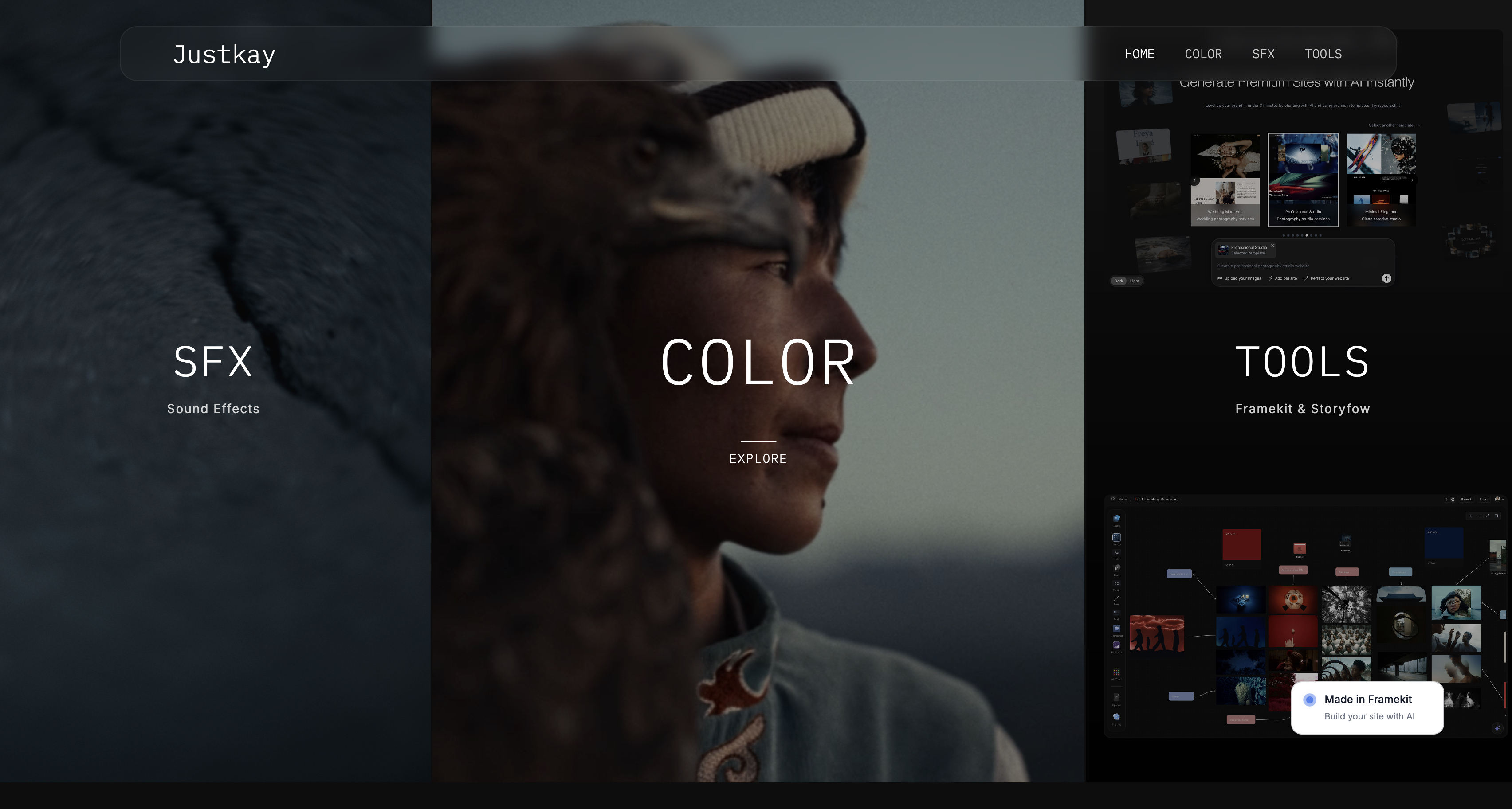
Framekit is an AI website builder with a store for digital files built in, so a sample pack sits on the same site as your work, and the free plan needs no credit card.
Full disclosure: Framekit, ranked #1 below, is our own product. We built or listed the same pack across these platforms, verified every fee against the platform's own published pricing in July 2026, and we link to all twelve. Where they beat us: Splice and BeatStars put your sounds in front of producers who are already shopping, which we cannot do; Lemon Squeezy acts as merchant of record and handles EU VAT, which we do not; Bandcamp has a music-buying audience we have no equivalent to; and Sellfy and Payhip Pro reach 0% fees without the plan price we charge for it. Read the ranking with that in mind.
How We Compared These Sample Pack Platforms
Sample platforms are usually compared on catalogue size, which matters to buyers and not to you. We scored twelve on five criteria that decide what a pack actually earns.
Fee on a sale, weighted 30%. What the platform keeps, including processing where it is bundled. This carries the most weight because it applies to every sale forever and is the one term you can act on today.
Reach, weighted 25%. Does the platform put your pack in front of producers who were not looking for you? This is the only thing a marketplace sells that you cannot build yourself in a weekend.
Ownership of the customer, weighted 20%. Do you get the buyer's email address and the right to tell them about the next pack?
Payout speed and terms, weighted 15%. How long from sale to money, and what the minimum threshold is.
Effort to run, weighted 10%. Listing, keywording, licence handling, and how much of your studio time the platform consumes.
The carried example throughout is a $29 sample pack, which is a realistic mid-market price, and a producer selling 300 packs a year. We hold both figures in every section.
Three kinds of finding, kept separate. What we handled hands-on: listing packs, setting prices, and running the buyer flow through checkout.
What we verified from primary sources rather than testing: every fee, checked against the platform's own published pricing page in July 2026 and linked inline.
What we report as community sentiment rather than our own measurement: Splice's effective per-download earnings, which the company does not publish and which producers have publicly disputed, and the BeatStars buyer-side service charge, which sellers describe but which is not stated as a percentage on the pricing page.
What Comparing 12 Sample Pack Platforms Showed
The numbers underneath the ranking, verified against each platform's published pricing in July 2026 except where flagged.
- On the carried $29 pack, the spread between the best and worst outcome is $4.66, which is 16% of the sale price.
- 4 of 12 can reach a genuine 0% platform fee: Framekit at $39 a month, Payhip Pro at $99, Sellfy on its paid plans, and BeatStars, which states sellers keep 100% via PayPal.
- Bandcamp's revenue share applies only to the first $100 of an item, which means a $150 deluxe bundle is charged as though it cost $100.
- Bandcamp's payment processing runs 4% to 6% rather than the usual 2.9%, because small transactions carry the fixed component badly.
- Splice does not publish a per-download rate, and its royalty model drew sustained public criticism from contributors across 2024 and 2025.
- Gumroad charges 10% plus $0.50 per direct sale, and 30% on any sale its Discover marketplace sends you, which is the fee most sellers do not realise they are opting into.
For a pick matched to where you are, jump to the decision tree. First, the field.
The 12 Best Places to Sell Sample Packs in 2026: Full Comparison
Reading the scores: the five weights above are the measure, and fee carries the heaviest because it is the term that compounds across every pack you will ever release.
Our own entry is not a clean sweep and should not be. Framekit takes 10 on fee and customer ownership and 2 on reach, the lowest score on any criterion anywhere in this comparison. Splice inverts it at 10 on reach and 3 on fee transparency.
Those two rows contain the entire decision.
| Platform | Fee on a sale | Publishes its rate | Reach | You keep the buyer | Our Rating |
|---|---|---|---|---|---|
| Framekit (your own store) | 5% down to 0% | Yes | None | Yes | 9.0/10 |
| BeatStars | 0% to sellers via PayPal | Partly | High for producers | Partly | 8.6/10 |
| Payhip | 5% free, 2% Plus, 0% Pro | Yes | None | Yes | 8.4/10 |
| Gumroad | 10% plus $0.50, 30% via Discover | Yes | Light | Yes | 8.3/10 |
| Lemon Squeezy | About 5% plus $0.50 | Yes | None | Yes | 8.1/10 |
| Splice | Not published | No | Highest here | No | 7.9/10 |
| Bandcamp | 15%, 10% after $5,000 | Yes | Music buyers | Partly | 7.7/10 |
| Sellfy | 0% on paid plans | Yes | None | Yes | 7.5/10 |
| Ko-fi | 5% free, 0% on Gold | Yes | Light | Yes | 7.3/10 |
| ADSR Sounds | Negotiated, not published | No | Producer audience | No | 7.0/10 |
| Loopmasters | Negotiated, not published | No | Established audience | No | 6.9/10 |
| Sample Focus | Free marketplace listing | Partly | Discovery only | No | 6.4/10 |
Fees verified against each platform's published pricing page in July 2026. Payment processing of roughly 2.9% plus $0.30 applies on top wherever the platform quotes a fee separately.
What a $29 sample pack actually leaves you
This is the comparison the category needs. Same pack, same price, twelve outcomes.
| Where you sell it | Platform fee | Processing | You receive |
|---|---|---|---|
| Framekit, Business plan | 0% | 2.9% plus $0.30 | About $27.86 |
| Sellfy, paid plan | 0% | 2.9% plus $0.30 | About $27.86 |
| Payhip Pro | 0% | 2.9% plus $0.30 | About $27.86 |
| Lemon Squeezy | 5% plus $0.50 | Included | About $27.05 |
| Payhip Plus | 2% | 2.9% plus $0.30 | About $27.28 |
| Framekit, free plan | 5% | 2.9% plus $0.30 | About $26.41 |
| Payhip free, and Ko-fi free | 5% | 2.9% plus $0.30 | About $26.41 |
| Gumroad, direct sale | 10% plus $0.50 | Covered | About $25.60 |
| Bandcamp, after $5,000 | 10% | 4% to 6% | About $24.65 |
| Bandcamp, before $5,000 | 15% | 4% to 6% | About $23.20 |
Splice, ADSR, Loopmasters, and Sample Focus are absent from this table on purpose: they pay from pools or negotiated splits rather than a per-sale percentage, so putting them in the same column would compare different units.
The subscription trap worth checking. Payhip Pro and Sellfy reach 0% for $99 and about $29 a month. At 300 packs a year, Payhip Pro costs $1,188 to save $435 in fees. Do that arithmetic before upgrading anywhere, including with us.
1. Framekit: Best if you have any audience
Our rating: 9.0/10
Framekit is an AI website builder with a store for digital files, which makes it the cheapest place on this list to sell a pack and the one that will sell none if nobody knows you exist.
Both of those are true at once, and any recommendation that gives you the first without the second is not being straight with you.
Setting up the test pack took about fifteen minutes.
Describing the project in a prompt produced a site with sections for the work and a store area already structured, and adding the pack meant uploading the ZIP, writing a description, setting $29, and connecting Stripe.
The detail that matters for producers specifically: because the store lives inside the same site as the rest of your work, a visitor who arrived to hear your sound design passes the pack on the way, which is a path no marketplace offers because on a marketplace nobody arrives for you.
Best forProducers and sound designers with an existing audience from YouTube, Instagram, a Discord, a mailing list, or client work.
Key features:
- A store for digital downloads on a site you own, with the fee dropping from 5% to 0% on the $39 Business plan
- Your sounds sit inside your own site rather than in a marketplace listing
- You set price, licence terms, and keep the buyer relationship
- Client galleries on every plan, useful for sending work-in-progress privately
- Generated by Cadence, Framekit's own premium model, with Score for faster iterations
The real numberthe carried $29 pack nets about $26.41 on the free plan after the 5% fee and roughly 2.9% plus $0.30 in processing, and about $27.86 on the $39 Business plan where the fee is 0%.
The crossover where a flat $39 a month beats a 5% cut is $780 a month in sales, so at 300 packs a year, which is about $725 a month, the free or Starter plan is still the right answer and we would rather say so than sell you a tier you do not need.
PricingFree $0, Starter $9 a month, Pro $19 a month, Business $39 a month, Enterprise $59 a month, with product fees of 5%, 5%, 3%, 0%, and 0%.
Pros:
- Among the lowest total cost per sale in this comparison, and 0% is genuinely reachable
- You keep the buyer, so the next pack has a list to launch to
- Store and portfolio on one domain from $0
Cons:
- No discovery: producers do not browse individual creators' sites the way they browse Splice
- Not a merchant of record, so EU VAT is your responsibility rather than the platform's
- No built-in licence templates, so you write your own terms
Skip it ifyou have no audience yet. This is the most important sentence here. A pack that earns a fraction of a cent per download on Splice, ten thousand times, beats a pack that earns $27.86 zero times. Build the audience first, or run a marketplace alongside from day one.
Verdict: Framekit is the best place to sell sample packs for a producer people already follow, and the worst for one starting from nothing. Most working sound designers should run both. Start free at framekit.ai, or see the wider field in our best website builders to sell digital products comparison.
2. BeatStars: Best producer marketplace
Our rating: 8.6/10
BeatStars is where producers already are. It began as a beat marketplace and now carries sound kits, sample packs, loops, and vocals, and its audience is specifically people making music who are already in a buying mindset.
For a producer with no list, that is worth more than any fee advantage.
The fee structure is the thing to read carefully, and the reading is more interesting than the headline. BeatStars states that sellers keep 100% of their music sales when paid via PayPal, and its seller plans are unusually cheap.
What producers describe separately is a service charge added at checkout, paid by the buyer, which sellers can choose to absorb instead. The fee did not disappear; it changed who is billed for it.
Best forProducers who want to be inside a marketplace of buyers and want the seller-side percentage as close to zero as possible.
The real numberBeatStars seller plans are Starter at $19.99 a year, Growth at $59.99, and Professional at $179.88, per BeatStars pricing, which makes Starter the cheapest annual platform cost in this entire comparison at about $1.67 a month.
The company states sellers keep 100% of sales via PayPal.
Producers separately report a service charge at checkout that the buyer pays, so confirm the current structure before setting your price, and note that the number we have seen circulated for it is not stated on the pricing page.
PricingStarter $19.99 a year, Growth $59.99 a year, Professional $179.88 a year, all billed annually.
Pros:
- An audience of producers who are already shopping for sounds
- The cheapest annual platform cost here at $19.99
- Seller-side commission stated as 0% via PayPal
Cons:
- The checkout service charge shifts cost to the buyer rather than removing it
- PayPal dependency for the 0% arrangement
- Your listing sits next to thousands of competing kits
Skip it ifyour buyers are film and TV sound people rather than beat producers. The audience is specific and that specificity is the whole product.
Verdict: BeatStars is the best marketplace here for a producer without a list, and the fee story rewards reading past the headline rather than accepting it. Visit BeatStars
3. Payhip: The cleanest fee ladder
Our rating: 8.4/10
Payhip is a dedicated digital storefront with the most legible pricing in this comparison: three tiers, identical features on all of them, and the only difference is the transaction fee.
No feature gating, no upsell mechanics, no discovering that downloads are capped on the plan you chose.
It is a storefront rather than a website, so it sits alongside whatever you use for your actual presence rather than replacing it.
Best forProducers who want a simple, honest storefront and are happy for it to be separate from their main site.
The real numberPayhip is free with a 5% transaction fee, $29 a month with 2%, and $99 a month with no transaction fee, per Payhip pricing, with all features on every tier.
The Pro plan is worth modelling rather than assuming: at 300 packs a year at $29, the 5% you would pay on the free plan is $435, and Pro costs $1,188, so the free plan wins until you are selling roughly three times that volume.
PricingFree with 5% fee, Plus $29 a month with 2%, Pro $99 a month with 0%.
Pros:
- The most transparent pricing structure in this comparison
- Every feature on every plan, including the free one
- Genuinely usable free tier with no product limits
Cons:
- A storefront rather than a site, so you still need a home for your work
- The 0% tier is expensive enough that most sellers should stay free
- Minimal discovery
Skip it ifyou want the store inside your own website rather than beside it. See our best Payhip alternatives guide for that comparison.
Verdict: Payhip is the most honestly priced pure storefront here, and the tier most people should choose is the free one. Visit Payhip
4. Gumroad: The simplest listing
Our rating: 8.3/10
Gumroad remains the fastest way to put a sample pack on the internet and take money for it. Upload, price, publish, share the link. Nothing here has less friction, and for a producer who wants the pack live tonight, that is a legitimate reason to choose it.
Its direct rate is 10% plus $0.50 and that covers payment processing, where most other platforms quote a fee and add roughly 2.9% plus $0.30 on top. The rate worth knowing is the second one: a sale arriving through Gumroad's Discover marketplace is charged at 30%, not 10%.
Best forProducers who want a pack listed in ten minutes with no setup and will accept a flat rate for it.
The real numberGumroad charges 10% plus $0.50 per direct sale, with processing covered, so the carried $29 pack pays about $25.60.
Against Payhip's free 5% plus processing at about $26.41 the difference is 81 cents per sale, or $243 across 300 packs a year.
If the buyer arrived through Gumroad Discover the rate is 30% instead, which turns the same sale into about $20.30.
Pricingfree to start, 10% plus $0.50 per direct sale with processing covered, and 30% on Discover-attributed sales.
Pros:
- The lowest-friction path from file to sale anywhere here
- The direct rate covers processing, so there is no second fee to add
- Light discovery through Gumroad's own browse and its creator network
Cons:
- The rate never falls, whatever your volume
- Discover-attributed sales are charged at 30%, three times the direct rate
- Your product page is a Gumroad page carrying Gumroad branding
Skip it ifyou sell at volume. A rate that never drops is the one structure that punishes success. See our best Gumroad alternatives comparison when that starts to bite.
Verdict: Gumroad is the right first listing and the wrong permanent home, and the rate to watch is not the 10% but the 30% on anything Discover sends you. Visit Gumroad
5. Lemon Squeezy: Best if you want VAT handled
Our rating: 8.1/10
Lemon Squeezy's differentiator is not the fee, it is the legal position.
It acts as merchant of record, meaning it is the seller of record on the transaction and handles sales tax and EU VAT registration, remittance, and invoicing on your behalf.
For a producer selling into Europe, that removes a genuine compliance headache that most platforms hand straight back to you.
That service is what the fee buys, and judged as a tax service rather than as a checkout it is priced reasonably.
Best forProducers selling internationally who do not want to think about VAT registration and remittance.
The real numberLemon Squeezy charges roughly 5% plus $0.50 per transaction with processing included, so the carried $29 pack pays about $27.05.
That is better than Gumroad and slightly behind Payhip Pro, and it includes tax compliance that would otherwise cost you either an accountant or a genuine risk.
The fixed 50 cents hurts more on cheap products: on a $5 loop pack it is 10% on its own.
Pricingabout 5% plus $0.50 per transaction, merchant of record.
Pros:
- Merchant of record, so EU VAT and sales tax are handled for you
- Processing included in the quoted rate
- Strong checkout with subscription support if you sell a pack series
Cons:
- The fixed 50 cents is punitive on low-priced products
- No discovery at all
- More platform than a solo producer selling three packs a year needs
Skip it ifyou sell cheap single loops. The fixed component dominates at low prices. See our Lemon Squeezy versus Framekit comparison for the head-to-head.
Verdict: Lemon Squeezy is worth its fee specifically for international sellers who value not thinking about tax, and overpriced for a domestic producer selling cheap packs. Visit Lemon Squeezy
6. Splice: The most reach, the least transparency
Our rating: 7.9/10
Splice is the largest audience in this comparison by a wide margin. Its subscribers download samples as part of a monthly plan, and contributors are paid per download from that revenue.
For a producer whose sounds are genuinely good and who has no list, no other platform puts your work in front of that many people.
The reason it does not rank higher is that you cannot know what you will earn.
Splice does not publish a per-download rate, and the model attracted sustained public criticism from contributors across 2024 and 2025, with several going public about the gap between expected and actual earnings.
Best forProducers with no audience whose sounds can carry volume, and who accept an undisclosed rate in exchange for reach.
The real numberthere is not one we can verify, and that is the finding.
Splice pays a per-download amount that it does not publish, which means the carried $29 example does not apply: buyers do not pay $29 for your pack, they pay a subscription and pull individual sounds.
Contributor criticism of the rate was widely reported, including by Music Business Worldwide in its coverage of Splice's creator payment model.
Model your expectations on other contributors' public figures rather than on any percentage.
Pricing for contributorscurated submission, per-download payment from subscription revenue, rate not published.
Pros:
- By far the largest producer audience in this comparison
- Downloads are not gated by your price, so volume can be enormous
- Payment extends to AI-generated variations of your sounds
Cons:
- The per-download rate is not published, so earnings cannot be modelled
- Contributors have publicly disputed the rate
- You do not get the buyer, and your pack is unbundled into individual sounds
Skip it ifyou need predictable income or you want your pack experienced as a pack. Splice sells sounds, not collections.
Verdict: Splice is the reach play and the least knowable deal here, which makes it a reasonable second channel and a poor thing to build a business on alone. Visit Splice
7. Bandcamp: The music-buying audience
Our rating: 7.7/10
Bandcamp is unusual here because its audience arrives intending to pay musicians.
If your sample packs sit alongside releases, a Bandcamp page lets an existing music following buy sounds from you without learning a new platform, and the culture genuinely supports paying more than the asking price.
Its fee structure has two details almost nobody publishes, and both matter.
Best forProducers who already release music on Bandcamp and want packs in the same place as the records.
The real numberBandcamp takes 15% on digital items, dropping to 10% once you pass $5,000 in sales and staying there if you exceed $5,000 in any twelve-month period, per Bandcamp's fee documentation.
Two details worth knowing: payment processing runs 4% to 6% rather than the usual 2.9%, and the revenue share applies only to the first $100 of an item, so a $150 deluxe bundle is charged as though it cost $100.
On the carried $29 pack you receive about $23.20 before the threshold and about $24.65 after it.
Pricing15% on digital, 10% after $5,000 in sales, 10% on physical, plus 4% to 6% processing; revenue share capped at the first $100 of an item.
Pros:
- An audience culturally disposed to paying artists directly
- The revenue share is capped at the first $100 of an item, which favours expensive bundles
- Bandcamp Friday waives the platform share entirely on the day
Cons:
- 15% before the threshold is the highest headline rate here
- Processing at 4% to 6% is well above the usual card rate
- Built for music releases, so sample packs sit slightly awkwardly
Skip it ifyou have no music presence there. Bandcamp works because of an audience you either have or do not.
Verdict: Bandcamp is excellent if you already sell records there and a strange choice if you do not, and its $100 cap makes it quietly the best place here to sell an expensive bundle. Visit Bandcamp
8. Sellfy: 0% fees on a subscription
Our rating: 7.5/10
Sellfy is a tidy all-in-one storefront with no transaction fee on its paid plans, plus email marketing and print-on-demand merch if you want physical products alongside the packs. For a producer who also sells shirts, having both in one place is genuinely convenient.
There is no free plan, only a trial, so the decision is a subscription commitment from day one.
Best forProducers who sell physical merch alongside digital packs and want one storefront for both.
The real numberSellfy charges 0% transaction fees on its paid plans, which run from roughly $29 a month, so you keep the full price minus only card processing.
The arithmetic that matters: at 300 packs a year at $29, a 5% fee elsewhere costs $435 while Sellfy costs about $348 a year, so Sellfy wins at that volume and loses below roughly 240 packs a year.
Pricingfrom about $29 a month, 0% transaction fees, no free plan.
Pros:
- 0% transaction fees on all paid plans
- Print-on-demand merch alongside digital products
- Email marketing built in
Cons:
- No free plan, only a trial
- The subscription costs money in months you sell nothing
- Minimal discovery
Skip it ifyour sales are seasonal or unpredictable. A fixed subscription against variable income is a bad shape for most producers.
Verdict: Sellfy is a good fit for a producer with steady volume and merch, and a poor one for someone releasing two packs a year. Visit Sellfy
9. Ko-fi: Best for a small catalogue alongside support
Our rating: 7.3/10
Ko-fi is built around fans supporting creators, and its shop is a natural extension of that rather than a serious storefront. For a producer with a following that already tips or subscribes, adding packs to the same page is frictionless and costs almost nothing.
It is not a place to run a catalogue. The presentation is a creator page, not a product catalogue, and it will feel thin the moment you have more than a handful of items.
Best forProducers with a supporter following who want to offer a few packs without running a store.
The real numberKo-fi's free plan takes 0% on donations and about 5% on shop sales, and Ko-fi Gold removes most fees for a low monthly price.
On the carried $29 pack the free plan leaves about $26.41 after processing, which is level with Payhip's free tier, and Gold makes sense only if you are selling regularly enough for 5% to exceed the subscription.
Pricingfree with about 5% on shop sales, Ko-fi Gold removes most fees for a low monthly fee.
Pros:
- Combines tips, memberships, and product sales on one page
- Free tier with a modest fee
- Very quick to set up
Cons:
- A creator page rather than a product catalogue
- Minimal presentation control for a serious pack listing
- Discovery is limited to your own audience
Skip it ifpacks are your main product. Ko-fi treats them as an extra because that is what it was designed for.
Verdict: Ko-fi is a fine place to put two packs next to a tip jar and the wrong place to build a sound library. Visit Ko-fi
10. ADSR Sounds: A producer-focused retailer
Our rating: 7.0/10
ADSR is a specialist retailer for sample packs, presets, and plugins, with an audience of producers who arrive already shopping for exactly what you make.
Being listed on a curated specialist store carries a credibility signal that a general checkout does not, and its audience converts well for the right material.
Like most specialist retailers, its contributor split is arranged rather than published.
Best forProducers with polished, genre-specific packs who want placement on a specialist store.
The real numberADSR's contributor revenue split is negotiated rather than published, so we cannot state a figure and will not invent one.
What you should do is ask for the split in writing before submitting, ask specifically whether it applies before or after discounting, since specialist retailers discount heavily, and ask what happens to your rate during sales events.
Pricing for contributorsnegotiated split, not published.
Pros:
- A specialist audience already shopping for sample content
- Curation acts as a quality signal for your pack
- Marketing and promotion the platform runs on your behalf
Cons:
- Revenue split not published, so earnings cannot be modelled up front
- Heavy discounting can erode your effective rate
- You do not get the buyer
Skip it ifyou need to know your rate before committing work. Ask first.
Verdict: ADSR is a reasonable additional channel for genre-specific packs, and one where you should get the split in writing before you upload anything. Visit ADSR Sounds
11. Loopmasters: The established name
Our rating: 6.9/10
Loopmasters has been selling sample content since long before most of this list existed, and its label imprint carries recognition among producers who have been buying samples for a decade.
For a producer whose ambition is a label-style release rather than a self-published pack, that recognition is the product.
The trade is the traditional one: the label handles production standards, artwork, marketing, and distribution, and it takes a share that is agreed privately.
Best forProducers seeking a label-style release with production support and an established brand behind it.
The real numberas with ADSR, Loopmasters arranges contributor splits privately rather than publishing them, so no percentage should be quoted for it, including on this page.
Treat a Loopmasters release the way you would treat a record deal: read the terms, ask about discounting and bundle inclusion, and understand that catalogue inclusion in subscription products may pay differently from individual pack sales.
Pricing for contributorsnegotiated split, not published.
Pros:
- A recognised name in sample content with a long track record
- Production, artwork, and marketing support
- Distribution into established retail channels
Cons:
- Terms are private and vary by release
- Bundle and subscription inclusion may pay differently from direct sales
- The slowest route from finished pack to published
Skip it ifyou want to publish this month. Label timelines are label timelines.
Verdict: Loopmasters suits a producer who wants a release rather than a listing, and the terms deserve the same scrutiny you would give any label agreement. Visit Loopmasters
12. Sample Focus: Free listing and discovery
Our rating: 6.4/10
Sample Focus is a free sample marketplace where producers upload individual sounds and users search and download them. As a place to earn from a paid pack it is weak, and as a place to be discovered by producers browsing for a specific sound it has genuine value.
Treat it as a marketing channel rather than a revenue one, which is how the producers who get value from it use it.
Best forProducers using free individual sounds as a route to their paid catalogue.
The real numberSample Focus is built around free sample listings, so the direct revenue from it is close to zero by design.
Its value is measured in traffic rather than payouts, which makes it a top-of-funnel tool: upload a handful of genuinely useful free sounds, credit your paid pack in the description, and measure whether the click-through justifies the upload time.
Pricingfree listing; revenue is indirect.
Pros:
- Free to list, with real search traffic from producers
- Good route to introduce your sound to people who have never heard of you
- No commitment or exclusivity
Cons:
- Effectively no direct revenue
- You do not get the buyer
- Time cost in uploading and tagging for an indirect return
Skip it ifyou are looking for income rather than exposure. This is a funnel, not a shop.
Verdict: Sample Focus is a marketing channel wearing a marketplace's clothes, and it works if you use it as one. Visit Sample Focus
What Selling Sample Packs Actually Costs
In one lineon a $29 pack the platform keeps between $1.14 and $5.80, and the difference across 300 packs a year is $1,398, which is more than most producers earn from a single release.
The percentages look small until you annualise them, so here is the annualisation.
Take a producer selling 300 packs a year at $29, which is $8,700 gross.
Selling from your own store on Framekit's free plan nets about $7,923, and on the $39 Business plan about $8,358 before the $468 subscription, so about $7,890 net, which means the free plan is genuinely better at this volume and we would rather you knew that.
On Gumroad you net about $7,830. On Bandcamp before the threshold you net about $6,960. The gap between the best and worst outcome here is roughly $1,400 a year on identical work.
Now the part that complicates it honestly. Those figures assume 300 sales happen. On your own store, 300 sales require 300 people who already know you.
On Splice or BeatStars, some portion of those sales come from strangers who found the sounds through the platform's search, and those sales would not have happened at all on your own site.
A lower rate on sales you would not otherwise make is not a loss.
The test to run on your own numbers: look at your last release and split the sales into people who came from your own channels and people the platform sent you. The first group should have been buying from your store.
The second group is what you are paying the platform for. If the split is heavily toward the first group, you are paying a distribution fee for distribution you did yourself.
Licensing, Refunds, VAT, and the Terms That Bite Later
In one linethe clauses that cause real problems are your licence wording, refunds on files that cannot be returned, EU VAT on digital goods, and exclusivity you agreed to without reading.
Your licence is your product's boundary. A sample pack sale is a licence, not a transfer of ownership, and buyers need to know whether they can use your sounds in commercial releases, whether they owe you credit, and whether they can resell derivative loops.
If you sell direct you write this yourself, which is real work and real control. On most marketplaces you inherit a standard licence, which is convenient and inflexible.
Refunds on downloads. Digital files cannot be returned, so refund policy is really a fraud and goodwill question. Some platforms refund at will and charge the fee back to you; others let you set the policy.
Check whether the platform's fee is refunded when the sale is: on several it is not, so a refunded $29 sale can still cost you money.
EU VAT. Digital goods sold to EU consumers attract VAT at the buyer's local rate, regardless of where you are. Merchant-of-record platforms like Lemon Squeezy handle registration and remittance.
Framekit, Payhip's basic setup, Gumroad, and most others leave the obligation with you, which is manageable at low volume and a genuine liability at high volume.
This is the single strongest argument for a merchant of record and we would rather state it than hide it.
Exclusivity. Specialist retailers and labels sometimes ask for exclusivity on a pack.
That closes off every other channel including your own store, so price it: exclusivity is worth taking only if the platform's reach exceeds what all your other channels would produce together.
Payout timing and thresholds. Direct sales through your own Stripe account typically settle within days.
Marketplaces often hold funds for a refund window and pay monthly against a minimum threshold, so a slow month can mean no payout at all. Check the threshold before you rely on the income.
The Setup That Actually Works: Two Channels
In one linerun a marketplace for discovery and your own store for margin, and use the free sounds on the marketplace to move people to the store where you keep almost everything.
The producers earning meaningfully from sample content rarely pick one platform, and the pattern they converge on is consistent.
Marketplaces are how strangers find you. Splice, BeatStars, and ADSR put your sounds in front of people who have never heard your name, and a share of those buyers will follow you afterward if you give them a reason to. That is worth paying for and it is not a compromise.
Your own store is where the relationship and the margin live. The same buyer, arriving directly, pays you about $26.41 instead of a fraction of a cent per download, and gives you an email address you can tell about the next release.
Over three or four packs, that list becomes the difference between launching to strangers and launching to customers.
The practical arrangement: put a free or cheap taster pack on the marketplaces with your site in the description, sell the full pack and the bundles from your own store, and email every past buyer on release day.
The marketplace becomes the top of the funnel rather than the whole business, which is the point at which sample packs stop being lottery tickets and start being a catalogue.
How to Choose Where to Sell Sample Packs: A Decision Tree
Three questions in order. The first branch that matches is your answer.
Start here: does anyone already follow your sound, on YouTube, Instagram, a Discord, or a mailing list?
- No, or barely. Start with a marketplace. Choose BeatStars if you make beats and kits, Splice if your sounds can carry download volume and you accept an undisclosed rate, or ADSR if your packs are polished and genre-specific. Add your own store later.
- Yes, there are people who would buy on release day. Go to the next question.
Do you sell into the EU, and do you want to handle VAT yourself?
- I sell internationally and do not want to think about tax: Lemon Squeezy, at about 5% plus $0.50 with merchant-of-record handling.
- I am fine handling my own tax position, or I sell mostly domestically: go to the next question.
How much volume are you doing?
- Under about 240 packs a year: use a free tier. Framekit free at 5%, or Payhip free at 5%, or Gumroad at 10% plus $0.50 if you value the simplicity more than the 81 cents.
- Over roughly 240 packs a year and steady: a 0% plan starts to pay. Framekit Business at $39 a month, or Sellfy at about $29 if you want merch too. Payhip Pro at $99 needs roughly three times that volume to make sense.
- I release expensive bundles above $100: Bandcamp, where the revenue share applies only to the first $100 of an item.
Frequently Asked Questions
What is the best place to sell sample packs in 2026?
The best place to sell sample packs in 2026 is your own storefront if you have any audience, because a $29 pack nets about $26.41 on Framekit's free plan and about $27.86 on its $39 Business plan, against $26.10 on Gumroad and $23.20 on Bandcamp.
If you have no audience, a marketplace is the right answer: BeatStars for beat producers and Splice for maximum reach, accepting that Splice does not publish its per-download rate.
How much do sample pack platforms charge?
Published fees in 2026 range from 0% to 15% before payment processing.
Framekit charges 5% falling to 0% on its $39 Business plan, Payhip charges 5% free, 2% on Plus and 0% on Pro, Gumroad charges 10% plus $0.50 on direct sales and 30% on Discover-attributed ones, Lemon Squeezy charges about 5% plus $0.50 as merchant of record, and Bandcamp charges 15% dropping to 10% after $5,000 in sales plus 4% to 6% processing.
Splice, ADSR, and Loopmasters do not publish contributor rates.
Is Splice worth it for sample pack creators?
Splice is worth it for reach and questionable for predictability.
It has by far the largest producer audience in this comparison, so a good pack can generate download volume no independent store could match, but the company does not publish a per-download rate and its royalty model drew sustained public criticism from contributors across 2024 and 2025.
Treat it as a discovery channel with unknown economics rather than as a business you can forecast, and run your own store alongside it.
Can I sell sample packs from my own website?
Yes, and it keeps the most money.
With Framekit you upload the pack as a digital product, set your own price and licence terms, and connect your own Stripe account, paying 5% on the free and Starter plans, 3% on Pro, and 0% on the $39 Business plan.
The trade is that you supply every buyer yourself, so this works when you already have an audience and produces nothing when you do not.
Which sample platform has the lowest fees?
Four platforms can reach a genuine 0% platform fee: Framekit on its $39 Business plan, Sellfy on its paid plans from about $29 a month, Payhip Pro at $99 a month, and BeatStars, which states sellers keep 100% via PayPal on plans from $19.99 a year.
Below roughly 240 packs a year at $29, a free tier with a 5% fee costs less than any of those subscriptions, so the lowest fee and the lowest cost are usually different answers.
Do I have to charge VAT on sample packs?
Yes, if you sell digital downloads to consumers in the EU and the UK, VAT applies at the buyer's local rate regardless of where you are based.
A merchant-of-record platform such as Lemon Squeezy registers, collects, and remits it for you as part of its fee.
Framekit, Gumroad, Payhip, and most other platforms leave the obligation with you, which is manageable at low volume and a real liability once you sell regularly, so take advice at the point where it stops being small.
BeatStars vs Splice: which is better for selling sample packs?
BeatStars is better if you want to sell packs as packs at a price you set, with sellers keeping 100% via PayPal on plans from $19.99 a year and a buyer-side service charge at checkout.
Splice is better for pure reach, because its subscribers download individual sounds in enormous volume, but your pack is unbundled into separate samples and the per-download rate is not published.
Producers making beats and kits generally do better on BeatStars; sound designers whose individual sounds get heavy use often do better on Splice.
How much can you make selling sample packs?
The realistic range is wide and depends almost entirely on audience rather than quality.
As a benchmark, 300 sales a year at $29 is $8,700 gross, which nets about $7,923 selling direct on a free plan and about $6,960 on Bandcamp before its threshold.
Producers with no audience selling only through marketplaces typically earn far less per pack but from sales they could not have made alone, which is why running both channels beats optimising either one.
Should I sell sample packs exclusively on one platform?
Usually not. Exclusivity closes off every other channel including your own store, so it is only worth taking when a single platform's reach genuinely exceeds everything else combined, which is rare outside a label release.
Non-exclusive listing across a marketplace for discovery and your own store for margin is the arrangement most working producers converge on, and it lets you route your existing audience to the higher-margin channel while strangers still find you.
Does Bandcamp charge a fee on expensive sample bundles?
Bandcamp's revenue share applies only to the first $100 of an item, so a $150 deluxe bundle is charged as though it cost $100.
That makes Bandcamp unusually good for expensive bundles and unremarkable for cheap packs: on a $29 pack you pay the full 15% before the $5,000 threshold, while on a $200 bundle the effective rate is roughly 7.5%.
Payment processing of 4% to 6% applies on top in both cases.
What licence should I use for a sample pack?
State plainly whether buyers may use the sounds in commercial releases, whether credit is required, and whether they may resell or redistribute derivative loops, because those three questions cover nearly every dispute.
Marketplaces supply a standard licence you inherit, which is convenient and not editable. Selling direct means writing your own, which is a genuine advantage if you want unusual terms and a genuine task if you have never done it.
Where should a producer with no audience sell their first pack?
Start on BeatStars if you make beats and kits, because the audience is already shopping and the entry plan is $19.99 a year, or submit to Splice if your sounds would be used heavily as individual samples.
Put a small free taster pack on a discovery site like Sample Focus with a link to wherever the full pack lives.
Set up your own store at the same time even if it sells nothing at first, because the point of the store is to catch the audience the marketplaces build for you.
Final Verdict: The Best Place to Sell Sample Packs in 2026
After pricing the same pack across twelve platforms, the pattern is the same one that runs through every creator marketplace: you are either paying for distribution or supplying it.
If people already follow your sound, sell direct.
A $29 pack nets about $26.41 on Framekit's free plan and about $27.86 on Business, the buyer's email address is yours, and the pack sits inside a site that also shows what you make rather than in a search result next to a thousand competing kits.
Where Framekit loses, said plainly: we send you nobody. No feed, no browse, no search traffic. We are also not a merchant of record, so EU VAT is your problem and not ours, which Lemon Squeezy would handle for you.
If you are starting from zero, go to BeatStars or Splice first and come back when the audience exists.
BeatStars is the producer marketplace, Splice is the reach with the unknown rate, Payhip has the most honest pricing ladder, Gumroad is the fastest listing, Lemon Squeezy solves tax, Bandcamp is quietly the best place for a bundle over $100, and Sellfy suits producers who also sell shirts.
But the moment you have a list, every pack you sell through a marketplace is one you could have sold at almost full price from a page you own.
For more, read our best free product-selling software comparison, the best zero-commission selling platforms, the best platforms to sell LUTs, and if you license clips too, the best places to sell stock footage.
_All platform fees re-verified against each vendor's published pricing page, July 2026, except Splice, ADSR, and Loopmasters, which do not publish contributor rates._