Framekit templates
Start from a designer-made template
 Use template
 Use template
 Use template
 Use template
 Use template
 Use template
 Use template
 Use template
Payhip does a lot right, and it is worth saying so first. Its free plan gives you a genuinely usable store, it takes only 5% on that plan and less as you grow, it handles EU VAT on digital goods automatically, and it is fast to set up.
For selling a download without paying anything up front, it is one of the best options there is.
Then you look at your finished store next to another seller's Payhip store, and they are identical - same layout, same header, same everything - because every Payhip store is built from the same template.
Your brand looks like the platform's.
That is the reason people look for a Payhip alternative in 2026. Not the fees, which are fair, but the sameness - a storefront you cannot make look like yours, on a page rather than a real website.
If your product is good and your brand matters, an interchangeable template store undersells both. This guide ranks the alternatives on whether they give you a storefront you are not embarrassed by.
Fees and terms were re-checked against each platform's pricing in July 2026, and the two entries whose plans had since changed, Ecwid and Sellfy, were re-verified on 12 October 2026: Ecwid has retired its free plan, and Sellfy's plans now show yearly prices and sales ceilings we have added.
On the same date we removed a claim that we built a store on every platform, and noted where Framekit's checkout runs.
Squarespace's fee lines were corrected then too: its help centre puts downloads under the 2% store fee on Basic, not a fee that lasts until the top tier.
Good store, borrowed face.
A Payhip alternative is a platform for selling digital products that a creator switches to when Payhip's identical-template storefront, or the fact that it is a store rather than a real website, outweighs its low fees and easy setup.
The best Payhip alternative in 2026 is Framekit, because it gives you a designer-quality website you own with the store built into it - so your storefront looks like your brand, not a shared template - while charging the same 5% on its free plan that drops to 0% as you grow.
The honest trade-off: Payhip's free store with automatic EU VAT is genuinely hard to beat on price alone, so you leave it for design and ownership, not to save money. Squarespace is the other design-led pick, and Gumroad or Lemon Squeezy handle tax as merchant of record.
Framekit builds a designer-quality site with your store inside it, on your own domain from the $9 Starter plan, and the free plan needs no credit card.
Full disclosure: Framekit, ranked #1 below, is our own product, so weigh the ranking against the concessions. We compared all 14 on their published pricing and features rather than by opening a store on each, and we are honest that Payhip is a strong, cheap tool we are competing with, not a weak one. We say where others beat us: Payhip's free store plus automatic EU VAT is excellent value, Gumroad and Lemon Squeezy handle tax as merchant of record, and Shopify has a bigger app ecosystem. We verified every fee in July 2026. If price alone is your deciding factor, Payhip is genuinely hard to beat.
How We Compared These Payhip Alternatives
We priced the same $25 digital product on every platform from its published fees, and rated each from its documented features on the reasons people leave Payhip:
Design control. Can you make the store look like your brand, or is it a fixed template like Payhip's?
A real website. Can you build a full site around the store - portfolio, about, blog - or just a storefront page?
Per-sale fees. The cut on each sale, and whether it reaches 0%, since Payhip's fees are already low.
VAT and tax. Whether it handles EU VAT like Payhip does, or leaves it to you.
Ownership. Whether the store is on your own domain and keeps the customer.
We carry one seller through the guide: a creator selling a $25 digital product who wants a store that looks like their brand. We priced each platform in July 2026 and flag community sentiment as such.
What the Comparison of 14 Payhip Alternatives Shows
- Payhip's fees are genuinely low - 5% free, dropping to 0% on its top plan - so most alternatives do not beat it on price alone (Payhip's pricing).
- The reason to switch is design and ownership: only a few alternatives let the store look like your brand on your own domain rather than a shared template.
- 1 of 14 gives you a designer-quality website you own with the store built in (Framekit).
- Payhip handles EU VAT automatically, which several cheaper alternatives do not, so check tax before switching to save money.
- Leaving Payhip usually costs a little more, not less - you pay for design and a real site, not lower fees.
The 14 Best Payhip Alternatives in 2026
How the ratings work: each platform gets our rating, judged from its published features, on design control, whether you get a real website, per-sale fees, VAT handling, and ownership, weighted toward why people leave Payhip - design and a real site 45%, fees and VAT 30%, ownership 25%.
Because Payhip's fees are already low, design and ownership decide the ranking more than price.
| Platform | Best For | Store Looks Like Your Brand | Typical Fee | Our Rating |
|---|---|---|---|---|
| Framekit | A designer store you own | Yes, AI-designed site | 5% free, 0% on Business | 9.3/10 |
| Sellfy | A quick 0%-fee store | Store template | 0% on paid plans | 8.4/10 |
| Gumroad | The simplest first sale | Basic Gumroad page | ~10% + $0.50 | 8.3/10 |
| Lemon Squeezy | Tax handled for you | Checkout only | ~5% + $0.50 | 8.2/10 |
| Squarespace | Template-polished design | Yes, template site | 0% top tier | 8.0/10 |
| Podia | Products plus courses | Store template | No free plan, $42/mo + 5% | 7.9/10 |
| Shopify | A full store at scale | Yes, theme-based | ~5% + processing | 7.8/10 |
| Ko-fi | Creators with a following | Ko-fi page | 0-5% | 7.7/10 |
| Ecwid | Adding a store to a site | Your existing site | 0%, no free plan, from $29/mo yearly for downloads | 7.5/10 |
| Big Cartel | A simple small catalog | Basic themes | Flat plan, no per-sale cut | 7.4/10 |
| Stan Store | Link-in-bio selling | Bio page | 0% on subscription | 7.3/10 |
| Etsy | Search traffic | Marketplace listing | 6.5% + $0.20 + ads | 7.2/10 |
| Thrivecart | A one-time fee model | Checkout on your pages | One-time license | 7.1/10 |
| SendOwl | A flat-fee delivery engine | Checkout only | Flat subscription | 6.9/10 |
Fees verified against each platform's pricing in July 2026. Processing of about 2.9% + $0.30 applies wherever you connect your own processor. Confirm current numbers before deciding.
Design, fees, and VAT versus Payhip
Payhip wins on price and VAT, so this is where alternatives have to justify the switch - on design and ownership.
| Platform | Design like your brand | Real website around store | EU VAT handled | Fee reaches 0% |
|---|---|---|---|---|
| Payhip | No, shared template | No, storefront only | Yes, automatic | Yes, top plan |
| Framekit | Yes, AI-designed | Yes, full site | You handle it | Yes, Business |
| Squarespace | Template-polished | Yes | You handle it | Top tier only |
| Gumroad | No, Gumroad page | No | Yes, merchant of record | No |
| Sellfy | Store template | Partly | You handle it | Yes, paid plans |
1. Framekit: Best Overall

Our rating: 9.3/10
Framekit is an AI website builder that fixes the exact thing people leave Payhip over: the generic store.
Instead of a template every other seller also uses, Framekit generates a designer-quality site on your own domain with the store built into it, so your storefront looks like your brand rather than the platform's.
And it matches Payhip on price where it counts - 5% on the free plan - while dropping to 0% on the Business plan.
Best forCreators who like Payhip's simplicity and low fees but want a store that looks like their own brand on a real website.
Key features:
- A designer-quality site generated by AI, on your own domain, with the store inside it
- A store that looks like your brand, not a shared template
- The same 5% fee as Payhip's free plan, dropping to 0% on Business
- Automatic file delivery and a full website - portfolio, about, blog - around the store
- Your own brand and email list, so the customer is yours

The honest comparison is close on price and clear on design.
Framekit's free plan takes 5%, the same as Payhip's, so you are not leaving to save money - you are leaving because a Framekit store is a designed site that reads as yours, while a Payhip store reads as Payhip.
If the brand around your product matters, that difference is the whole reason to switch, and the fee still drops to 0% as you grow.
The real numberFramekit's free plan takes 5%, matching Payhip, and drops to 0% on the $39 Business plan - so on fees it ties Payhip at the bottom and beats it at the top, while giving you a designed site Payhip cannot. On a $25 product, Business keeps about $24.00 after processing.
Pricing (transaction fee on sales in parentheses)Free $0 (5% fee), Starter $9 per month (5% fee, custom domain), Pro $19 per month (3% fee), Business $39 per month (0% fee).
Pros:
- A designer store that looks like your brand, not a shared template
- Matches Payhip's 5% free fee and drops to 0% on Business
- A full website around the store, on your own domain
Cons:
- You handle your own EU VAT, where Payhip does it automatically
- You connect your own Stripe rather than getting a merchant of record
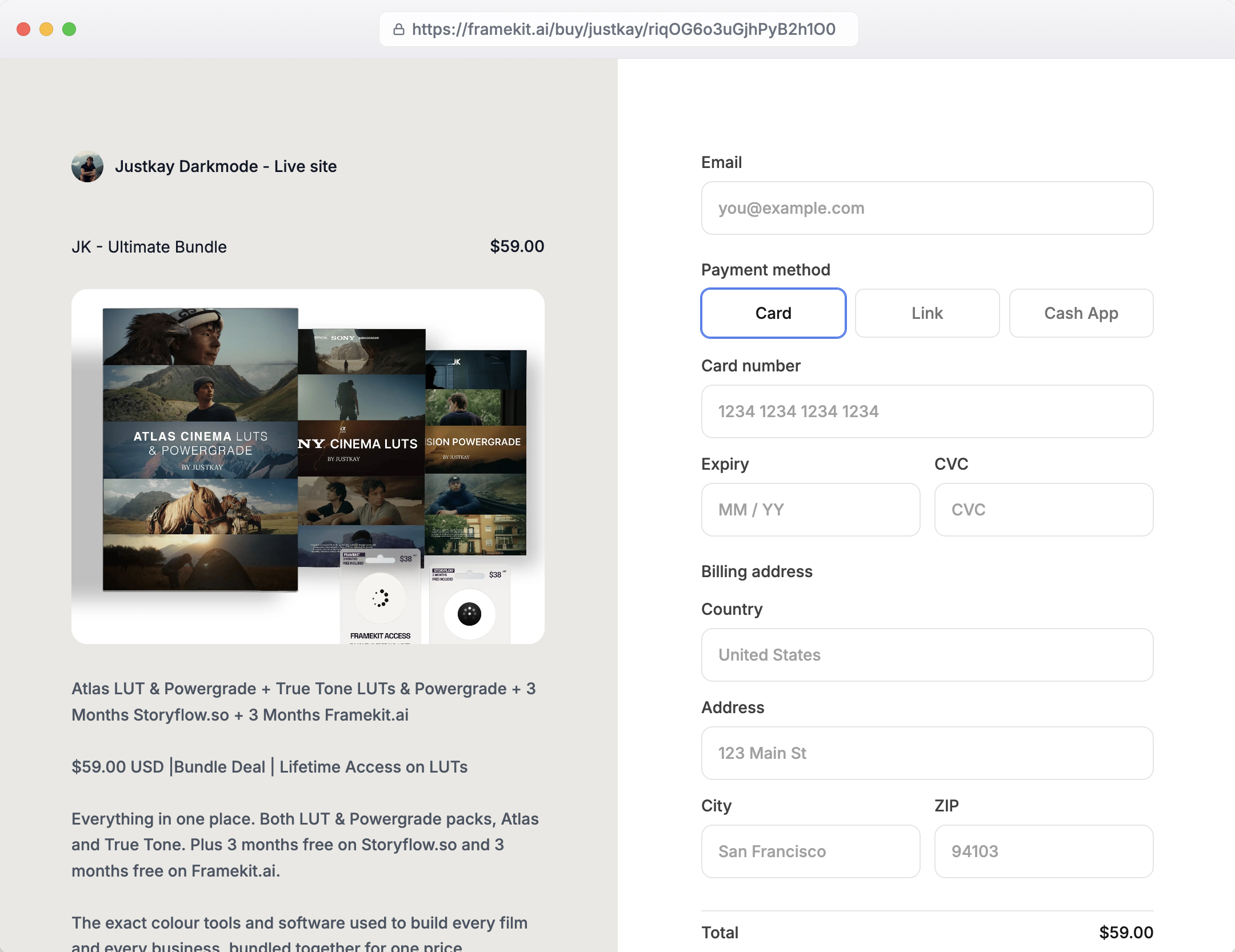
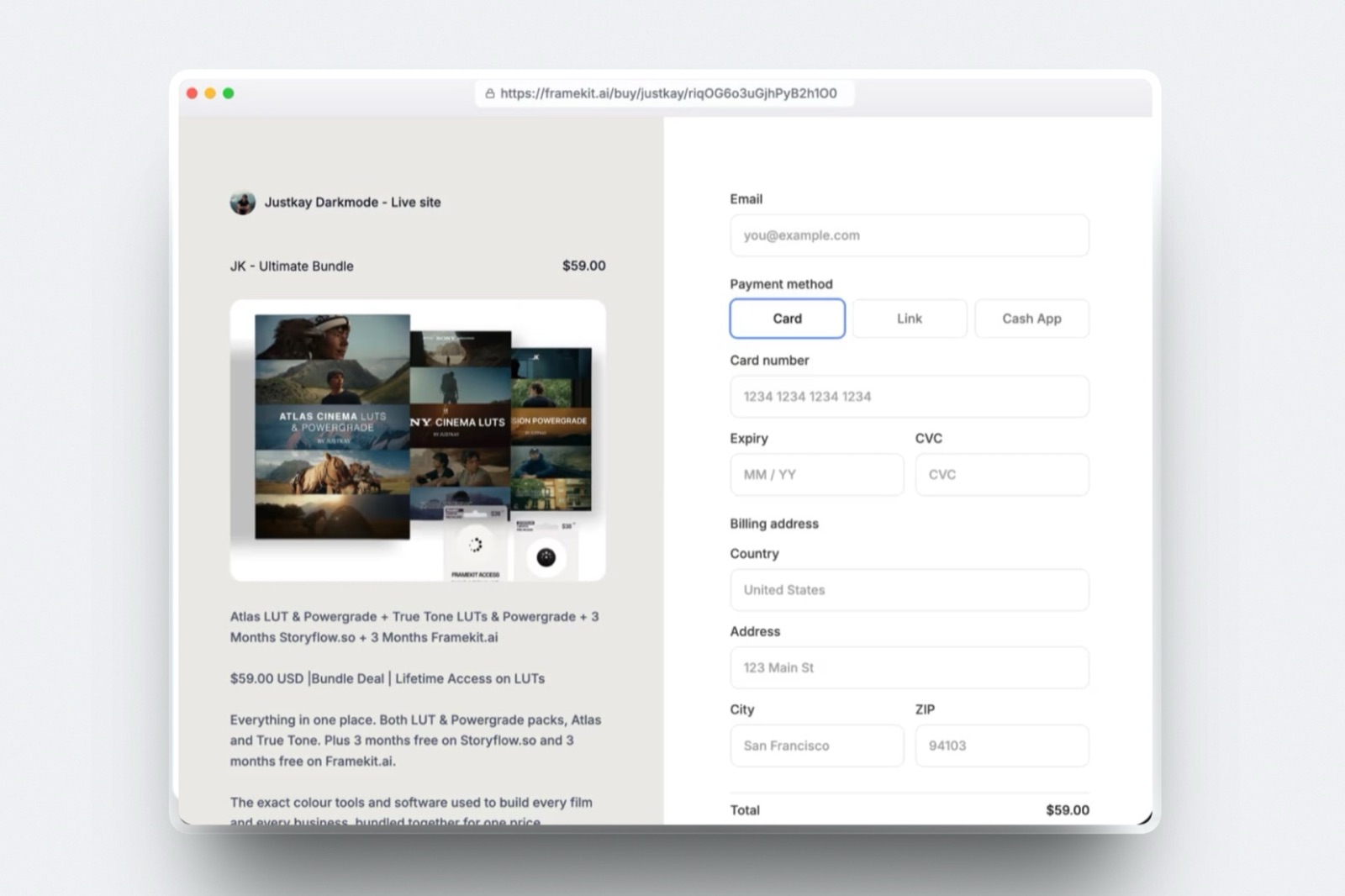
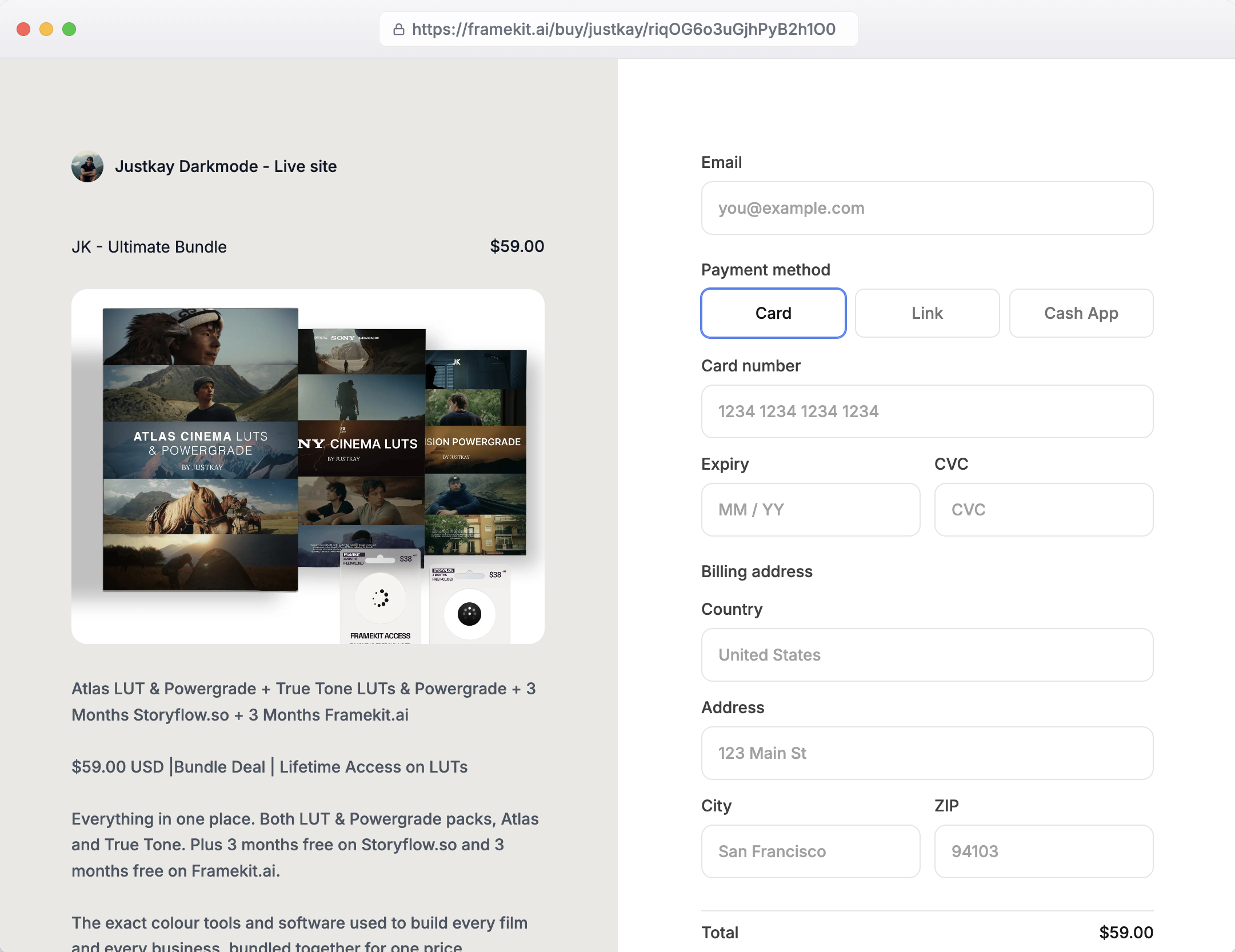
- The payment step opens on a Framekit-hosted checkout at framekit.ai/buy, with your name and logo and a small Powered by Framekit line
- Newer than Payhip, without its years of store-specific polish
Skip it ifyour deciding factor is the lowest price with automatic EU VAT and you do not care about design - Payhip itself is genuinely hard to beat there.
Verdict: Framekit is the best Payhip alternative for a creator who wants a store that looks like their brand on a real site, at the same free-plan fee. You leave Payhip for design and ownership, not price, and Framekit delivers both. Start free at framekit.ai, or compare the field in our best free product-selling software guide.
2. Sellfy: A Quick 0%-Fee Store
Our rating: 8.4/10
Sellfy is the Payhip alternative for a creator who wants 0% transaction fees and does not mind paying a subscription to get them.
It is a quick all-in-one store for digital products, subscriptions, and print-on-demand merch, and its storefront is more customizable than Payhip's fixed template - though it is still built from templates rather than a site you design yourself.
For a seller who has outgrown Payhip's percentage and sells enough to make a flat fee cheaper, that 0% is the draw.
The catch is the one Payhip does not have: no free tier. Where Payhip lets you open a store for nothing and pay only 5% as you sell, Sellfy asks for roughly $29 a month from day one, before you have proven a single sale.
So the switch is less about design than about fee structure - you trade Payhip's free, pay-as-you-sell model for a subscription that only pays off above a certain volume.
Best forSellers ready to commit to a subscription for 0% fees and a little more design flexibility than Payhip's single template.
Key features:
- 0% transaction fees on paid plans, versus Payhip's 5% on free
- A more customizable store than Payhip's fixed template
- Print-on-demand merch alongside digital products
- Anti-piracy file protection, including PDF stamping and unique links
- Email marketing and upsells built into the store
The real numberSellfy's 0% saves the percentage a free plan charges, but you pay about $29 a month - roughly $348 a year - whether you sell or not, so it only beats a 5% free plan once your sales top about $580 a month, or $440 if you pay $22 a month billed yearly.
Pricingno free plan, only a 14-day trial; Starter at $29 a month or $22 billed annually, Business at $79 or $59 and Premium at $159 or $119, all at 0% transaction fees plus processing, within yearly sales ceilings of $10,000, $50,000 and $200,000, past which Sellfy expects an upgrade or may charge a 2% overage fee (checked October 2026).
Pros:
- 0% transaction fees once you are on a paid plan
- More store customization than Payhip's fixed template
- Print-on-demand merch, which Payhip does not include
Cons:
- No free plan, so you pay from day one unlike Payhip
- The store is still template-based, not a site you fully own
- The subscription only pays off above a sales crossover
Skip it ifyou want Payhip's free, pay-as-you-sell start - a subscription before your first sale is the opposite of what makes Payhip easy to begin on.
Verdict: Sellfy is the Payhip alternative for committed sellers who want 0% fees and will pay a subscription for them. Our best Sellfy alternatives guide runs the subscription-versus-free math. Visit Sellfy
3. Gumroad: The Simplest First Sale
Our rating: 8.3/10
Gumroad is the Payhip alternative for the simplest possible setup and tax handled for you.
Because it acts as a merchant of record, it collects and remits sales tax and VAT on your behalf, so like Payhip you never touch a tax return - and you can list a product and share a link in minutes.
For a creator who wants the fastest route from file to first sale, nothing here is quicker.
What you pay for that speed is fees. Gumroad charges 10% + $0.50 per sale (Gumroad's pricing), which is far above Payhip's 5% on the free plan, so on fees alone this is a step up in cost, not down.
And the storefront is a Gumroad page - a recognizable shared template, exactly the sameness people leave Payhip over - so the switch buys you tax handling and simplicity, not a store that looks like your brand.
Best forCreators who value automatic tax and a fast link over Payhip's lower fee and dedicated store.
Key features:
- Merchant of record that handles sales tax and global VAT for you
- The fastest setup here - a product live and selling in minutes
- Gumroad Discover, a small marketplace that can surface your product
- Simple checkout that works from a link or an embed
- Handles digital downloads, subscriptions, and license keys
The real numberat 10% + $0.50, a $25 product costs about $3.00 in platform fee, against roughly $1.25 on Payhip's 5% free plan - so you pay more than double per sale for the tax handling and speed.
Pricingfree to use with no monthly fee; a flat 10% + $0.50 per transaction, plus payment processing.
Pros:
- Merchant of record removes tax work, like Payhip's VAT and more
- The quickest possible path to a first sale
- No monthly fee, so nothing to pay until you sell
Cons:
- 10% + $0.50 is far higher than Payhip's 5%
- The store is a shared Gumroad page, not your brand
- Limited design control, the same complaint as Payhip
Skip it iflow fees are your priority - Payhip's 5% beats Gumroad's 10% + $0.50 comfortably, and you keep automatic EU VAT.
Verdict: Gumroad is the Payhip alternative for the simplest start with tax off your plate, if you accept a higher fee for it. Our best Gumroad alternatives guide compares the fee difference in depth. Visit Gumroad
4. Lemon Squeezy: Tax Handled for You
Our rating: 8.2/10
Lemon Squeezy is the Payhip alternative when you want full tax handling as a merchant of record - not just the EU VAT Payhip covers, but global sales tax collected and remitted for you, at 5% + $0.50 per sale (Lemon Squeezy's pricing).
For a creator selling worldwide, that wider tax coverage is the reason to look past Payhip, which handles EU VAT but leaves the rest of the world to you.
It is strongest for software, licenses, and subscriptions, with a clean, trusted checkout that converts well.
The trade against Payhip is the flat $0.50 on every sale, which stings on cheap products, and slower payouts than a direct processor.
It is also more a checkout and tax layer than a store or a full site - so it solves tax and payments, not the design and sameness problem that sends people looking beyond Payhip in the first place.
Best forSellers who sell globally and want worldwide tax off their plate, beyond Payhip's EU-only VAT.
Key features:
- Merchant of record for global sales tax and VAT, wider than Payhip's EU VAT
- A clean, trusted checkout suited to software and subscriptions
- Licensing and subscription tools for digital products
- Handles failed payments, refunds, and dunning for you
- Simple product pages and checkout embeds
The real numberat 5% + $0.50, a $25 sale costs about $1.75 in fees, a little above Payhip's roughly $1.25 at 5% - the extra buys global tax handling rather than Payhip's EU-only coverage.
Pricingno monthly fee; 5% + $0.50 per transaction inclusive of payment processing, as merchant of record.
Pros:
- Global tax fully handled, more than Payhip's EU VAT
- Strong for software, licenses, and subscriptions
- No subscription, so you pay only when you sell
Cons:
- The flat $0.50 per sale hurts on cheap products
- A checkout more than a store or a real website
- Payouts are slower than a direct Stripe connection
Skip it ifyou sell mainly in the EU and Payhip's automatic VAT already covers you - the extra $0.50 per sale buys tax reach you may not need.
Verdict: Lemon Squeezy is the Payhip alternative for a seller who wants worldwide tax handled, not just EU VAT, on a clean checkout. Visit Lemon Squeezy
5. Squarespace: Template-Polished Design

Our rating: 8.0/10
Squarespace is the other design-led Payhip alternative, and the one that most directly answers the sameness complaint.
Its templates are genuinely well-designed, and you build a real website around the store - portfolio, about, blog - so your storefront looks far more polished and more like your brand than Payhip's fixed page.
For a creator whose reason to leave is that every Payhip store looks alike, this is a real step up in presentation.
It sells digital products natively, but the fee structure is the catch: Squarespace charges a 2% store fee on downloads on its Basic plan and none from Core, per its transaction fees help article, while courses and memberships carry a separate fee until the top Advanced tier.
So you pay mostly in subscription, plus that 2% on Basic, for design and a full site. That is the honest trade: more polish and a real website, at a higher cost than Payhip's free-to-cheap store.
Best forSellers who want template polish and a real site, and will pay for the top tier to reach 0% on digital sales.
Key features:
- Genuinely well-designed templates, a clear step up from Payhip's page
- A full website - portfolio, about, blog - around the store
- Native digital-product selling with delivery built in
- A custom domain and cohesive branding across the whole site
- Marketing tools, email, and analytics in one subscription
The real numberSquarespace's Basic plan takes 2% on download sales and Core at $29 a month takes none, so reaching 0% on a file store costs a mid-tier subscription rather than nothing; only courses and memberships wait for Advanced to reach 0%.
Pricingtiered monthly plans; a transaction fee on digital sales below the top Commerce tier, dropping to 0% at that tier, plus processing.
Pros:
- Polished templates that answer Payhip's sameness problem
- A real website around the store, not a storefront page
- Reaches 0% transaction fees on the top tier
Cons:
- A transaction fee applies until the top Commerce tier, unlike Payhip's low fees
- No permanent free plan the way Payhip offers
- You handle your own tax, where Payhip does EU VAT
Skip it ifyou want the lowest running cost with automatic EU VAT - Payhip's free plan is cheaper, and Squarespace's polish costs a subscription.
Verdict: Squarespace is the design-led, template-polished Payhip alternative for a seller who wants a real site and will pay to reach 0%. Our best website builders to sell digital products guide compares it with Framekit. Visit Squarespace
6. Podia: Products Plus Courses
Our rating: 7.9/10
Podia is the Payhip alternative for creators who also teach.
It bundles digital products, online courses, and email marketing in one place, so your downloads, your lessons, and your mailing list live together rather than scattered across tools.
For a seller whose catalog is expanding into teaching - a preset pack today, a course on using it tomorrow - that consolidation is the reason to move past Payhip's product-only store.
On fees, Podia has no free plan to compare against Payhip's, having removed it in October 2024, so the honest comparison is Payhip free at 5% against Podia Mover at $42 a month plus 5%.
And the storefront is a template like Payhip's, so the switch is not about design - it is about gaining courses and built-in email.
If you only sell downloads, Podia is heavier than you need and costs $504 a year before your first sale; if teaching is part of the plan, it earns its place.
Best forSellers whose products sit alongside courses or memberships and who want email marketing built in.
Key features:
- Digital products, courses, and memberships in one storefront
- Email marketing built in, so your list lives with your products
- A free plan to start, at a higher fee than Payhip's
- Webinars, coaching, and community tools alongside downloads
- Simple setup with no separate course platform needed
The real numberPayhip's free plan takes 5%, about $1.25 on a $25 product, while Podia charges the same 5% on Mover but only after $42 a month - so Podia costs $504 a year more before a single sale, and that difference buys courses and email.
Pricinga free plan at about 8% per transaction; paid monthly plans remove the fee and add features, plus processing.
Pros:
- Courses, memberships, and products together, beyond Payhip's scope
- Email marketing built in, no separate tool
- A free plan to start, like Payhip
Cons:
- The free-plan fee of about 8% is higher than Payhip's 5%
- The store is a template, so it does not fix Payhip's sameness
- Heavier than a plain download seller needs
Skip it ifyou only sell downloads and want the lowest fee - Payhip's 5% free plan is cheaper and simpler than carrying a course platform you will not use.
Verdict: Podia is the Payhip alternative when courses and email are part of the plan, bundling teaching with your products. Visit Podia
7. Shopify: A Full Store at Scale

Our rating: 7.8/10
Shopify is the Payhip alternative for scaling a serious store.
Its theme-based design looks far more like your brand than Payhip's fixed template, it runs on your own domain, and its checkout and app ecosystem are built to handle real volume.
For a seller whose catalog and ambitions have outgrown a simple storefront page, Shopify is the platform that keeps going as you grow.
The catch for digital products is that Shopify is built for physical commerce first.
Selling downloads means adding a delivery app, and the total cost - subscription plus per-sale and processing - runs higher than Payhip's free-to-cheap plans.
So Shopify makes sense when you are scaling a large, mixed catalog and want room to expand, not when you are selling a handful of downloads as cheaply as possible, where Payhip or a digital-first builder fits better.
Best forSellers scaling a large or mixed catalog who want theme-based branding and room to grow.
Key features:
- Theme-based design on your own domain, beyond Payhip's fixed template
- A large app ecosystem for delivery, marketing, and fulfilment
- A trusted checkout built for high volume
- Handles physical and digital products in one store
- Deep analytics and multi-channel selling
The real numberShopify's lowest plans plus a digital-delivery app and per-sale processing add up to more than Payhip's free-to-cheap store, so on a few downloads it costs more, and it earns its keep only at scale.
Pricingtiered monthly plans; roughly 5% plus payment processing depending on plan and processor, plus any delivery-app cost.
Pros:
- Theme-based branding on your own domain
- Scales to a large catalog and high volume
- The widest app ecosystem of any option here
Cons:
- Built for physical goods, so digital needs a delivery app
- Higher total cost than Payhip's lean plans
- More platform than a small download seller needs
Skip it ifyou sell a few digital downloads and want it cheap and simple - Payhip does that for free, where Shopify's stack costs more than it returns at low volume.
Verdict: Shopify is the Payhip alternative for scaling a serious, mixed store with real branding, not the lean pick for a few downloads. Visit Shopify
8. Ko-fi: Creators With a Following
Our rating: 7.7/10
Ko-fi is the Payhip alternative for creators who sell alongside tips and memberships.
It takes 0% on donations even on the free plan, and its shop fee is low - Ko-fi Gold drops it to zero for about $12 a month, cheaper than most routes to 0%.
For a creator with an audience who wants to monetize support, memberships, and a few products together, Ko-fi bundles all of it in one friendly page.
The storefront, though, is a Ko-fi page - a recognizable shared template, the same sameness that sends people away from Payhip.
It is built around community support more than a product catalog, so it suits a creator monetizing a following with occasional products rather than a design-focused store seller.
If your brand and store presentation are the point, Ko-fi does not solve that any more than Payhip does; if community and low cost are the point, it fits well.
Best forCreators monetizing a following with tips, memberships, and a few products, who want low cost.
Key features:
- 0% on donations even on the free plan
- A low shop fee that Ko-fi Gold removes for about $12 a month
- Tips, memberships, commissions, and products on one page
- A simple, friendly page that suits a community audience
- Quick setup with no store-building required
The real numberKo-fi Gold at about $12 a month drops the shop fee to 0%, cheaper than Sellfy's roughly $29 or most other routes to zero fees, though the page is a Ko-fi template rather than your own brand.
Pricingfree with a low shop fee; Ko-fi Gold about $12 a month for 0% shop fees and extra features, plus processing.
Pros:
- 0% on donations, and a cheap route to 0% shop fees
- Tips, memberships, and products together
- Friendly and fast for a community audience
Cons:
- The storefront is a Ko-fi page, not your brand
- Built for community support more than a product catalog
- Less design control than a real store builder
Skip it ifyou want a store that looks like your brand rather than a Ko-fi page - the design complaint that sends people from Payhip applies here too.
Verdict: Ko-fi is the community-first Payhip alternative for creators with a following who sell alongside tips and memberships. Visit Ko-fi
9. Ecwid: Adding a Store to a Site
Our rating: 7.5/10
Ecwid, part of Lightspeed, is the Payhip alternative for adding a store to a website you already have.
It charges no per-sale platform fee on any plan, though it no longer offers a free plan, and instead of a standalone storefront like Payhip's, the selling embeds into your own site - so the store lives inside the design you already built, not on a separate page.
For a seller who has a site and just wants to bolt selling onto it, that integration is the draw.
It delivers digital products natively and is a practical way to start selling without leaving your existing site's look.
The trade is that Ecwid is a store widget rather than a designed storefront, so the store can feel added on rather than woven in, and the surrounding design is only as good as the site you embed it into.
It solves where the store goes more than it solves Payhip's presentation problem.
Best forSellers who already have a website and want to add Payhip-style selling directly into it.
Key features:
- A store widget you embed into an existing website
- No per-sale platform fee on any plan
- Native digital-product delivery from the Venture plan, up to 25GB per file
- Works across most site builders and platforms
- Multi-channel selling into social and marketplaces
The real numberEcwid has dropped its free plan, so where Payhip's free store costs nothing until you sell, Ecwid's digital downloads start on Venture at $35 a month, or $29 billed annually (checked October 2026); the selling then integrates into a site you already own with no per-sale platform cut, and against Payhip's 5% that subscription pays for itself above about $580 a month in sales on yearly billing.
Pricingno free plan; Starter at $5 a month for 10 products without digital goods, Venture at $35 ($29 yearly) for 100 products with downloads, Business at $65 ($49) and Unlimited at $149 ($119), all with no platform fee on sales, plus processing.
Pros:
- Adds a store to a site you already have
- No per-sale platform fee on any plan
- Native digital delivery, like Payhip
Cons:
- A store widget rather than a designed storefront
- The store can feel grafted onto your site
- No free plan, and downloads need the $35 Venture plan
Skip it ifyou have no site to embed into and want a ready-made store - Payhip gives you one out of the box, where Ecwid assumes a site to add to.
Verdict: Ecwid is the add-a-store Payhip alternative for a seller who already has a website and wants selling built into it. Visit Ecwid
10. Big Cartel: A Simple Small Catalog
Our rating: 7.4/10
Big Cartel is the Payhip alternative for artists with a small catalog who want flat pricing and no per-sale cut.
Where Payhip takes a percentage of every sale, Big Cartel charges a flat monthly plan and keeps none of the sale itself, so a seller with steady volume pays a predictable cost rather than a rising percentage.
Its simple themes offer a little more design control than Payhip's single template, which suits an artist who wants a tidy, personal shop.
It is oriented toward physical goods and small ranges, so digital delivery is basic next to a digital-first tool.
That makes it a fit for an artist selling a handful of products - prints, a zine, a small drop - who values flat, predictable costs over Payhip's percentage, rather than a seller building a large digital catalog.
Within that small-catalog niche, the flat fee and simple themes are the appeal.
Best forArtists with a small catalog who want flat, predictable pricing and no per-sale commission.
Key features:
- Flat monthly pricing with no per-sale cut
- Simple themes with a little more control than Payhip's template
- A free tier for a very small catalog
- Straightforward setup oriented to artists
- Basic digital and physical product listings
The real numberBig Cartel takes no percentage of sales, so on a $25 product you keep the full amount after processing - unlike Payhip's 5% - which pays off once your volume makes the flat plan cheaper than a percentage.
Pricinga free tier for a handful of products; flat monthly plans for larger catalogs, with no sales commission, plus processing.
Pros:
- Flat pricing with no per-sale commission
- A little more design control than Payhip's single template
- Predictable cost that does not rise with sales
Cons:
- Oriented to physical goods, so digital delivery is basic
- Built for small ranges, not a large catalog
- Fewer selling features than a digital-first tool
Skip it ifyou sell a large or growing digital catalog - Payhip or a digital-first builder handles downloads better than Big Cartel's physical-goods focus.
Verdict: Big Cartel is the flat-fee, small-catalog Payhip alternative for artists who want predictable costs and no per-sale cut. Visit Big Cartel
11. Stan Store: Link-in-Bio Selling
Our rating: 7.3/10
Stan Store is the Payhip alternative for selling straight from a social bio link.
It charges 0% transaction fees on a flat subscription of about $29 a month and gives you a mobile-first page designed to convert followers who tap through from Instagram or TikTok.
For a creator whose traffic comes from a social feed rather than search or a website, that bio-link funnel is cleaner than pointing followers at a Payhip store.
The trade-offs are real.
The storefront is a simple bio page with less flexibility than even Payhip, so it is a funnel more than a designed store, and the flat cost with no free plan is pricey at low volume - you pay about $29 a month before proving the funnel works.
It suits a creator selling from a strong, engaged following where the bio link is the main sales channel, not a seller who wants a full store or the lowest entry cost.
Best forCreators selling from a strong social following who want a mobile-first bio-link funnel.
Key features:
- A mobile-first page built for link-in-bio traffic
- 0% transaction fees on a flat subscription
- Digital products, courses, and booking on one page
- A funnel designed to convert social followers
- Quick setup aimed at creators, not store-builders
The real numberStan Store's flat subscription of about $29 a month buys 0% transaction fees, the same price point as Sellfy, but with no free plan you pay it before your first sale - so it only pays off once the bio-link funnel is converting steadily.
Pricingno free plan; a flat subscription of about $29 a month at 0% transaction fees, plus processing.
Pros:
- 0% transaction fees on a flat plan
- A mobile-first funnel that converts social traffic
- Products, courses, and bookings in one bio link
Cons:
- A simple bio page with less flexibility than Payhip
- No free plan, so you pay about $29 a month upfront
- Pricey at low volume until the funnel converts
Skip it ifyou want a real store or a free start - Payhip gives you both, where Stan Store is a paid bio-link funnel, not a storefront.
Verdict: Stan Store is the bio-link Payhip alternative for creators selling from a social following, at a flat 0% subscription. Visit Stan Store
12. Etsy: Search Traffic
Our rating: 7.2/10
Etsy is the Payhip alternative that brings its own buyers. People search "digital planner" or "wedding template" on Etsy with a card out, and your listing is right there - discovery Payhip's standalone store simply cannot provide.
For a seller without an audience, that built-in search traffic is the one thing worth trading fees for, and it is why Etsy is the easiest place to make an early digital sale.
The cost is steep, though.
Etsy stacks fees - $0.20 per listing, 6.5% transaction, processing, and possible ads - which run higher than Payhip's 5%, and your product is a marketplace listing beside competitors rather than a store you control.
Worse for the long run, Etsy keeps the customer: the buyer's email is Etsy's, not yours, so your next launch starts from zero. Use it for discovery, not as a home, and move repeat buyers to a store you own.
Best forSellers without an audience who need Etsy's search discovery to find their first buyers.
Key features:
- Built-in search traffic that brings buyers, unlike Payhip
- A trusted marketplace checkout buyers already know
- Native digital-download delivery
- Reviews and listings that build early credibility
- A large audience of active shoppers
The real numberEtsy's stacked fees - $0.20 per listing, 6.5%, processing, and for smaller shops a mandatory ad cut - can take about a quarter of a cheap item, well above Payhip's 5%, and the customer stays Etsy's rather than yours.
Pricing$0.20 per listing plus 6.5% per transaction, plus processing and possible Offsite Ads fees; no monthly store fee required.
Pros:
- Brings its own buyers through search, which Payhip cannot
- A trusted marketplace with an active audience
- Easy to start and make an early sale
Cons:
- Stacked fees run higher than Payhip's 5%
- Etsy keeps the customer, so you build no list
- A marketplace listing, not a store that is yours
Skip it ifyou can drive your own traffic - once you have an audience, Payhip or an owned store keeps the fees and the customer that Etsy takes.
Verdict: Etsy is the discovery Payhip alternative, best as a feeder that finds buyers you then move to a store you own. Our best Etsy alternatives for digital sellers guide covers the move. Visit Etsy
13. Thrivecart: A One-Time Fee Model
Our rating: 7.1/10
Thrivecart is the Payhip alternative with genuinely different economics: you pay once for a license and then take no per-sale commission and no monthly fee.
For a seller with steady, predictable volume, paying a single upfront cost can work out cheaper over time than any percentage - including Payhip's 5% - because after the license there is nothing more to pay on each sale.
The trade-offs are the size of that upfront cost and what Thrivecart actually is.
The license is a significant one-time outlay, so it only pays back above a certain volume, and Thrivecart is a cart-and-checkout tool that bolts onto your own pages rather than a store or a full site.
It optimizes checkout, upsells, and conversion, but it assumes you already have the pages and traffic - so it solves the fee math for committed sellers, not the design and storefront question that sends people from Payhip.
Best forCommitted sellers with steady volume who want to pay once and take no per-sale cut afterward.
Key features:
- A one-time license with no per-sale commission afterward
- High-converting checkout with upsells and bump offers
- Bolts onto pages and funnels you already have
- Affiliate management built in
- Detailed sales and conversion controls
The real numberThrivecart's one-time license removes per-sale fees entirely, so after the upfront cost a $25 product keeps its full price beyond processing - which beats Payhip's 5% only once your volume repays that upfront outlay.
Pricinga single one-time license fee, then no monthly or per-sale platform cost, plus processing.
Pros:
- Pay once, then no per-sale commission, unlike Payhip's 5%
- A high-converting checkout with upsells built in
- Cheaper long-term for high, steady volume
Cons:
- A significant upfront cost that only pays back at volume
- A cart and checkout, not a store or a site
- Assumes you already have pages and traffic
Skip it ifyou are testing whether a product sells - Payhip's free, pay-as-you-sell plan risks nothing, where Thrivecart's upfront license is a bet on future volume.
Verdict: Thrivecart is the pay-once Payhip alternative for committed sellers with steady volume, trading an upfront cost for no per-sale fees. Visit Thrivecart
14. SendOwl: A Flat-Fee Delivery Engine
Our rating: 6.9/10
SendOwl is the Payhip alternative as a pure delivery-and-checkout engine.
It runs on a flat subscription with no per-sale commission, and it handles the mechanics of selling a download - secure delivery, license keys, PDF stamping - reliably behind whatever pages you already have.
For a seller who has a website and wants a commission-free checkout layer under it, SendOwl is the plumbing that makes the sale work.
That is also its limit.
SendOwl is plumbing behind your own pages, not a storefront, so it does not solve the design question the way a builder does - it assumes you already have the design and the site, and simply delivers the file and takes the payment.
Where people leave Payhip for a store that looks like their brand, SendOwl offers no store at all, just the delivery engine. It is a fit for sellers who have the front end handled and need a dependable, flat-fee back end.
Best forSellers who already have a website and want a reliable, commission-free delivery and checkout layer.
Key features:
- Secure digital delivery with expiring, unique links
- License keys and PDF stamping for file protection
- A flat subscription with no per-sale commission
- Checkout that embeds into pages you already have
- Subscriptions, drip content, and affiliate options
The real numberSendOwl's flat subscription means no percentage on any sale, so at volume it can undercut Payhip's 5% - but it delivers files behind your own pages and gives you no storefront, so the design problem is yours to solve elsewhere.
Pricinga flat monthly subscription by tier, with no per-sale commission, plus processing.
Pros:
- Flat fee with no per-sale commission
- Reliable secure delivery and license keys
- Embeds under a site you already have
Cons:
- Plumbing behind your pages, not a storefront
- Does not solve Payhip's design and presentation problem
- Assumes you already have a site and design
Skip it ifyou want a ready-made store rather than a delivery layer - Payhip gives you a storefront out of the box, where SendOwl only handles delivery behind your own.
Verdict: SendOwl is the flat-fee delivery-engine Payhip alternative for sellers who have their own site and need a commission-free checkout under it. Visit SendOwl
Why People Actually Leave Payhip
In one linePayhip's fees are fair and its VAT handling is genuinely useful, so the real reason to switch is that every Payhip store looks the same - a shared template that reads as the platform, not your brand - which an owned, designed site fixes.
It is worth being clear that leaving Payhip is rarely about money. Its 5% free plan and automatic EU VAT are strong, and cheaper is not usually why people go. The reason is the storefront.
Because every Payhip store is built from the same template, a buyer who has seen one Payhip store recognizes the next, and your carefully made product sits inside a page that looks like everyone else's.
For a creator whose brand is part of the value, that sameness quietly undersells the work.
The fix is a store that looks like you, which means design control and, ideally, a real website around the store rather than a standalone page.
Framekit gives you an AI-designed site you own; Squarespace gives template polish; Shopify gives theme-based branding. The hosted-template tools - Gumroad, Ko-fi, and Payhip itself - trade design for simplicity.
If your brand matters, that trade is the one worth reconsidering. Our best website builders to sell digital products guide covers the design-led options in depth.
Does Leaving Payhip Cost More?
In one lineusually a little, because Payhip's free store and automatic EU VAT are hard to beat on price, so switching buys you design and ownership rather than lower fees - which is worth it only if the brand around your product matters.
Be honest with yourself about the trade.
Payhip's free plan at 5% with EU VAT handled is genuinely cheap, and most alternatives cost the same or more - Framekit matches the 5% free fee but you handle your own VAT, Squarespace takes 2% on downloads on Basic on top of a monthly plan, and Sellfy or Stan Store add a subscription.
So the switch is not a money-saver; it is an investment in a store that looks like your brand and a site you own.
Run the honest comparison: if your product sells on price and convenience and the store's look does not matter, Payhip is hard to leave.
If your product sells partly on your brand - a designed store lifts perceived value and trust - then the small extra cost of a real site pays for itself in conversion and repeat sales.
Our guide to the best zero-commission selling platforms covers the fee side if price is your main concern.
How to Choose a Payhip Alternative: A Decision Tree
Weigh what you actually want against these, top to bottom.
Is your main reason for leaving the generic store design?
- Yes, I want a store that looks like my brand. Choose Framekit for an AI-designed site you own at Payhip's free-plan fee, or Squarespace for template polish.
- No, I want something else. Go to the next question.
Do you want tax handled beyond Payhip's EU VAT?
- Yes, global tax off my plate. Choose Lemon Squeezy or Gumroad, both merchant of record.
- No. Go to the next question.
What fits your setup?
- 0% fees and you will pay a subscription: Sellfy.
- Products plus courses: Podia. Tips and community: Ko-fi.
- Add selling to a site you have: Ecwid. Sell from a bio link: Stan Store.
Frequently Asked Questions
What is the best Payhip alternative in 2026?
The best Payhip alternative in 2026 is Framekit, because it gives you a designer-quality website you own with the store built into it, so your storefront looks like your brand rather than Payhip's shared template, at the same 5% free-plan fee that drops to 0% as you grow.
The honest caveat is that Payhip's free store with automatic EU VAT is hard to beat on price, so you switch for design and ownership, not to save money.
Is Payhip actually good, or should I switch?
Payhip is genuinely good - a real free store at 5%, automatic EU VAT, and easy setup make it one of the best-value ways to sell downloads.
You should switch only if its generic template store or the fact that it is a store rather than a real website bothers you, since those are its main limits, not the fees.
If your brand matters and you want a store that looks like yours on your own site, an alternative like Framekit is worth it; if price and simplicity are all you need, Payhip is hard to beat.
Why do people leave Payhip?
People leave Payhip almost entirely for design, not fees.
Its fees are low and its EU VAT handling is useful, but every Payhip store is built from the same template, so your storefront looks identical to every other seller's and reads as a Payhip store rather than your brand.
Creators whose products sell partly on their brand switch to a platform where the store looks like theirs on a real website, which is the one thing Payhip's low-cost simplicity cannot provide.
Which Payhip alternative has the best design?
Framekit has the best design of the Payhip alternatives, because it generates a custom site with AI rather than using a fixed template, so the store reads as your brand.
Squarespace is the strongest template-based option with polished designs, and Shopify offers theme-based branding. The other low-cost tools - Gumroad, Ko-fi, Sellfy - use templates like Payhip, so they do not solve the design complaint.
For a store that looks unmistakably yours without hiring a designer, an AI builder leads.
Does any Payhip alternative handle EU VAT automatically?
Yes, but fewer than you might expect. Gumroad and Lemon Squeezy handle EU VAT and global tax automatically as merchants of record, which is more than Payhip's EU-only VAT handling.
Many other alternatives, including Framekit, Squarespace, and Sellfy, leave you to handle your own tax, which is a step back from Payhip on this specific point.
So if automatic tax is why you use Payhip, switch to a merchant-of-record tool rather than a builder, or factor tax handling into the move.
Is there a cheaper alternative to Payhip?
Rarely, because Payhip is already cheap.
Its free plan at 5% with EU VAT handled is among the best value, so most alternatives match or exceed its cost rather than beat it - Framekit ties the 5% free fee, Square Online is free with no platform cut but a basic store, and Sellfy or Stan Store add a subscription.
The honest answer is that you do not switch from Payhip to save money; you switch for design, a real website, or ownership, which usually costs a little more.
Can I build a real website around my store instead of a storefront page?
Yes, and that is a key reason to leave Payhip, which is a storefront rather than a full site.
With Framekit you get a complete website - portfolio, about page, blog - with the store built in on your own domain, so the store is part of a real site rather than a standalone page.
Squarespace, Wix, and Shopify also combine a full site with a store. Payhip and the pure store tools give you the storefront but not the website around it.
Framekit vs Payhip: which is better?
It depends on what you value. Payhip is better on price and tax - a free store at 5% with automatic EU VAT is hard to beat, and it is dead simple.
Framekit is better on design and ownership - a store that looks like your brand on a designer-quality site you own, at the same 5% free fee dropping to 0% on Business, though you handle your own VAT.
Choose Payhip for the cheapest, simplest store; choose Framekit for a store that looks like yours on a real website.
What do I give up by leaving Payhip?
Mainly automatic EU VAT and rock-bottom simplicity.
Payhip handles EU VAT for you and is about as easy as selling gets, so leaving usually means handling your own tax (unless you pick a merchant-of-record tool) and doing a bit more setup for a better-looking store.
What you gain is design control, a real website, and ownership of your brand and customer. Weigh the VAT and simplicity you lose against the design and ownership you gain - for a brand-driven seller, the trade favors switching.
Which Payhip alternative is best for selling to my own audience?
For selling to an audience you already have, the best Payhip alternative is a store you own that looks like your brand, since a memorable, branded store converts a following better than a generic template.
Framekit puts a designer store on your own domain and keeps the customer and email list, which compounds with an audience. Sellfy and Squarespace also offer more branding than Payhip.
The marketplaces like Etsy only earn their keep when you lack an audience and need discovery.
Can I move my products from Payhip to another platform?
Yes, moving products is straightforward - you download your files from Payhip and re-upload them to the new platform, since the products are just digital files.
The bigger consideration is your customer list and any subscribers, which you should export from Payhip before switching so you keep the relationship.
Rebuild your store on the new platform, redirect any links, and keep Payhip live until the new store is ready, so no sale is interrupted during the move.
Final Verdict: The Best Payhip Alternative
Payhip earns its place - cheap, easy, and good at EU VAT - so the reason to leave is not its fees but its face: a store that looks like every other Payhip store rather than your brand.
Framekit is the best Payhip alternative in 2026 for a creator who wants a store that looks like their own.
It generates a designer-quality website you own with the store inside it, at the same 5% free-plan fee that drops to 0% on Business, so you fix the generic-template problem without paying more at the bottom.
Where Framekit loses: sellers whose deciding factor is the lowest price with automatic EU VAT and who do not care about design - Payhip itself is genuinely hard to beat there - and anyone who wants a merchant of record for global tax, where Lemon Squeezy fits.
Squarespace is the other design-led pick, Sellfy is the 0%-fee store, and Gumroad or Lemon Squeezy handle tax. But if you like Payhip and only wish the store looked like you, that is exactly what a site you own provides.
For more, read our best free product-selling software comparison, our best website builders to sell digital products, the best platforms to sell presets, and our best Gumroad alternatives.
_Payhip-alternative fees and terms re-checked against each vendor's pricing, July 2026; Ecwid and Sellfy re-checked October 2026._
The most common comparison people run before switching is Gumroad vs Payhip, which covers both the fee gap and the payout difference.
For the merchant-of-record comparison specifically, Lemon Squeezy vs Payhip works out which is cheaper once card processing is counted on both sides.