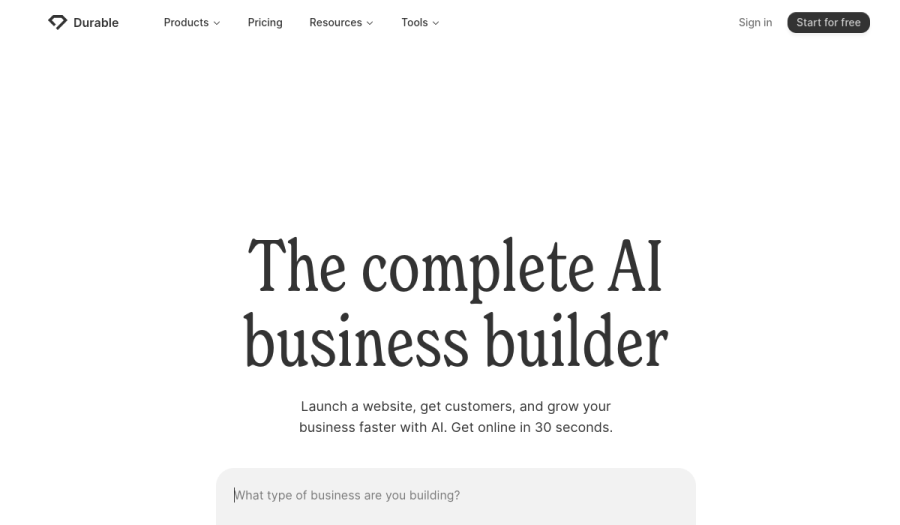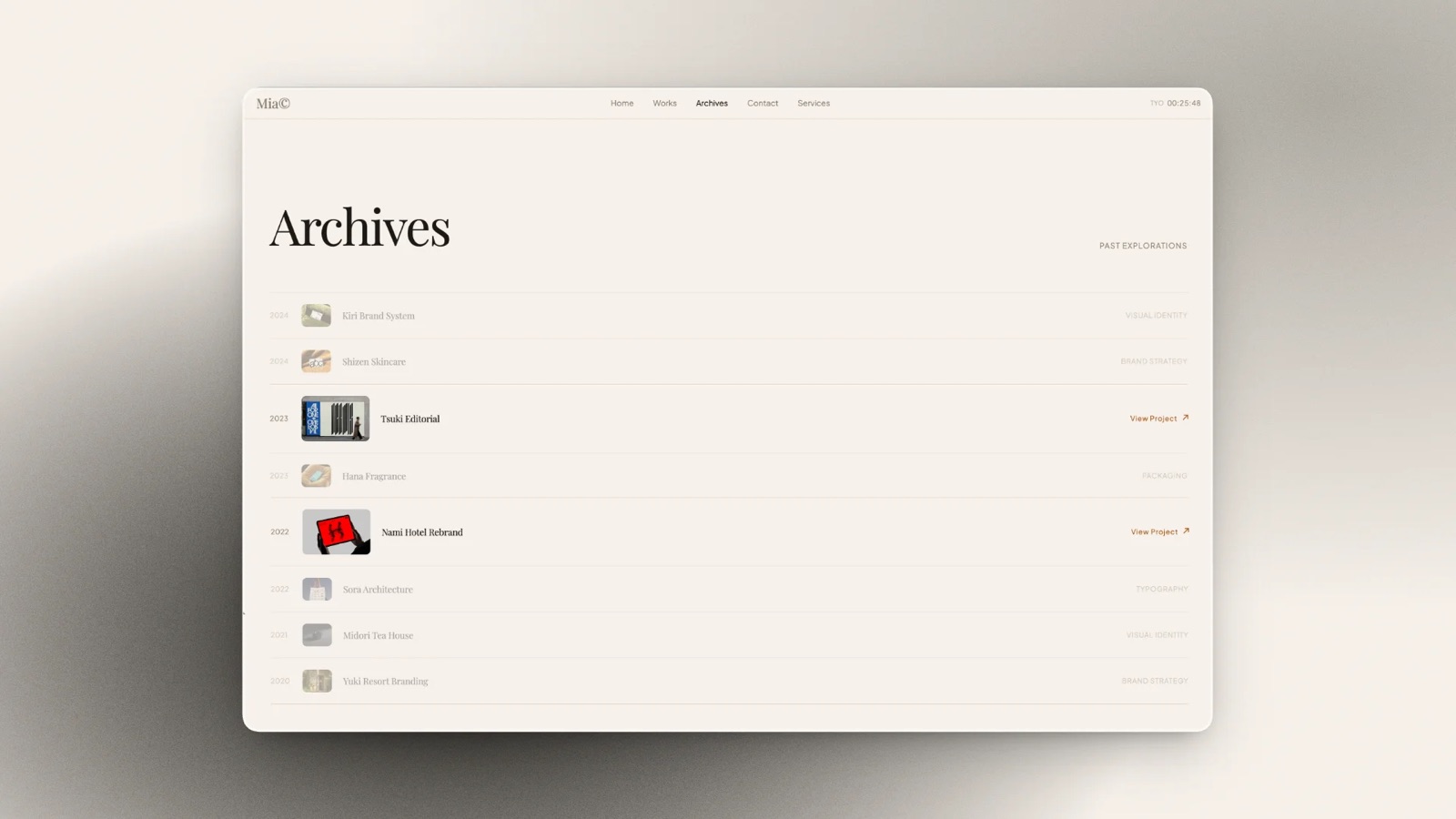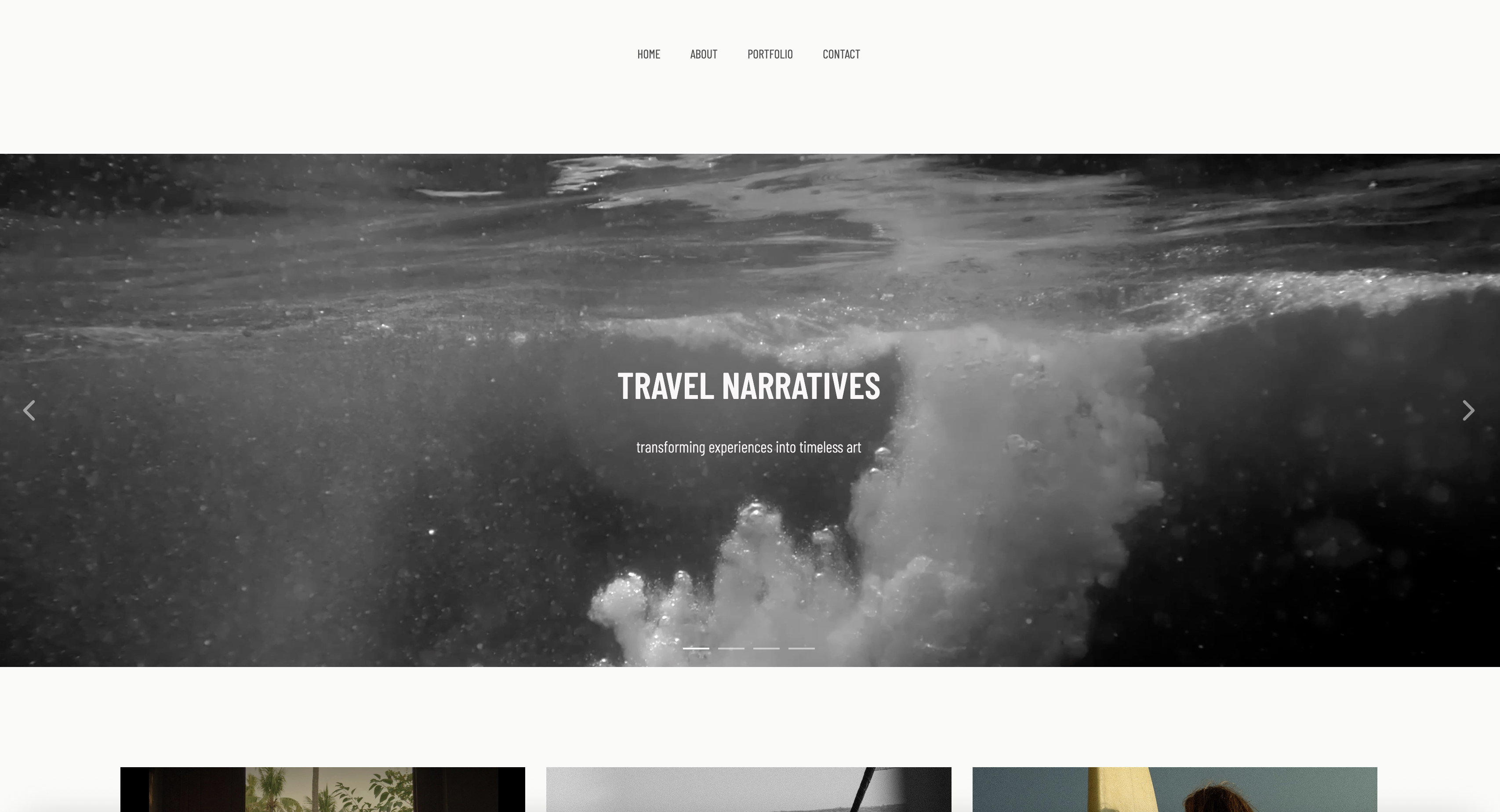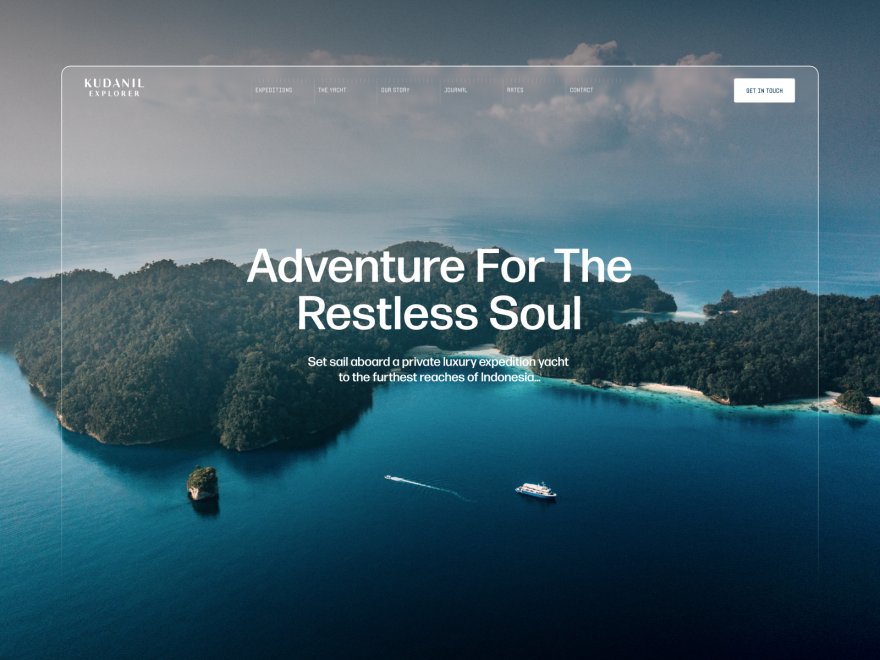
Framekit templates
Start from a designer-made template
 Use template
 Use template
 Use template
 Use template
 Use template
 Use template
 Use template
 Use template
On 1 July 2026, an Envato author who had spent a decade building an exclusive catalogue woke up keeping 50 cents of every dollar instead of 87.5. Nothing about their templates changed. The terms did.
That is the whole risk of building a template business on somebody else's marketplace, and it stopped being hypothetical three weeks before this guide was written.
Templates are close to the perfect digital product: made once, sold indefinitely, no support burden, no shipping. The only variable is where you sell them, and that variable can be rewritten without your consent.
A digital template marketplace is a platform that lists and licenses your Notion, Canva, Figma, web, or document templates to buyers, taking a share of each sale in exchange for supplying the audience, the checkout, and usually the licence.
The best place to sell digital templates in 2026 is your own store if you have any audience, and Framekit is the cheapest way to run one: a $29 template leaves about $27.86 on the $39 Business plan against $14.50 on Envato Market since its July 2026 move to a flat 50%.
If you have no audience, Etsy has the most template buyers actively searching, and the Notion Marketplace is the right home for Notion templates specifically at 10% plus $0.40 with Notion acting as merchant of record.
The honest trade-off with selling direct: Framekit sends you no buyers at all, and it is not a merchant of record, so EU VAT stays your problem.
Framekit is an AI website builder with a store for digital files, so a template pack sits on the same site that shows your work, and the free plan needs no credit card.
Full disclosure: Framekit, ranked #1 below, is our own product, and the caveat sits in the Quick Answer rather than buried down here: selling direct wins on fees and loses on reach, every time. We verified every rate against the platform's own documentation in July 2026 and linked to all eleven. Where they beat us: Etsy and Creative Market put templates in front of people already shopping for them, Notion and Lemon Squeezy act as merchant of record and handle your VAT, Canva pays you for usage rather than requiring a sale at all, and Envato still reaches an audience no independent store does.
Selling website templates specifically? The best places to sell web templates prices twelve venues on a $59 template and finds the buyer-support obligation costs more than any commission in the category.
How We Compared These Template Marketplaces
Template platforms are usually compared on audience size, which is a buyer's metric. We scored eleven on the five things that decide what a seller actually banks.
Fee on a sale, weighted 30%. What the platform keeps, counting payment processing where it is charged separately. This is the term that applies to every sale forever.
Reach, weighted 25%. Does the platform bring buyers who were not looking for you? This is the only thing a marketplace sells that you cannot build yourself.
Who owns the buyer, weighted 20%. Do you get the customer's email address and the right to tell them about the next template?
Rate stability, weighted 15%. Has the platform changed its terms under sellers, and can it again? Envato just demonstrated why this belongs in the rubric.
Payout terms, weighted 10%. Holds, thresholds, timing, and currency conversion.
The carried example throughout is a $29 template, which is a realistic mid-market price across Notion, Canva, and Figma, and a seller with a 20-template catalogue. Both numbers are held in every section.
Three kinds of finding, kept separate. What we handled hands-on: listing templates, running the buyer flow, and testing the payout setup.
What we verified from primary sources rather than testing: fees and payout terms, checked against the platform's own documentation in July 2026 and linked inline.
What we report as reported rather than confirmed: Creative Market's current seller share, where published sources disagree, and we say so rather than picking the flattering number.
What Comparing 11 Template Platforms Showed
The figures underneath the ranking, verified against each platform's published documentation in July 2026.
- On the carried $29 template, the spread between best and worst is $13.36: about $27.86 selling direct against $14.50 on Envato Market.
- Envato moved every Market author to a flat 50% on 1 July 2026, ending the tiered exclusive model under which top authors kept up to 87.5%.
- The Notion Marketplace charges 10% plus $0.40 and acts as merchant of record, with biweekly Thursday payouts after a 14-day hold, a $20 minimum, and a 1% currency fee for sellers outside the United States.
- Etsy's fee stack on a $29 template is about $3.21 without advertising and about $7.56 once its 15% Offsite Ads fee lands, which is 26% of the sale.
- Canva pays from a royalty pool per template usage rather than per sale, so it is the only platform here where you can earn without anyone buying anything.
- 3 of 11 act as merchant of record and handle EU VAT for you: Notion Marketplace, Lemon Squeezy, and Gumroad.
For a pick matched to what you make, jump to the decision tree. First, the field.
The 11 Best Places to Sell Digital Templates in 2026: Full Comparison
How to read the ranking: the five weights above are the measure, and fee carries the most because it compounds across every template you will ever publish. Rate stability is weighted unusually high in this category for a reason that needed no hypothetical this year.
Our own row is lopsided on purpose. Framekit takes 10 on fees and buyer ownership and 2 on reach, the lowest reach score in the table. Etsy takes 9 on reach and 4 on fees. Those two lines are the decision.
| Platform | Fee on a sale | Merchant of record | Reach | You keep the buyer | Our Rating |
|---|---|---|---|---|---|
| Framekit (your own store) | 5% down to 0% | No | None | Yes | 9.0/10 |
| Payhip | 5% free, 2% Plus, 0% Pro | No | None | Yes | 8.5/10 |
| Lemon Squeezy | About 5% plus $0.50 | Yes | None | Yes | 8.4/10 |
| Gumroad | 10% plus $0.50, 30% via Discover | Yes | Light | Yes | 8.3/10 |
| Notion Marketplace | 10% plus $0.40 | Yes | High for Notion | No | 8.1/10 |
| Etsy | 6.5% plus $0.20 plus processing | No | Highest here | No | 7.8/10 |
| Sellfy | 0% on paid plans | No | None | Yes | 7.4/10 |
| Ko-fi | 5% free, lower on Gold | No | Light | Yes | 7.2/10 |
| Creative Market | Reported 60%, revised upward | No | Design buyers | No | 7.0/10 |
| Canva Creators | Royalty pool, no per-sale rate | Not applicable | Very high | No | 6.8/10 |
| Envato Market | Flat 50% since July 2026 | Yes | Declining | No | 6.2/10 |
Rates verified against each platform's published documentation in July 2026. Payment processing of roughly 2.9% plus $0.30 applies to direct sales where the platform quotes its fee separately.
What a $29 template actually leaves you
| Where you sell it | What the platform takes | You receive |
|---|---|---|
| Your own store, Framekit Business or Payhip Pro | 0% plus processing | About $27.86 |
| Lemon Squeezy | About 5% plus $0.50, processing included | About $27.05 |
| Your own store, Framekit free or Payhip free | 5% plus processing | About $26.41 |
| Gumroad, direct sale | 10% plus $0.50, processing covered | About $25.60 |
| Etsy, no ad attribution | $0.20 plus 6.5% plus processing | About $25.80 |
| Notion Marketplace | 10% plus $0.40 | About $25.70 |
| Etsy, ad-attributed sale | The above plus 15% Offsite Ads | About $21.45 |
| Creative Market, at the reported 60% share | 40% | About $17.40 |
| Envato Market | 50% | $14.50 |
Canva Creators is absent by necessity: it pays a share of a royalty pool per template usage, so there is no per-sale figure to put in this column.
Scale it before you choose. Twenty templates each selling ten times a year at $29 is $5,800 in gross sales. That pays about $5,572 sold direct, about $5,160 on Etsy without ads, and $2,900 on Envato. Same catalogue, same year, same work.
1. Framekit: Best if you have an audience
Our rating: 9.0/10
Framekit is an AI website builder with a store for digital files built in, which makes it the highest-paying option here and the one that sells nothing if nobody knows you exist.
Those two facts are inseparable, and any page that gives you the first without the second is selling you something.
Setting up the test listing took about fifteen minutes: a prompt produced a site with a store section already structured, and adding the template meant uploading the file, writing the description, setting $29, and connecting Stripe.
What matters for template sellers specifically is that the store and the portfolio are one site, so a visitor who came to look at your work passes the template on the way, which is a path a marketplace cannot offer because on a marketplace nobody arrives for you.
Best forTemplate makers with an audience from YouTube, X, a newsletter, TikTok, or client work, who want to keep the price rather than a share of it.
Key features:
- A store for digital files on your own domain, with the fee falling from 5% to 0% on the $39 Business plan
- You set the price, the licence, and keep the buyer's email address
- Portfolio and store on one site rather than a profile and a listing
- Client galleries on every plan for sending work privately
- Generated by Cadence, Framekit's own premium model, with Score for faster iterations
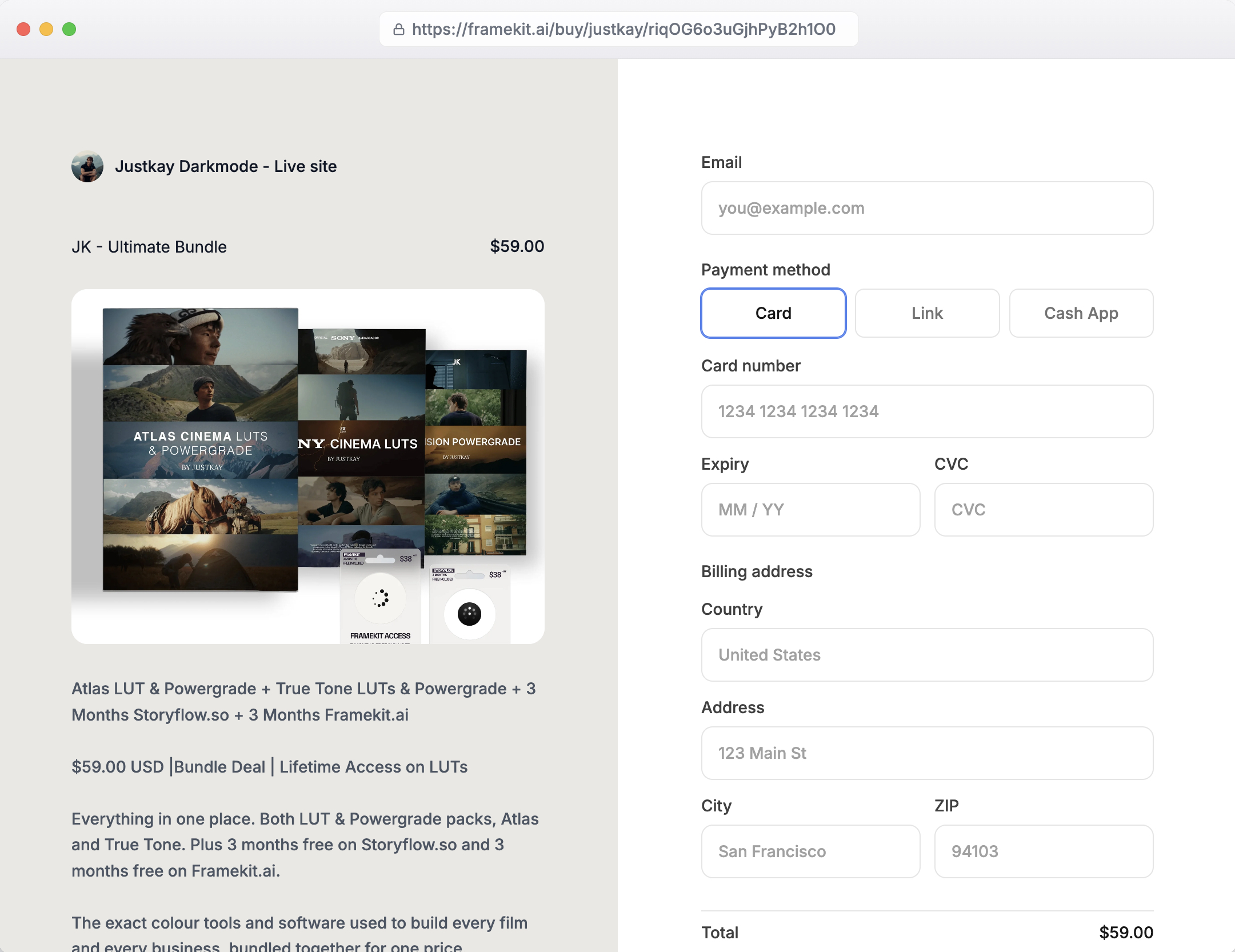
The real numberthe carried $29 template nets about $26.41 on the free plan after the 5% fee and roughly 2.9% plus $0.30 in processing, and about $27.86 on the $39 Business plan where the fee is 0%.
Against Envato's new flat 50% at $14.50, that is a difference of $13.36 per sale.
The crossover where a flat $39 a month beats a 5% cut is $780 a month in sales, so below that the free or Starter plan is the right answer and we would rather say so than sell you a tier you do not need.
PricingFree $0, Starter $9 a month, Pro $19 a month, Business $39 a month, Enterprise $59 a month, with product fees of 5%, 5%, 3%, 0%, and 0%.
Pros:
- Among the highest share of the sale price in this comparison
- You keep the customer, so the next template launches to a list
- Nobody can rewrite your revenue share overnight
Cons:
- No discovery at all: template buyers do not browse individual sellers' sites
- Not a merchant of record, so EU VAT is your responsibility
- You write your own licence terms rather than inheriting one
Skip it ifyou have no audience yet. A template earning $14.50 on Envato a hundred times beats one earning $27.86 zero times, and 96% of nothing is nothing. Start on a marketplace and build the store alongside it.
Verdict: Framekit is the best place to sell templates for someone people already follow, and the worst for someone starting from zero. Most working template sellers should run both. Start free at framekit.ai, or see the wider field in our best website builders to sell digital products comparison.
2. Payhip: The most honest pricing ladder
Our rating: 8.5/10
Payhip is a dedicated digital storefront with the clearest pricing in this comparison: three tiers, every feature on all of them, and the only difference between them is the transaction fee. No feature gating, no discovering that downloads are capped on the plan you picked.
It is a storefront rather than a website, so it sits beside whatever you use for your actual presence rather than replacing it.
Best forTemplate sellers who want a simple, honestly priced store and already have a site or a social presence elsewhere.
The real numberfree with a 5% transaction fee, $29 a month with 2%, and $99 a month with none, per Payhip pricing.
Run the arithmetic before upgrading: at 200 sales a year at $29, the 5% you pay on the free plan is $290, while Pro costs $1,188, so the free plan wins until you are selling roughly four times that volume.
PricingFree with 5% fee, Plus $29 a month with 2%, Pro $99 a month with 0%.
Pros:
- The most transparent pricing structure of anything here
- Every feature on the free plan, with no product limits
- Reaches a genuine 0% at the top tier
Cons:
- A storefront, not a site, so you still need somewhere to be found
- The 0% tier costs more than most sellers' fee savings
- No discovery
Skip it ifyou want the store inside your own website rather than beside it. See our best Payhip alternatives comparison.
Verdict: Payhip is the most honestly priced standalone store in this category, and the tier most template sellers should pick is the free one. Visit Payhip
3. Lemon Squeezy: Best if you want VAT handled
Our rating: 8.4/10
Lemon Squeezy's differentiator is legal rather than technical. It acts as merchant of record, so it is the seller on the transaction and handles EU VAT registration, collection, remittance, and invoicing on your behalf.
For a template seller whose buyers are scattered across Europe, that removes a compliance burden most platforms hand straight back.
Judged as a tax service rather than as a checkout, the fee is reasonable.
Best forTemplate sellers with international buyers who do not want to think about VAT registration.
The real numberroughly 5% plus $0.50 per transaction with processing included, so the carried $29 template pays about $27.05.
That is better than Gumroad's flat 10% and slightly behind a 0% own-store plan, and it includes tax compliance that would otherwise cost you an accountant or a real risk.
The fixed 50 cents hurts on cheap items: on a $5 template it is 10% on its own.
Pricingabout 5% plus $0.50 per transaction, merchant of record.
Pros:
- Merchant of record, so EU VAT is handled rather than deferred
- Processing included in the quoted rate
- Solid checkout with subscription support for template bundles
Cons:
- The fixed 50 cents is punitive on low-priced templates
- No discovery
- More platform than a seller with three templates needs
Skip it ifyou sell cheap single templates. The fixed component dominates. See our Lemon Squeezy versus Framekit comparison.
Verdict: Lemon Squeezy earns its fee specifically for international sellers who value not thinking about tax, and overcharges a domestic seller of cheap files. Visit Lemon Squeezy
4. Gumroad: The fastest listing
Our rating: 8.3/10
Gumroad remains the quickest way to put a template online and take money for it: upload, price, publish, share the link. For a seller who wants the template live tonight, that is a legitimate reason to choose it.
Its direct rate is 10% plus $0.50 and that covers the card fees, which is better than it looks against platforms that quote a fee and add processing separately. The rate worth checking is the other one: sales attributed to Gumroad Discover are charged at 30%.
Best forTemplate sellers who want a listing in ten minutes and will accept a flat rate for it.
The real number10% plus $0.50 per direct sale with processing covered, per Gumroad's pricing, so the carried $29 template pays about $25.60. Against Payhip's free plan at about $26.41 the gap is 81 cents a sale.
A Discover-attributed sale is charged at 30% instead, which takes the same template down to about $20.30.
Pricingfree to start, 10% plus $0.50 per direct sale, 30% on Discover-attributed sales.
Pros:
- The lowest-friction path from file to sale anywhere here
- The direct rate covers processing, so there is no second fee
- Acts as merchant of record, so tax is handled
Cons:
- The rate never falls with volume, and Discover sales cost 30%
- Your product page carries Gumroad branding
- Only light discovery of its own
Skip it ifyou sell at real volume. A rate that never drops punishes success. See our best Gumroad alternatives comparison.
Verdict: Gumroad is the right first listing and the wrong permanent home, and its 10% is closer to the free alternatives than it looks once processing is counted properly. Visit Gumroad
5. Notion Marketplace: Best for Notion templates specifically
Our rating: 8.1/10
If you make Notion templates, the Notion Marketplace is where the buyers are, and being inside the product people are already using removes every step between wanting a template and installing it. That adjacency is worth more than a few percentage points.
Its terms are unusually well documented, and worth reading in full because the payout mechanics matter more than the headline rate.
Best forNotion template creators who want distribution inside the product itself.
The real numberthe Notion Marketplace charges 10% plus $0.40 per sale when using its own payments, and Notion is the merchant of record, per Notion's selling documentation.
On the carried $29 template that leaves about $25.70.
Payouts run biweekly on Thursdays after a 14-day eligibility hold with a $20 minimum balance, and creators outside the United States pay an additional 1% to convert from USD, which is the detail most comparisons miss.
Pricing10% plus $0.40 per sale via Notion payments; Notion acts as merchant of record.
Pros:
- Distribution inside the product your buyers already use
- Notion handles tax as merchant of record
- Well-documented, predictable terms
Cons:
- Approval required, via a waitlist rather than open listing
- A 14-day hold plus biweekly payouts means slow cash flow
- A 1% currency fee for creators outside the United States
Skip it ifyour templates are for Figma, Canva, or documents. The audience is specific to Notion by definition.
Verdict: The Notion Marketplace is the obvious home for Notion templates and irrelevant for anything else, and its 10% plus $0.40 buys genuine in-product distribution. Visit Notion
6. Etsy: The most buyers, the most fees
Our rating: 7.8/10
Etsy has more people actively searching for templates than anything else in this comparison, and for a seller with no audience that is worth real money.
Planners, invitations, resumes, social templates and Canva files sell there in volume that an independent store cannot approach in its first year.
The fee stack is the cost of that traffic, and it is worth adding up rather than glancing at.
Best forSellers with no audience who need buyers more than they need margin.
The real numberEtsy charges $0.20 per listing, a 6.5% transaction fee, and payment processing of 3% plus $0.25 for US sellers, which on the carried $29 template is about $3.21, leaving $25.80.
The Offsite Ads fee is the one to understand: 15% on an attributed sale for shops under $10,000 in the past 365 days, who may opt out, and 12% for shops above that threshold, who are enrolled permanently and cannot leave.
An ad-attributed $29 sale leaves about $21.45, which is 26% gone.
Pricing$0.20 per listing, 6.5% transaction, 3% plus $0.25 US processing, plus Offsite Ads at 15% or 12%.
Pros:
- By far the largest population of buyers searching for templates
- No audience required to make the first sale
- Low barrier to listing
Cons:
- The fee stack reaches roughly 26% on an ad-attributed sale
- Crossing $10,000 enrols you in Offsite Ads permanently
- The buyer is Etsy's customer, not yours
Skip it ifyou already have an audience. You are paying a marketplace to introduce you to people who already follow you. See our best Etsy alternatives for digital sellers guide.
Verdict: Etsy is the right first channel and an expensive permanent home, and the Offsite Ads threshold is the clause to plan around before you cross it. Visit Etsy
7. Sellfy: 0% fees on a subscription
Our rating: 7.4/10
Sellfy is a tidy all-in-one storefront with no transaction fee on its paid plans, plus email marketing and print-on-demand if you want physical products beside the templates.
For a seller with steady volume, trading a percentage for a flat subscription is straightforward arithmetic.
There is no free plan, only a trial, so it is a commitment from day one.
Best forTemplate sellers with predictable monthly volume who also want email tools or merch.
The real number0% transaction fees on paid plans from roughly $29 a month, so you keep the full price minus card processing.
At 200 sales a year at $29, a 5% fee elsewhere costs $290 while Sellfy costs about $348, so Sellfy only wins above roughly 240 sales a year, and loses in every month you sell nothing.
Pricingfrom about $29 a month, 0% transaction fees, no free plan.
Pros:
- 0% transaction fees on every paid plan
- Email marketing built in
- Print-on-demand alongside digital products
Cons:
- No free plan, only a trial
- The subscription costs the same in a month with no sales
- No discovery
Skip it ifyour sales are seasonal or unpredictable. A fixed cost against variable income is the wrong shape.
Verdict: Sellfy suits a seller with steady volume and merch ambitions, and punishes one with a quiet quarter. Visit Sellfy
8. Ko-fi: Best for a few templates beside a tip jar
Our rating: 7.2/10
Ko-fi is built around supporters paying creators, and its shop is a natural extension of that rather than a serious catalogue. If you already have people tipping or subscribing, adding a couple of templates to the same page takes minutes and costs almost nothing.
It is not a place to run twenty products. The page is a creator page, not a storefront, and it thins out quickly.
Best forCreators with a supporter following who want to offer a few templates without running a shop.
The real numberthe free plan takes about 5% on shop sales and Ko-fi Gold removes most fees for a low monthly price, so the carried $29 template leaves about $26.41 on the free tier after processing, level with Payhip free.
Gold only makes sense once 5% of your monthly sales exceeds the subscription.
Pricingfree with about 5% on shop sales; Ko-fi Gold removes most fees for a low monthly fee.
Pros:
- Tips, memberships, and products on one page
- Very quick to set up
- A modest fee on a genuinely free tier
Cons:
- A creator page rather than a product catalogue
- Limited presentation control for a serious listing
- Discovery limited to your own audience
Skip it iftemplates are your main product rather than a bonus.
Verdict: Ko-fi is a fine place to put two templates next to a tip jar and the wrong place to build a catalogue. Visit Ko-fi
9. Creative Market: Design buyers, a moving rate
Our rating: 7.0/10
Creative Market reaches designers specifically, and for fonts, mockups, brand kits, and design-adjacent templates that audience converts better than a general marketplace. Being in a curated design store also carries a credibility signal a personal site does not.
Its seller share is the problem, and the honest answer is that we could not pin it down.
Best forDesigners selling fonts, mockups, and brand or presentation templates to other designers.
The real numberCreative Market's seller share has been revised, and published sources disagree on where it landed: some report sellers keeping 70%, others 60% after a commission increase from 30% to 40%.
We could not confirm a single current figure from the company, so we are reporting the disagreement rather than picking the flattering number. At the reported 60%, the carried $29 template pays $17.40.
Confirm your own rate in your shop settings before pricing anything.
Pricingno listing fees; seller share reported between 60% and 70%, revised upward in the platform's favour.
Pros:
- A design-literate audience that buys regularly
- No listing fees and unlimited uploads
- Curation acts as a quality signal
Cons:
- The seller share has moved and is not clearly published
- Heavy discounting erodes effective prices
- You do not get the buyer
Skip it ifyou need to know your rate before committing a catalogue. Ask before you upload.
Verdict: Creative Market reaches the right buyers for design templates and asks you to accept a share it has already revised once, which is exactly the risk this category keeps demonstrating. Visit Creative Market
10. Canva Creators: Paid for usage, not for sales
Our rating: 6.8/10
Canva Creators is structurally different from everything else here: you publish templates into Canva, and you are paid a royalty each time a Canva user actually uses one, rather than when anyone buys anything.
With a user base in the tens of millions, usage volume can be enormous.
It is the only platform in this comparison where you can earn without a single sale, and the only one where you cannot calculate what a template is worth in advance.
Best forDesigners who can produce templates at volume and want distribution inside Canva rather than a storefront.
The real numberthere is not one, and that is the finding.
Canva pays from a royalty pool that grows with its subscription revenue, divided by template usage, and it does not publish a per-use rate, per Canva's Creators documentation.
Publishing is free, creators are paid for both free and Pro template usage, and payouts run through PayPal, Skrill, or Payoneer. Model it as volume income with unknown unit economics rather than as a per-sale channel.
Pricingfree to publish; royalty pool per template usage, no published per-use rate.
Pros:
- Distribution to a very large in-product audience
- No sale required: usage itself pays
- No fees to publish
Cons:
- No published rate, so earnings cannot be modelled in advance
- Pool economics mean your rate depends on everyone else's usage too
- Requires volume to matter, which means a lot of unpaid production
Skip it ifyou need predictable income per template. This is a volume play with opaque unit economics.
Verdict: Canva Creators can pay well at volume and cannot be priced in advance, which makes it a good second channel and a poor sole plan. Visit Canva Creators
11. Envato Market: The cautionary tale
Our rating: 6.2/10
Envato Market still reaches buyers, and ThemeForest in particular retains a real audience for web and presentation templates.
It ranks last here because of what happened to its sellers in July 2026, which is the clearest demonstration in this category of what platform risk actually means.
Best forSellers who value Envato's remaining audience and are comfortable with terms the platform can change.
The real numberon 1 July 2026, Envato moved every Market author to a flat 50% revenue share, ending the tiered exclusive model under which top authors had kept as much as 87.5% of each sale, as reported by The Repository.
An elite author keeping 87.5 cents on the dollar now keeps 50. On the carried $29 template that is $14.50, the lowest figure in this comparison.
The stated upside is that authors are now free to sell anywhere, which is worth taking them up on.
Pricingflat 50% author share across ThemeForest, CodeCanyon, AudioJungle, VideoHive, and GraphicRiver since 1 July 2026.
Pros:
- Still a real audience, particularly on ThemeForest
- Exclusivity is gone, so the same templates can now live everywhere
- Envato handles tax as merchant of record
Cons:
- A flat 50% is the lowest seller share in this comparison
- The change was made to existing sellers, not just new ones
- Marketplace traffic has been in long decline
Skip it ifyou were relying on the old exclusive rates. That business no longer exists, and rebuilding it on the same platform means accepting half.
Verdict: Envato is worth a non-exclusive listing for the audience it still has, and it is the strongest argument on this page for owning the channel you sell through. Visit Envato
What Template Marketplaces Actually Cost
In one lineon a $29 template the platform keeps between $1.14 and $14.50, and across a 20-template catalogue selling ten times a year the gap between selling direct and selling on Envato is $2,672.
Scale the carried example. Twenty templates each selling ten times a year at $29 is $5,800 in gross sales. Selling direct on Framekit's free plan pays about $5,282, and on the $39 Business plan about $5,572 before the $468 subscription.
On Etsy without ad attribution it pays about $5,160, and with it about $4,290. On Envato it pays $2,900.
The honest complication: the direct column assumes 200 sales happened without a marketplace supplying a single buyer. That is the hardest number on the page to produce. The marketplace columns assume only that you listed and were approved.
The fee is not the only variable, and 2026 proved it. Every seller on Envato had modelled their business on a rate the platform withdrew. A percentage you do not control is a forecast, not a fact, and rate stability deserves the weight we gave it in the rubric.
Read what happens above a threshold. Etsy's Offsite Ads is the clearest example: below $10,000 in the past 365 days you can switch it off, and once you cross that line you are enrolled at 12% permanently, even if sales later fall.
Growing into a worse deal is a specific hazard of marketplace selling.
Merchant of record is a real service, not a markup. Notion, Lemon Squeezy, Gumroad, and Envato all take on the tax obligation. Framekit, Payhip's basic setup, Sellfy, and Ko-fi leave it with you.
If a meaningful share of your buyers are in the EU, that difference is worth more than two percentage points.
Run it on your own numbers: take last year's sales and split them into buyers who came from your own channels and buyers the platform sent. The first group should have been buying from your store. The second group is what the fee actually bought.
Licensing, Refunds, and the Terms That Bite
In one linethe clauses that cause problems are your licence wording, refund policy on files that cannot be returned, EU VAT, and the platform's right to change its share.
Your licence is the product's boundary. Buyers need to know whether they can use your template in client work, whether they can resell derivatives, and how many end products it covers.
Marketplaces supply a standard licence you inherit, which is convenient and unchangeable. Selling direct means writing your own, which is real control and real work. Write it before the first sale.
Refunds on files that cannot be returned. A digital template cannot be given back, so refund policy is a fraud and goodwill question.
Check whether the platform refunds its own fee when a sale is refunded, because on several it does not, which means a refunded $29 sale can still cost you money.
EU VAT. Digital goods sold to EU consumers attract VAT at the buyer's local rate wherever you are. Merchant-of-record platforms handle it.
Everyone else leaves it with you, which is manageable at low volume and a genuine liability once you sell regularly across borders.
The right to change the share. Read the terms for how much notice a platform must give before changing its revenue split, and assume the answer is not much.
Envato gave roughly six weeks between announcing on 15 May 2026 and applying the new rate on 1 July. Build so that a change like that costs you a channel rather than your business.
Approval and waitlists. The Notion Marketplace requires approval rather than open listing, and Canva and Creative Market curate. Factor the wait into your launch plan rather than assuming you can list on release day.
The Setup That Works: Marketplace for Reach, Store for Margin
In one linelist non-exclusively where the buyers are, sell the bundles and premium versions from your own store, and point every profile at your domain.
Marketplaces are advertising you get paid for. Every Etsy or Notion Marketplace sale is a buyer who found you without you spending anything to reach them, and some proportion will follow you afterwards if you give them a reason to. That is real value and it is worth a share.
Your own store is where the margin and the relationship live.
The same template sold direct returns about $27.86 instead of $14.50, and the buyer's email address is yours, which matters more than the single sale because the second and third purchase is where a template catalogue becomes an income.
The practical arrangement: list individual templates on the marketplace that matches your format, keep bundles and premium versions exclusive to your own store, put your domain in every marketplace bio and template description that allows it, and email past buyers on release day.
Envato's exclusivity ending in July 2026 removed the last real obstacle to running both, which is the one genuinely good thing about that change.
How to Choose Where to Sell Digital Templates: A Decision Tree
Three questions in order. The first branch that fits is your answer.
Start here: does anyone already follow your work?
- No, or barely. Start on a marketplace. Choose Etsy if your templates are planners, invitations, resumes, or Canva files, the Notion Marketplace if you make Notion templates, Creative Market if you sell to designers, and Canva Creators if you can produce at volume. Set up your own store anyway and point everything at it.
- Yes, people would buy on release day. Go to the next question.
Do you sell into the EU, and do you want to handle VAT yourself?
- I sell internationally and would rather not think about tax: Lemon Squeezy at about 5% plus $0.50, or Gumroad at 10% plus $0.50, both merchant of record.
- I can handle my own tax position, or I sell mostly domestically: go to the next question.
What volume are you doing?
- Under roughly 240 sales a year: use a free tier. Framekit free or Payhip free at 5%, or Gumroad at 10% plus $0.50 if the simplicity is worth 81 cents a sale.
- Over roughly 240 sales a year and steady: a 0% plan starts to pay. Framekit Business at $39 a month, or Sellfy at about $29 if you want email and merch too. Payhip Pro at $99 needs about four times that volume.
- I make Notion templates specifically: list on the Notion Marketplace for distribution and sell bundles from your own store.
Frequently Asked Questions
What is the best place to sell digital templates in 2026?
The best place to sell digital templates in 2026 is your own store if you have an audience, where a $29 template returns about $27.86 on Framekit's $39 Business plan and about $26.41 on the free plan.
If you have no audience, Etsy has the most buyers actively searching for templates, and the Notion Marketplace is the right home for Notion templates at 10% plus $0.40 with Notion acting as merchant of record.
Envato is now the lowest-paying option at a flat 50%.
What did Envato change in July 2026?
On 1 July 2026 Envato ended its tiered exclusive author model and moved every Envato Market seller to a flat 50% revenue share, across ThemeForest, CodeCanyon, AudioJungle, VideoHive, and GraphicRiver.
Under the previous model, exclusive authors could keep as much as 87.5% of each sale depending on cumulative earnings.
The change applied to existing sellers rather than only new ones, and the stated upside is that authors are now free to sell the same products on other platforms.
How much do template marketplaces take?
Published rates in 2026 range from 0% to 50%.
Envato Market takes 50%, Creative Market takes a reported 40%, Etsy takes 6.5% plus $0.20 plus processing and up to another 15% for Offsite Ads, the Notion Marketplace takes 10% plus $0.40, Gumroad takes 10% plus $0.50 on direct sales and 30% via Discover, Lemon Squeezy takes about 5% plus $0.50, and Payhip and Framekit take 5% falling to 0% on their paid tiers.
Canva pays from a royalty pool with no published per-use rate.
Where should I sell Notion templates?
The Notion Marketplace is the natural home, because it puts your template inside the product the buyer is already using, at 10% plus $0.40 per sale with Notion acting as merchant of record.
The trade-offs are approval via a waitlist, a 14-day eligibility hold with biweekly Thursday payouts and a $20 minimum, and a 1% currency fee for creators outside the United States.
Many Notion creators list there for discovery and sell bundles from their own store where the fee is lower and the buyer is theirs.
Is Etsy good for selling digital templates?
Etsy is the best place to start and an expensive place to stay. It has more buyers actively searching for templates than anything else in this comparison, so a seller with no audience can make sales in week one.
The cost is the fee stack: $0.20 per listing, 6.5% transaction, 3% plus $0.25 processing, and an Offsite Ads fee of 15% below $10,000 in annual sales or 12% above it, which becomes compulsory and permanent once you cross that threshold.
Can I sell templates from my own website?
Yes, and it keeps by far the most money.
With Framekit you upload the template as a digital product, set your own price and licence terms, and connect your own Stripe account, paying 5% on the free and Starter plans, 3% on Pro, and 0% on the $39 Business plan, so a $29 template returns about $26.41 or $27.86.
The trade is that you supply every buyer yourself, which is why this works alongside marketplaces rather than instead of them.
How much can you make selling digital templates?
Earnings track catalogue size and audience far more than individual template quality.
As a benchmark, twenty templates each selling ten times a year at $29 is $5,800 in gross sales, which pays about $5,572 selling direct on a 0% plan, about $5,160 on Etsy without ad attribution, and $2,900 on Envato at its new flat 50%.
Most sellers earn considerably less because the sales rate, not the fee, is the binding constraint in the first year.
Do I need to charge VAT on digital template sales?
Yes, if you sell to consumers in the EU or UK, VAT applies at the buyer's local rate regardless of where you are based.
The Notion Marketplace, Lemon Squeezy, Gumroad, and Envato act as merchant of record and handle registration, collection, and remittance as part of their fee.
Framekit, Payhip's basic setup, Sellfy, and Ko-fi leave the obligation with you, which is manageable at low volume and becomes a real liability once you sell regularly across borders.
Should I sell templates exclusively on one platform?
Almost never, and Envato just made the case. Exclusivity closes off every other channel including your own store, and it is only worth taking when one platform's reach genuinely exceeds everything else combined.
Sellers who accepted Envato's exclusive terms in exchange for higher rates saw those rates cut to a flat 50% in July 2026 with the exclusivity having already cost them years of alternative channels.
Non-exclusive listing plus your own store is the arrangement that survives a terms change.
Creative Market vs Etsy for design templates: which is better?
Creative Market reaches a design-literate audience that buys fonts, mockups, and brand assets regularly, and Etsy reaches a far larger general audience buying planners, invitations, and Canva files.
On economics Etsy is usually better despite its fee stack, because Creative Market's seller share has been revised in the platform's favour and published sources now disagree on whether sellers keep 60% or 70%.
For design-professional buyers, Creative Market; for consumer templates at volume, Etsy.
What licence should I use for a digital template?
State three things plainly: whether the buyer may use it in commercial or client work, how many end products or clients one purchase covers, and whether they may resell or redistribute a modified version.
Those three questions cover almost every dispute template sellers actually have.
Marketplaces supply a standard licence you inherit and cannot edit, which is convenient; selling direct means writing your own, which is worth an hour before your first sale rather than after your first argument.
How fast do template platforms pay out?
It varies more than the fee does. Direct sales through your own Stripe account typically settle within a few days. The Notion Marketplace holds funds for 14 days and then pays biweekly on Thursdays with a $20 minimum.
Etsy deposits on a schedule you set, subject to reserves for newer shops. Canva pays monthly from its royalty pool via PayPal, Skrill, or Payoneer.
If cash flow matters to you, the payout terms can outweigh a couple of percentage points of fee.
Final Verdict: The Best Place to Sell Digital Templates in 2026
After pricing the same template across eleven platforms, the lesson of 2026 is not about fees. It is about who controls them.
If people already follow your work, sell direct. A $29 template returns about $26.41 on Framekit's free plan and about $27.86 on Business, the buyer's email address is yours, and nobody can rewrite your revenue share in a blog post six weeks before it takes effect.
Where Framekit loses, plainly: we send you no buyers at all, and we are not a merchant of record, so EU VAT is your problem and not ours. If you are starting from zero, Etsy will make you sales this month and we will not.
If tax handling is what you want to stop thinking about, Lemon Squeezy or the Notion Marketplace does that and we do not.
Payhip has the most honest pricing ladder, Lemon Squeezy solves tax, Gumroad is the fastest listing, the Notion Marketplace owns Notion distribution, Etsy owns the search traffic, Creative Market reaches designers at a rate it has already revised, and Canva pays for usage rather than sales.
Envato reaches buyers and now keeps half. But every one of those percentages is a number somebody else can change, and the one channel where that cannot happen is the one with your name on the domain.
Before you list anywhere, check the licence on your preview images: the best mockup generators covers which mockups you are actually allowed to sell products with.
For more, read our best Etsy alternatives for digital sellers comparison, the best free product-selling software, the best zero-commission selling platforms, and if you also make sounds, the best places to sell sample packs.
_All platform fees re-verified against each vendor's published documentation, July 2026. Envato's flat 50% took effect on 1 July 2026; Creative Market's current seller share is reported inconsistently and we flag it as unconfirmed rather than quoting a single figure._