Framekit templates
Start from a designer-made template
 Use template
 Use template
 Use template
 Use template
 Use template
 Use template
 Use template
 Use template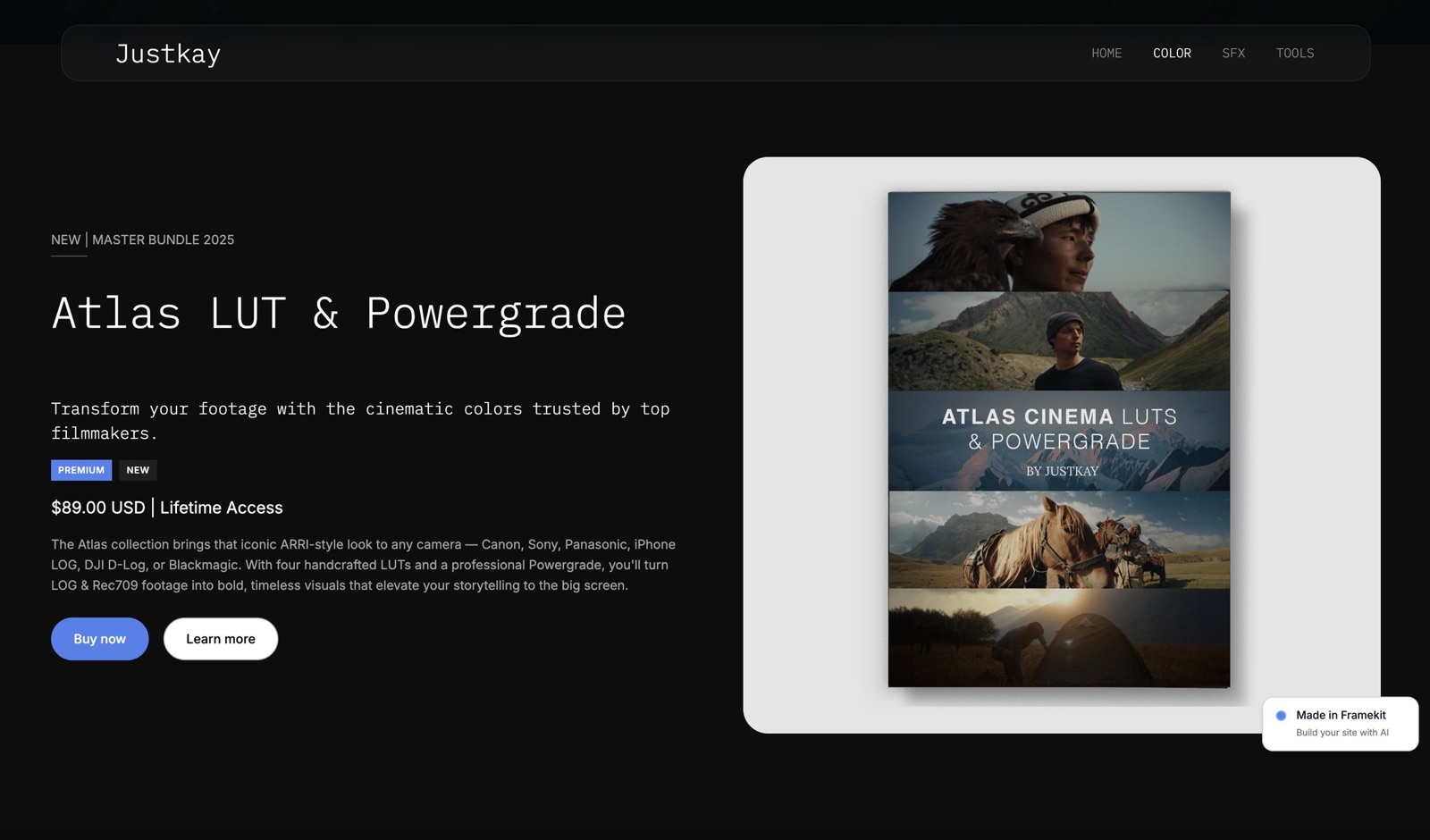
A colourist in Ohio sells a $24 LUT pack. On a Tuesday, two copies sell: one to a buyer in Denver, one to a buyer in Berlin.
On plain Stripe she keeps $23.00 from the first sale and owes German VAT on the second, which means a VAT registration she has probably never thought about.
On Lemon Squeezy she keeps $22.30 and $21.64, and the VAT is somebody else's problem.
That gap, about 70 cents a sale, is the whole Lemon Squeezy vs Stripe decision for a creator, and in 2026 it has a third answer: Stripe's own merchant of record service, Managed Payments.
This guide prices all three, plus Paddle and a store on your own site, on that single $24 pack, so the difference is a number rather than a vibe.
Lemon Squeezy is a merchant of record for digital products: it sells your file to the buyer in its own name, charges 5% plus 50 cents a sale, and collects and remits the sales tax and VAT on every order.
Stripe is a payment processor: it moves the money for 2.9% plus 30 cents on a US card, and the seller remains the merchant of record who owns the tax, refunds and disputes.
A merchant of record is the legal seller on a transaction, the party responsible for tax, refunds, chargebacks and payment compliance.
For most creators selling presets, LUTs, templates or ebooks worldwide, Lemon Squeezy is still the simpler choice in 2026, because at 5% plus 50 cents it handles VAT and sales tax for you, while plain Stripe costs less per sale (2.9% plus 30 cents in the US) but leaves every tax registration and filing with you.
Stripe Managed Payments, Stripe's own merchant of record at 3.5% on top of normal card fees, is where Lemon Squeezy's team says the product is heading, and it costs slightly more than Lemon Squeezy on an international sale.
Paddle matches Lemon Squeezy's 5% plus 50 cents, and a store on your own site (such as Framekit's) suits creators who mostly sell at home and want the customer relationship, accepting that tax stays theirs.
Full disclosure: Framekit, which publishes this guide, runs a digital-product store on Stripe Connect, and it appears near the end as a third option. It is not a merchant of record, it does not calculate or remit tax, and Lemon Squeezy, Paddle and Stripe Managed Payments all do something here that Framekit does not. We did not process live sales on any of these services for this article: every fee comes from the vendor's own pricing page or documentation, read on 19 September 2026 and linked inline, and every per-sale figure is our arithmetic, shown in full.
How This Comparison Was Built
Every fee below was read at its source and every result was calculated from those fees, because both vendors publish enough detail to price a real sale without guessing and without running live test transactions.
Read at the source. Lemon Squeezy's pricing page, its fee, payout, refund and merchant-of-record documentation, and its January 2026 announcement about Stripe Managed Payments.
Stripe's US pricing page, its Managed Payments documentation and eligibility rules, and its Managed Payments pricing article. Paddle's pricing page. All read on 19 September 2026.
Calculated. One carried example: a US-based creator selling a $24 LUT pack by card. The Denver buyer pays no sales tax in our example (US state rules vary and many small sellers are below nexus thresholds).
The Berlin buyer is charged 19% German VAT on top where the service adds tax, so $28.56. Currency is US dollars throughout, with no currency conversion.
Reported by users. One item only, and it comes from Lemon Squeezy itself rather than from forums: its co-founder's own post acknowledging slower support in the past year. We quote it where it matters.
Lemon Squeezy vs Stripe by the Numbers
These six facts carry most of the decision for a creator, and each one is taken directly from a vendor page on 19 September 2026 or calculated from those pages using the carried example.
- 5% + 50 cents is Lemon Squeezy's base fee, plus 1.5% for buyers outside the US and 1.5% for PayPal, calculated on the total order including tax.
- 2.9% + 30 cents is Stripe's US card rate, plus 1.5% for international cards and 1% when currency conversion is needed.
- 3.5% is what Stripe Managed Payments adds on top of normal Stripe payment fees, charged on the full amount including taxes.
- $22.30 vs $23.00 is what the creator keeps from the $24 US sale on Lemon Squeezy vs plain Stripe.
- $15 is the chargeback fee on both: Lemon Squeezy deducts a $15 dispute fee, Stripe charges $15 per dispute received (and another $15 to counter one, returned if you win).
- 37 business locations are listed as eligible for Stripe Managed Payments in its documentation, and Stripe Connect platforms are excluded.
Lemon Squeezy vs Stripe at a Glance
The core difference between Lemon Squeezy and Stripe is who the legal seller is, and nearly every other row in the table below (tax, refunds, disputes, payouts, price) follows from that single fact about who owns the sale.
| Lemon Squeezy | Stripe (Payments) | Stripe Managed Payments | |
|---|---|---|---|
| Who is the merchant of record | Lemon Squeezy | You | Stripe |
| Base fee, US card | 5% + 50 cents | 2.9% + 30 cents | 2.9% + 30 cents, plus 3.5% |
| International buyer | +1.5% | +1.5% card, +1% if converting currency | Same card fees, plus 3.5% |
| Sales tax and VAT | Collected and remitted for you | Yours; Stripe Tax from 0.5% a transaction helps calculate | Collected and remitted for you |
| Monthly fee | None | None | None |
| Chargebacks | $15 dispute fee, handled by Lemon Squeezy | $15 received, $15 to counter | Dispute management included for eligible card disputes |
| Refunds | Platform fee kept | Original fees not returned | Stripe may refund within 60 days |
| Payout timing | Twice a month after a 13-day hold, $50 minimum | Standard schedule free; instant 1.5% | Stripe payouts |
| File delivery and storefront | Built in | Not built in | Checkout and Payment Links; delivery is yours |
| Best for | Solo creators selling worldwide who want tax off their plate | Creators with a developer, or mostly domestic sales | Stripe users who want merchant of record without leaving Stripe |
Sources: Lemon Squeezy fees, Stripe US pricing and the Managed Payments pricing article.
Stripe localises its pricing page, so a reader outside the US may see other currencies and rates.
In one lineLemon Squeezy and Stripe Managed Payments both sell your file in their own name and take the tax with them, while plain Stripe charges roughly half as much per US sale and leaves you as the seller of record.
What Changed in 2026: Lemon Squeezy Is Now Part of Stripe
The biggest news in this comparison is that the two sides are now one company, and Lemon Squeezy's own founders say its future lies inside a Stripe product called Managed Payments, which matters for anyone choosing where to build a store in 2026.
In a post dated 28 January 2026, Lemon Squeezy's co-founder JR Farr wrote that Stripe acquired Lemon Squeezy in 2024 and that the team has been building Stripe Managed Payments, which he calls Stripe's merchant of record solution.
He was candid about the cost to existing sellers, naming "slower support responses and less frequent product updates" over the previous year.
The same post states the team's goal of giving Lemon Squeezy users an easy migration path to Stripe Managed Payments. At the time it described Managed Payments as waitlisted and available to merchants in 35+ countries, with public access announced as coming soon.
What that means in September 2026. Lemon Squeezy is still live and still selling at 5% plus 50 cents, with sign-up open on its pricing page.
But its own team has named its successor. A creator starting a new store today should expect a migration to Managed Payments at some point, and should weigh that against building on Managed Payments directly.
Is Lemon Squeezy still worth it? For a creator who wants a hosted store, file delivery, license keys, discount codes, lead magnets and an affiliate program in one place without writing code, yes, today.
Managed Payments covers the merchant-of-record half, but it works with Stripe Checkout and Payment Links rather than a ready-made storefront. The honest risk is the direction of travel, not the product in front of you.
Looking at the wider field?
The best Lemon Squeezy alternatives covers the other merchants of record, and Gumroad vs Lemon Squeezy compares the two creator-first options directly.
Stripe Managed Payments, Explained
Stripe Managed Payments is Stripe's merchant of record service: Stripe becomes the legal seller of your digital product, handles sales tax, VAT and GST, fraud, disputes and customer support, and charges 3.5% per successful transaction on top of its normal payment fees.
What the 3.5% covers. Stripe's Managed Payments pricing article lists global indirect tax handling, fraud prevention, dispute management for eligible card disputes and transaction-level customer support.
The fee is calculated on the full amount including taxes, and standard Stripe processing fees apply separately. Currency conversion costs 1% to 2%, waived if Adaptive Pricing is on.
Where it works. The Managed Payments documentation says it handles tax compliance in more than 80 countries (the pricing page says more than 75) and works with Stripe Checkout and Payment Links.
It does not support Stripe Connect, embedded payment components or other advanced integrations, and subscriptions must be created through Checkout or Payment Links.
Who can use it. The eligibility page lists 37 supported business locations: the US and Canada, 31 European countries, Australia, Hong Kong, Japan and Singapore.
Access goes through an eligibility review.
Products must be digital and fully automated: software, e-books, audio and video, digital images and artwork, and online courses qualify; physical goods, professional services and live events do not.
You must sell directly, not through a platform or marketplace.
The detail most comparisons miss. Because Managed Payments excludes Connect platforms and accounts controlled by a platform, it cannot be switched on for a store that takes payments through a Connect-based builder.
It is for creators with their own direct Stripe account using Checkout or Payment Links.
Buyers. Customers in more than 195 countries and territories can buy, except a short restricted list that includes China, Cuba, Iran, North Korea, Russia and Syria. Stripe may refund a purchase within 60 days, including to head off a chargeback.
One $24 LUT Pack, Eight Ways
In one lineOn a single $24 sale the cheapest route is plain Stripe and the most expensive is Managed Payments to an overseas buyer, but the gap between them is under $1.60, which is the price of not handling VAT yourself.
Each row is one sale of the carried $24 LUT pack by a US-based creator, paid by card in US dollars. Where the service adds tax on top, the Berlin buyer pays $28.56 including 19% VAT. Framekit's checkout does not add tax, so on that row the VAT sits inside the $24.
| Route | Buyer | Buyer pays | Tax in the payment | Fees | Creator keeps | Fees as % of pre-tax price | Who files the tax |
|---|---|---|---|---|---|---|---|
| Lemon Squeezy | Denver | $24.00 | $0 | $1.70 | $22.30 | 7.1% | Lemon Squeezy |
| Lemon Squeezy | Berlin | $28.56 | $4.56 | $2.36 | $21.64 | 9.8% | Lemon Squeezy |
| Stripe | Denver | $24.00 | $0 | $1.00 | $23.00 | 4.2% | You |
| Stripe + Stripe Tax Basic | Berlin | $28.56 | $4.56 | $1.70 | $22.30 | 7.1% | You |
| Managed Payments | Denver | $24.00 | $0 | $1.84 | $22.16 | 7.7% | Stripe |
| Managed Payments | Berlin | $28.56 | $4.56 | $2.56 | $21.44 | 10.7% | Stripe |
| Framekit Pro (3%) | Denver | $24.00 | $0 | $1.72 | $22.28 | 7.2% | You |
| Framekit Pro (3%) | Berlin | $24.00 | $3.83 | $2.08 | $18.09 | 10.3% | You |
How the Lemon Squeezy Berlin row works. 50 cents, plus 5% of $28.56 ($1.43), plus 1.5% of $28.56 for an international buyer ($0.43) comes to $2.36. The fee is calculated on the total including VAT, which Lemon Squeezy's own fee example shows the same way.
How the Managed Payments Berlin row works. Stripe's card fee on $28.56 with the 1.5% international surcharge is 4.4% plus 30 cents, or $1.56. The 3.5% Managed Payments fee on $28.56 is $1.00. Total, $2.56.
Why the Framekit Berlin row looks worse. Framekit does not calculate tax, so a creator pricing at $24 everywhere effectively absorbs German VAT: $24 includes $3.83 of VAT, leaving $20.17 of real revenue, and fees of $2.08 on top.
A Framekit seller who sells heavily into Europe would set a higher price or accept that margin. On the Business plan the 3% disappears and the Berlin sale keeps $18.81.

A Month of Sales: Where the Money Goes
In one lineOver a realistic month the fee gap between Lemon Squeezy and plain Stripe is about $35 on $1,200 of sales, so the real question is whether $35 a month buys back the time and risk of running your own VAT and sales tax compliance.
Take 50 sales of the $24 pack in a month: 35 to US buyers and 15 to buyers in Germany, using the per-sale figures above.
| Route | 35 US sales kept | 15 German sales kept | Month kept | vs Lemon Squeezy | Tax work left to you |
|---|---|---|---|---|---|
| Lemon Squeezy | $780.50 | $324.65 | $1,105.15 | Baseline | None |
| Stripe + Tax Basic | $805.14 | $334.51 | $1,139.65 | +$34.50 | Registrations and filings |
| Stripe + Tax Complete ($90/mo) | $805.14 | $334.51 | $1,049.65 | -$55.50 | Reduced: Stripe files for you |
| Managed Payments | $775.74 | $321.66 | $1,097.40 | -$7.75 | None |
Plain Stripe wins by $34.50 a month, or $414 a year, but only if you handle the tax yourself. Stripe Tax Basic only calculates tax where you are already registered; registering and filing are yours.
Stripe Tax Complete adds registrations and filings, starting at $90 a month on a one-year contract, and at this volume it turns Stripe into the most expensive option.
The breakeven. At this sales mix, plain Stripe keeps about 69 cents more per sale than Lemon Squeezy. Tax Complete's $90 is recovered at roughly 131 sales a month. Below that, a merchant of record is cheaper than paying Stripe to file for you.
Run it on your own numbers. Take last month's orders, split them into domestic and international, apply each route's fee from the table, and add the hours you would spend on VAT returns at your own hourly rate. That last number usually decides it.
Tax: The Difference That Decides It
In one lineChoosing Lemon Squeezy vs Stripe is mostly choosing who is legally responsible for sales tax and VAT on your sales, and for a creator selling across borders that responsibility starts earlier than most people expect.
When Lemon Squeezy or Managed Payments is the merchant of record, the buyer is legally buying from them. They calculate the right rate, collect it, file the returns and remit the money.
Lemon Squeezy's merchant of record documentation says it takes on sales tax, refunds, chargebacks and PCI compliance so sellers do not have to.
On plain Stripe, you are the seller.
For a US creator that means US states that tax digital products, each with its own threshold, and, for EU buyers, VAT under EU rules that apply to sellers outside the EU from the first sale, usually reported through the EU's one-stop-shop scheme.
A UK or EU creator faces the mirror image. None of that is exotic, but it is recurring paperwork, and a mistake is yours.
Stripe Tax narrows the gap. Tax Basic calculates and collects tax for 0.5% per transaction on no-code integrations such as Payment Links and Checkout, where you are registered.
Tax Complete adds threshold monitoring, registrations and filings. What Stripe Tax does not do is make Stripe the seller: the liability stays with you.
For the rules in plain language, read VAT on digital products for creators and do you need a merchant of record.
Payouts, Refunds and Chargebacks
In one lineLemon Squeezy holds money longer and keeps its fee on refunds, Stripe pays out faster and returns nothing but its refund is free to issue, and both charge $15 when a buyer disputes a charge with their bank.
| Money mechanic | Lemon Squeezy | Stripe |
|---|---|---|
| Payout schedule | Created on the 1st and 15th, paid on the 14th and 28th after a 13-day hold | Standard schedule free; Instant Payouts 1.5%, minimum 50 cents |
| Minimum payout | $50 | Not listed on the pricing page |
| Payout fees | Free to a US bank, 1% to a bank outside the US; PayPal $0.50 in the US, 3% capped at $30 elsewhere | Standard payouts free |
| Refund cost | Refunded amount minus the platform fee comes out of your next payout, so the fee is kept | No fee to refund a card payment; original processing fees are not returned |
| Who can refund | You, and Lemon Squeezy may refund within 60 days to prevent chargebacks | You (on Managed Payments, Stripe may refund within 60 days) |
| Chargeback | Lemon Squeezy refunds on your behalf and deducts the amount minus its fee, plus a $15 dispute fee | $15 dispute received fee, $15 to counter it, returned if you win |
Sources: Lemon Squeezy's getting paid and refunds and chargebacks pages, and Stripe's pricing page.
What that means on the $24 pack. A refunded Lemon Squeezy sale to Denver costs you the $1.70 fee. A refunded Stripe sale costs you the $1.00 fee.
A chargeback on either costs about $15 plus the lost fee, which is more than half the price of the pack. For a creator, a clear refund policy and a delivery email that names the product are worth more than any fee difference.
The cash-flow detail. A sale made on the 4th of the month on Lemon Squeezy lands in your bank on or after the 28th, per its own example. On Stripe's standard schedule, money arrives much sooner.
For a creator living on launch weeks, that timing can matter more than the percentage.
For the mechanics of disputes on digital goods, see digital product refunds and chargebacks.
What You Get Beyond Payments
In one lineLemon Squeezy is a store and Stripe is plumbing, so the fee comparison only holds if you count the delivery, storefront and marketing work that Stripe leaves for you to build or buy elsewhere.
Lemon Squeezy includes a hosted storefront, hosted checkout and a checkout overlay, file delivery with file versions, license keys, discount codes, lead magnets, pay-what-you-want pricing, subscriptions, a customer portal and abandoned cart emails.
Email marketing is free up to 500 subscribers. It lists 16 payment methods including PayPal.
Some of these cost extra per sale: 5% on payments recovered through abandoned cart emails, and 3% on affiliate referrals, with affiliates paying 2% on their payouts.
Stripe includes Payment Links, Checkout, invoicing, subscriptions through Billing and a long list of payment methods, all priced per transaction.
What it does not include is a place to host your files or an email that delivers them. A creator on plain Stripe usually redirects buyers to a download page, wires up an automation, or writes a webhook handler. Each works; each is a job.

Where Stripe is better. Lower base fees, faster payouts, no 13-day hold, and full control of the checkout and the customer record. For a creator with a developer, or a store builder that sits on top of Stripe, those are real advantages.
Where Lemon Squeezy is better. Everything a solo creator needs to sell a file is on by default, and the tax is gone. For a head-to-head against another creator store, see Lemon Squeezy vs Framekit.
Lemon Squeezy vs Stripe vs Paddle
Paddle is the third merchant of record most creators shortlist, and on price it is Lemon Squeezy's twin: the Paddle pricing page lists 5% plus 50 cents per checkout transaction, with custom pricing for products under $10 or where invoicing is needed.
Like Lemon Squeezy, Paddle is the seller of record and handles sales tax, fraud and chargebacks.
Its page compares itself against assembling the same pieces on a payment processor, which it puts at "~7% and above" once tax, fraud and billing tools are added.
That is Paddle's framing, not our calculation, but it is the same argument Lemon Squeezy makes.
| Lemon Squeezy | Paddle | Stripe Managed Payments | Stripe | |
|---|---|---|---|---|
| Base fee | 5% + 50 cents | 5% + 50 cents | Card fees + 3.5% | 2.9% + 30 cents |
| Merchant of record | Yes | Yes | Yes | No |
| Built-in storefront and file delivery | Yes | Not the focus | No | No |
| Owner | Stripe | Independent | Stripe | Stripe |
On the carried $24 US sale, Paddle's published fee comes to the same $1.70 as Lemon Squeezy.
Paddle's pricing page is built around software billing (subscriptions, churn recovery, invoicing); creators selling a single file will find Lemon Squeezy's storefront tools closer to what they need.
For alternatives to Paddle, see the best Paddle alternatives.
The Creator's Third Option: A Store on Your Own Site
The third option for a creator is a store that lives on your own website and runs on your own Stripe account, and it trades the merchant-of-record convenience for owning the customer, the page and the brand from first visit to download.
Framekit is an AI website builder whose store sells digital files (presets, LUTs, ebooks, templates, any file) from the creator's own site or a direct buy link, with instant delivery and a place buyers can return to for their files.
Checkout runs on Stripe Connect as a direct charge on the seller's own Stripe account, so buyers see the payment methods the seller has enabled, such as cards, Link and wallets.

Say it plainly: the tax is yours. Because the charge happens on your Stripe account, you are the merchant of record.
Framekit does not calculate, collect or remit VAT or sales tax, and because it uses Stripe Connect, Stripe's documentation rules out switching on Managed Payments through it.
A creator who sells mostly abroad and wants no tax paperwork should use Lemon Squeezy, Paddle or Managed Payments instead.
What it costs. Framekit's platform fee is 5% on Free and Starter, 3% on Pro and 0% on Business ($39 a month), charged on the post-discount price, on top of Stripe's processing. On a refund, Framekit keeps its platform fee.
Discount codes are a Pro feature. There are no subscriptions, memberships, affiliate program or email sends.
Why a creator would choose it anyway. The store sits inside the portfolio that sells the work, on the creator's domain, next to their galleries and reel.
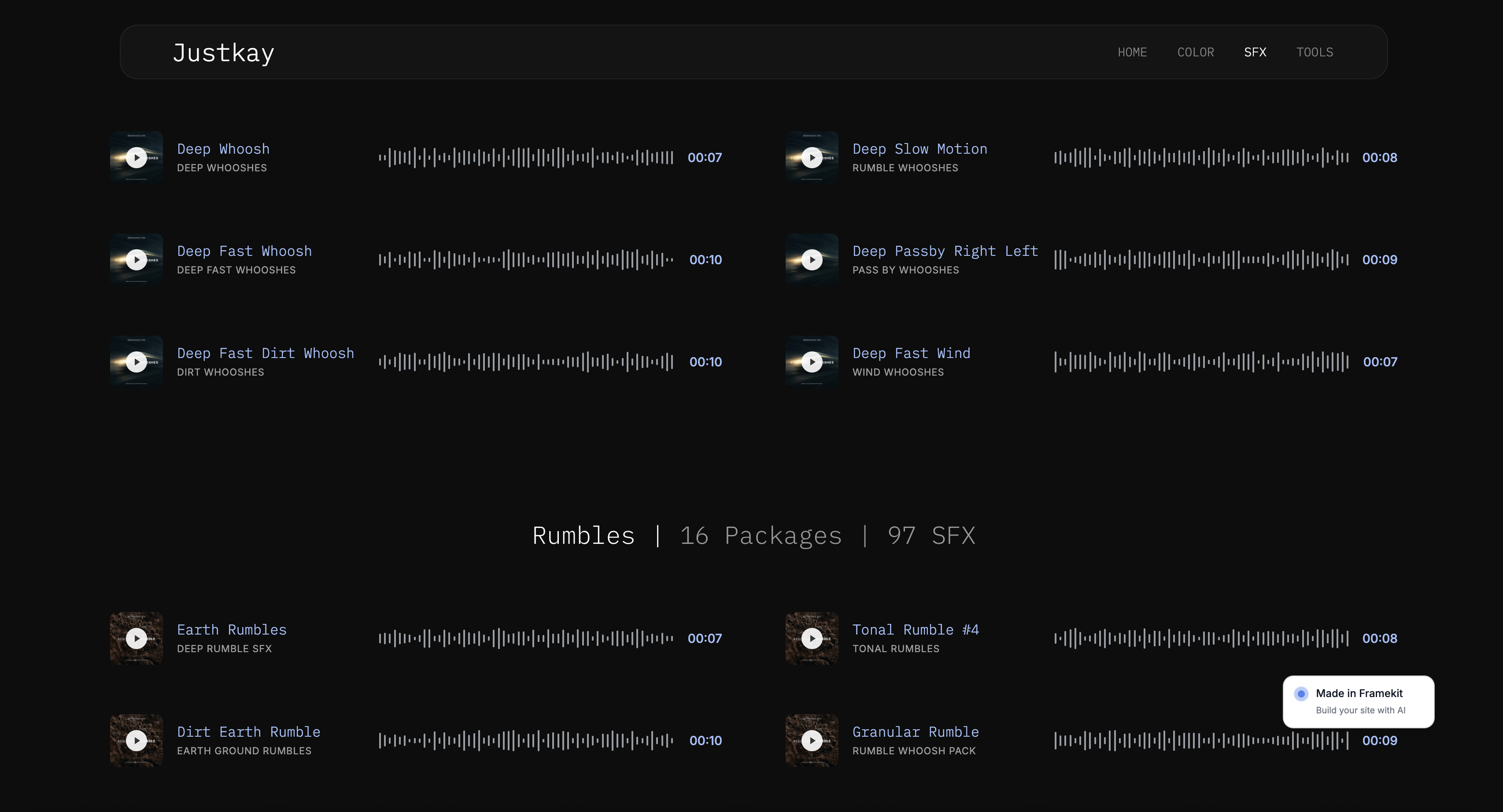
Justkay, a filmmaker, sells Atlas LUTs, Powergrade and Resonance SFX packs this way, with audio previews on the product pages.
When the numbers favour it. For a creator who sells mostly to buyers in their own country, the Framekit row in our table ($22.28 on the Denver sale on Pro) sits beside Lemon Squeezy ($22.30).
On Business at 0%, the same sale keeps $23.00, the plain-Stripe number, and the $39 plan pays for itself against Pro once sales pass about $667 a month (the $20 price gap divided by Pro's 3%).
How to Choose: A Decision Path
The right choice between Lemon Squeezy, Stripe and the alternatives follows from four questions about where your buyers are and what you are willing to handle, and answering them in order gives a clear pick for most creators.
1.
Do more than a handful of your buyers live outside your country? If yes, and you do not want to register for foreign VAT or file returns, choose a merchant of record: Lemon Squeezy if you want a ready-made store, Managed Payments if you already sell through Stripe Checkout or Payment Links.
If your buyers are mostly domestic, go to question 2.
2. Do you have a developer, or a store builder that sits on Stripe? If yes, plain Stripe is the cheapest per sale, at 2.9% plus 30 cents in the US, and you keep the customer record. If no, go to question 3.
3. Do you want the store on your own website, next to your portfolio? If yes, a store builder on Stripe such as Framekit gives you that, with the tax staying yours. If no, go to question 4.
4. Are you starting from zero and want the fewest decisions? Lemon Squeezy, knowing that its own team expects users to migrate to Stripe Managed Payments over time.

Frequently Asked Questions
Is Lemon Squeezy cheaper than Stripe?
Lemon Squeezy is more expensive than Stripe per sale but includes tax compliance. Lemon Squeezy charges 5% plus 50 cents, plus 1.5% for buyers outside the US, while Stripe charges 2.9% plus 30 cents on a US card.
On a $24 US sale, you keep $22.30 on Lemon Squeezy and $23.00 on Stripe. The difference pays for Lemon Squeezy acting as merchant of record and handling VAT and sales tax.
Is Lemon Squeezy still worth it in 2026?
Lemon Squeezy is still worth it in 2026 for creators who want a hosted store with tax handled and no code, and it is still live at 5% plus 50 cents.
The caveat is direction: its co-founder wrote in January 2026 that the goal is an easy migration for Lemon Squeezy users to Stripe Managed Payments, and acknowledged slower support over the previous year.
What is Stripe Managed Payments?
Stripe Managed Payments is Stripe's merchant of record service for digital products.
Stripe becomes the legal seller and handles sales tax, VAT and GST, fraud, disputes and transaction-level support, for 3.5% per successful transaction on top of normal Stripe payment fees.
It works with Stripe Checkout and Payment Links, is open to businesses in 37 listed locations after an eligibility review, and does not support Stripe Connect.
Lemon Squeezy vs Stripe Managed Payments: which costs less?
Lemon Squeezy costs slightly less than Stripe Managed Payments on the sales we priced. On a $24 US sale, Lemon Squeezy keeps you $22.30 and Managed Payments $22.16.
On the same pack sold to a German buyer with VAT, Lemon Squeezy keeps $21.64 and Managed Payments $21.44. Managed Payments' 3.5% is charged on the total including tax, on top of card fees.
Does Stripe handle VAT for me?
Stripe does not handle VAT for you on standard Stripe Payments, because you remain the merchant of record.
Stripe Tax can calculate and collect tax for 0.5% per transaction where you are registered, and Tax Complete, from $90 a month, adds registrations and filings. Only Stripe Managed Payments makes Stripe the seller responsible for the tax.
Does Lemon Squeezy refund its fee when I refund a customer?
Lemon Squeezy does not refund its platform fee when you refund a customer. Its documentation says the refunded amount minus the platform fee is deducted from your next payout, so a refunded $24 US sale costs you the $1.70 fee.
Stripe also keeps its original processing fee on a refund, although issuing a card refund is free.
How long do Lemon Squeezy payouts take compared with Stripe?
Lemon Squeezy pays out twice a month: sales are held for 13 days, payouts are created on the 1st and 15th and paid on the 14th and 28th, with a $50 minimum. A sale on the 4th reaches your bank on or after the 28th.
Stripe's standard payout schedule is free and faster, and Instant Payouts cost 1.5% with a 50-cent minimum.
Can I use Stripe Managed Payments with a website builder's store?
Stripe Managed Payments cannot be used through a store that runs on Stripe Connect, because Stripe's eligibility rules exclude Connect platforms and accounts controlled by a platform.
It supports direct integrations using Stripe Checkout or Payment Links. Creators on a Connect-based builder, including Framekit's store, remain the merchant of record and handle their own tax.
Is Paddle better than Lemon Squeezy for creators?
Paddle and Lemon Squeezy charge the same published fee, 5% plus 50 cents, and both act as merchant of record.
Lemon Squeezy is usually the better fit for creators selling individual files, because it bundles a storefront, file delivery, lead magnets and license keys.
Paddle's pricing page is built around software and subscription billing, with custom pricing for products under $10.
Which is best for selling LUTs and presets: Lemon Squeezy, Stripe or my own site?
Lemon Squeezy is best for LUT and preset sellers with many international buyers who want no tax paperwork. Plain Stripe is cheapest per sale for sellers with a developer and mostly domestic buyers.
A store on your own site, such as Framekit, suits creators who want the store inside their portfolio and sell mostly at home, at 5%, 3% or 0% by plan plus Stripe fees, with tax left to them.
Final Verdict
For a creator selling LUTs, presets, templates or ebooks to buyers in several countries, Lemon Squeezy remains the better choice over plain Stripe in 2026: it costs about 70 cents more on a $24 sale and removes the VAT and sales tax work entirely.
Plain Stripe wins for creators with a developer and mostly domestic buyers, and Stripe Managed Payments is the merchant of record to watch, because Lemon Squeezy's own team is pointing its users there.
A store on your own site is the better fit for a creator whose portfolio is the storefront and whose buyers are mostly local.
Framekit is not for creators who want someone else to own the tax: it does not calculate or remit VAT, and it cannot use Managed Payments. If that trade-off is wrong for you, use Lemon Squeezy, Paddle or Managed Payments.
Related readingFor the processor fees in depth, see Stripe fees for creators.
To compare every processor that can sell a file, read the best payment processors for digital products, and if colour grades are your product, the best platforms to sell LUTs.
If you pick Stripe, how to sell digital products with Stripe covers the four delivery routes; for a flat-fee alternative, see Stan Store vs Gumroad.