Framekit templates
Start from a designer-made template
 Use template
 Use template
 Use template
 Use template
 Use template
 Use template
 Use template
 Use template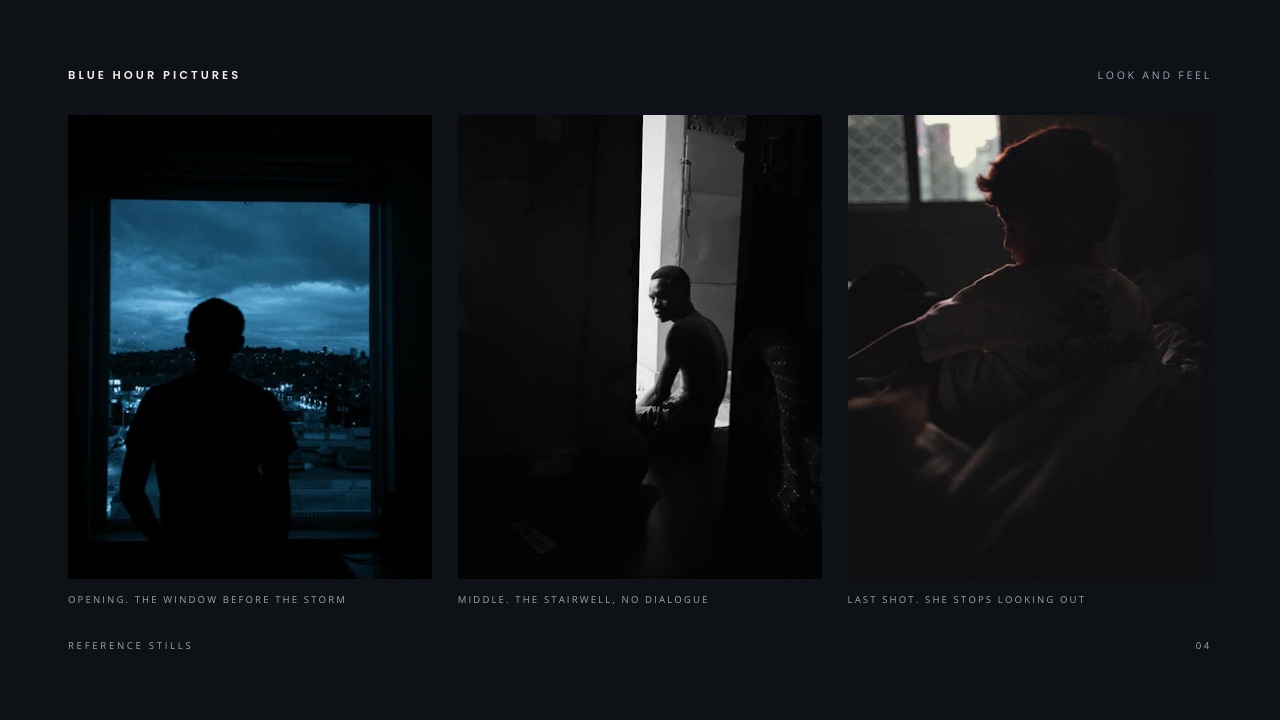
An artist's manager forwards you a track on a Tuesday, with a line saying three directors are pitching and treatments are due Friday. The song runs 3 minutes 36 seconds.
The artist has heard it several hundred times, the label has heard it in every mix, and your music video treatment template has to show both of them what they will see in every one of those 216 seconds.
That is the difference between a music video treatment and every other treatment a director writes. A film treatment introduces a story the reader has never met.
A music video treatment is read against a story the reader already knows by heart, and the pages that win are the ones that line pictures up with the song.
A music video treatment is a short, image-led document, usually 8 to 15 pages, in which a director pitches an artist and label on a concept for a song: the idea, the look, the performance, how the visuals move through the track's structure, the references, and what the shoot and the finished cuts will be.
A music video treatment template that wins the job has twelve sections, and the one most templates leave out is the song map: a page that ties each part of the track (intro, verse, chorus, bridge) to a scene, with timings, so the artist can play the song and follow the video in their head.
Pair it with a deliverables page listing the master, the vertical cut and the short visual loop streaming apps show.
Framekit Slides is our pick for building it when the treatment should look finished and play your reference clips on the page, though it has no template labelled "music video", so you adapt a film treatment template, and the templates need a paid plan.
Canva is the free start, Milanote is better while the idea is still a pile of references, and Google Slides or Keynote work if the look is simple.
Full disclosure: Framekit is our product and it ranks first in the build section. It has no music video template, and we say which of its film treatment templates to adapt and how. We have not used Canva, Google Slides, Keynote, Milanote or Pitch for this guide; their sections rest on each vendor's own pricing and template pages, read on 19 September 2026. Storyflow, whose planning guide we link for the step before the treatment, is a sister product to Framekit made by the same team.
How This Music Video Treatment Template Was Built
Everything in this guide is either published by the company that owns the fact, worked out in the open from simple arithmetic, or rendered from Framekit's real templates, and those three sources are kept separate so you know which is which.
Read at the source. Platform rules for the cutdowns come from YouTube's and Spotify's own help pages. Tool prices come from each vendor's pricing page. All were read on 19 September 2026 and are linked beside the figure.
Calculated. The song map converts beats per minute into seconds. At 120 BPM in 4/4, a bar lasts two seconds, so an eight-bar intro is sixteen seconds. The formula is in the table so you can run it on your own track.
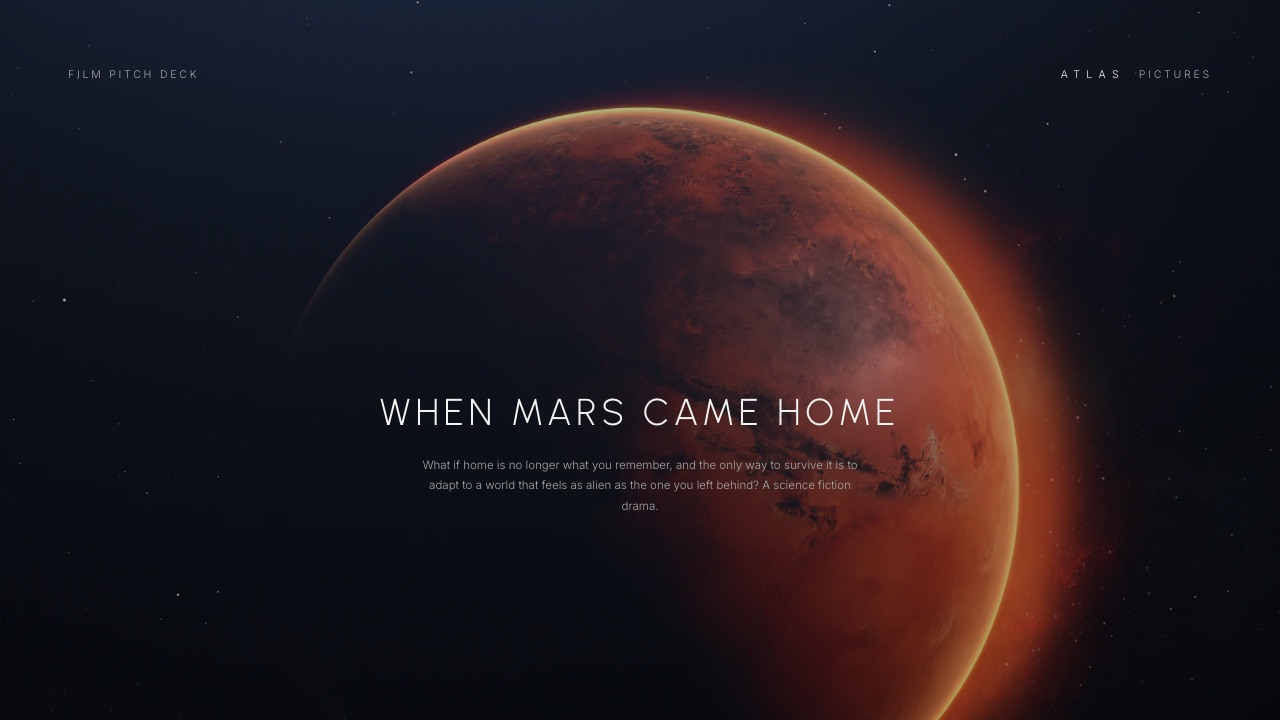
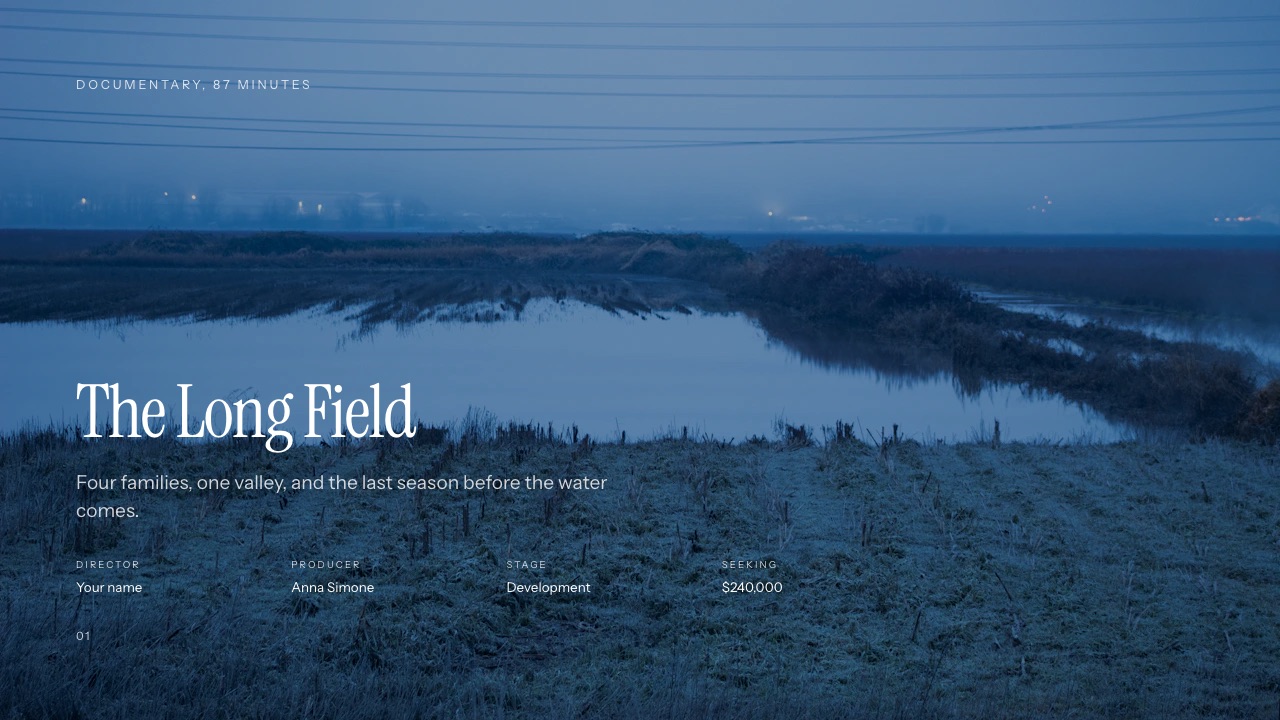
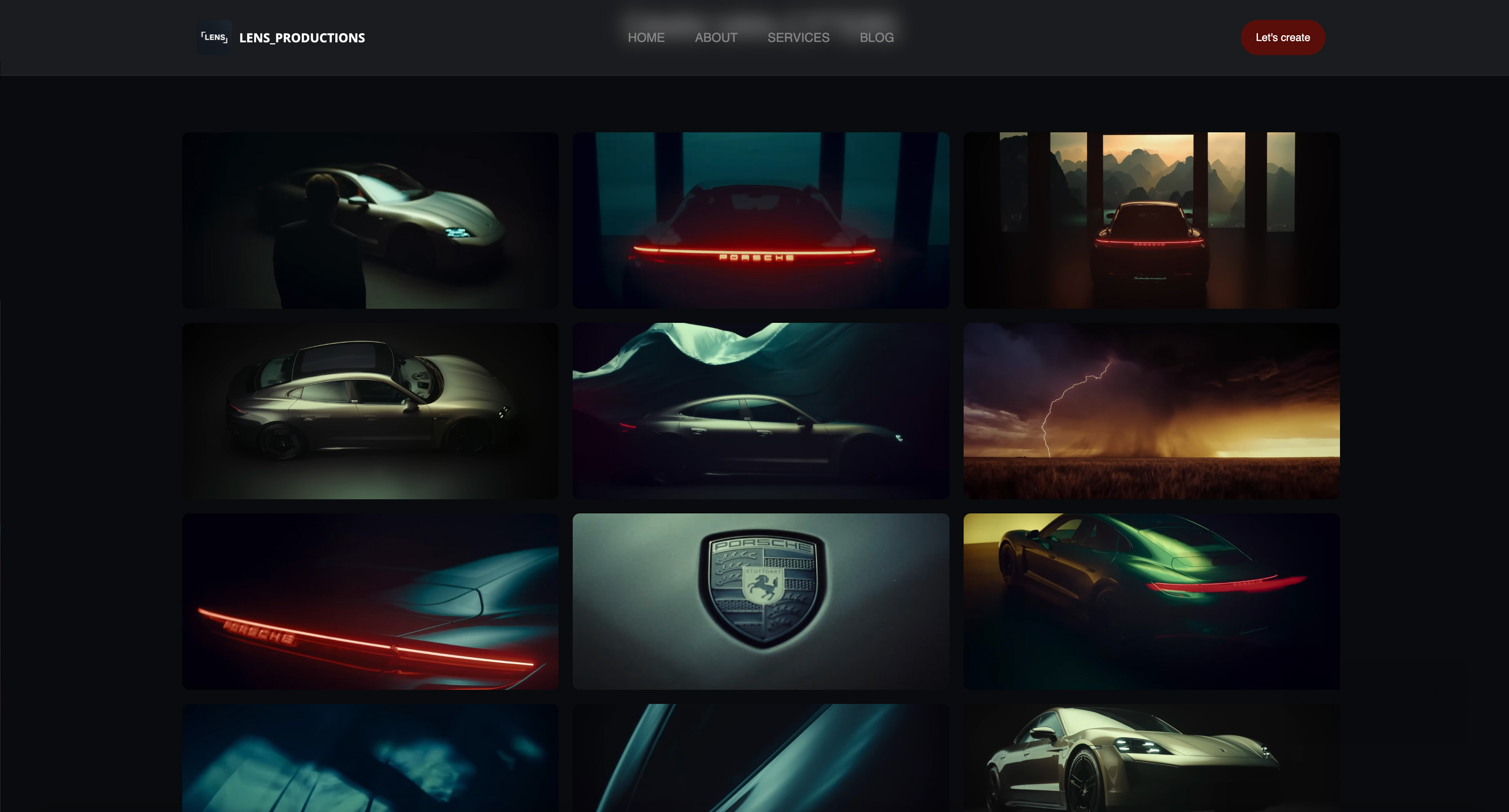
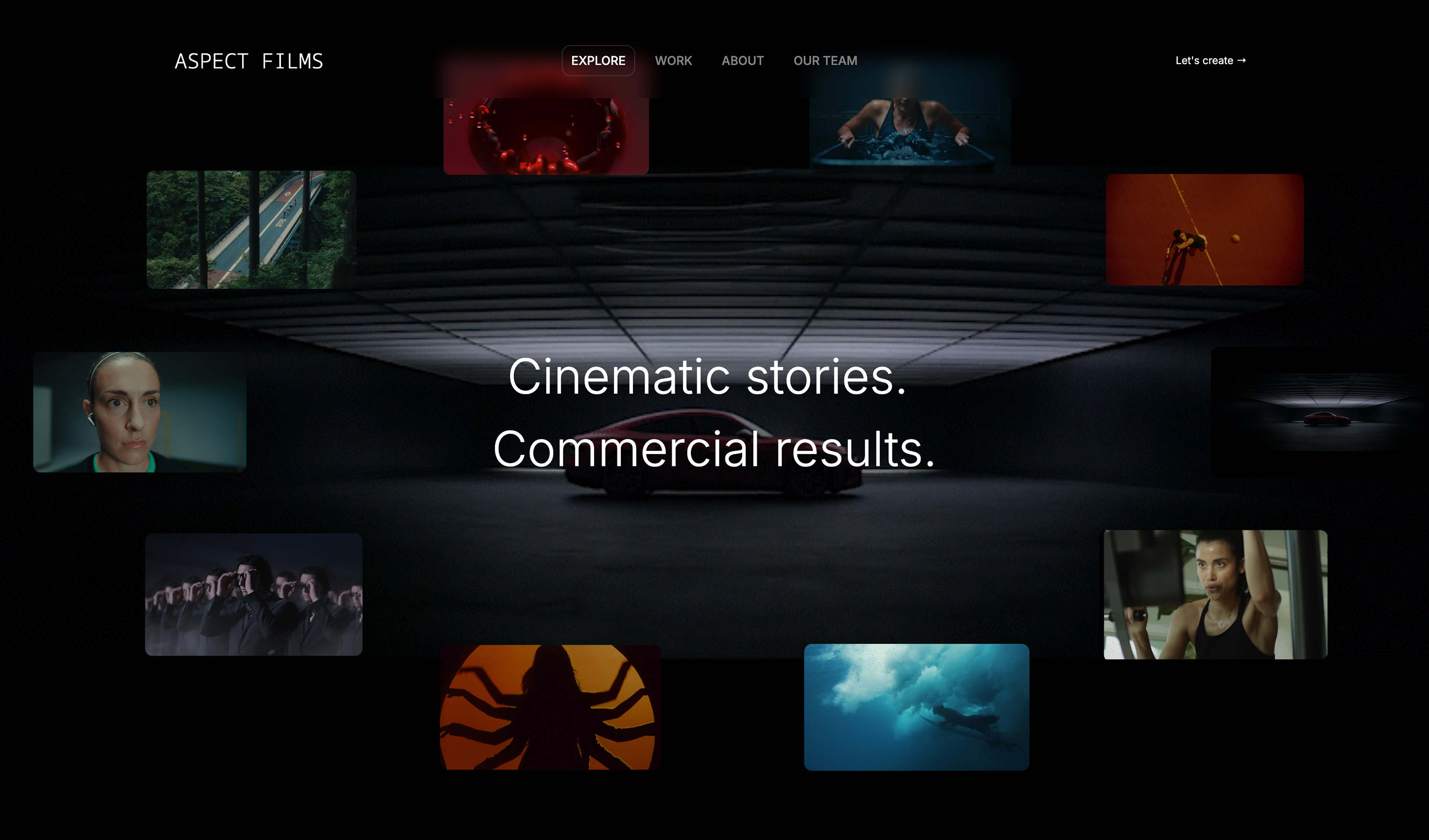
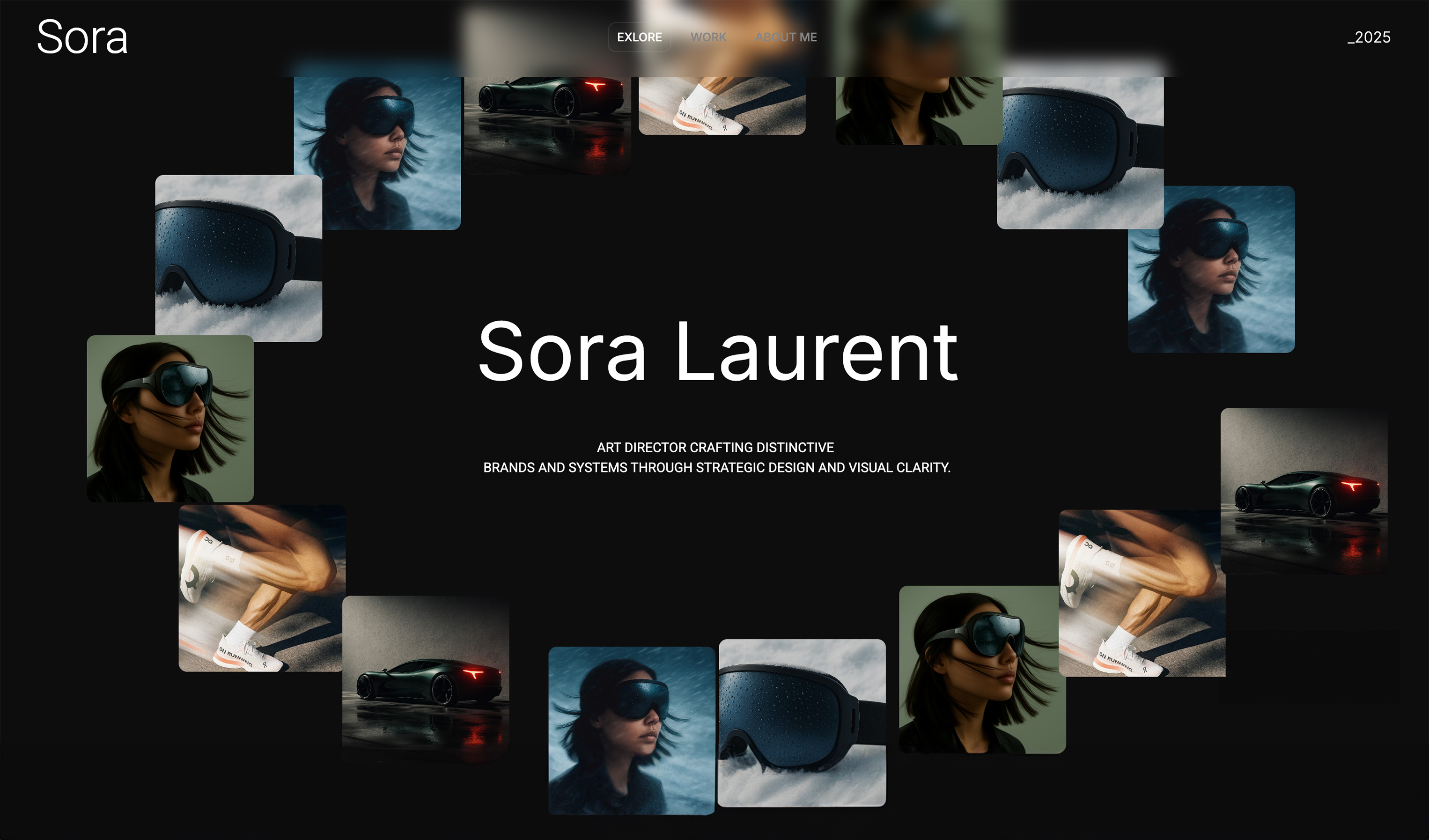
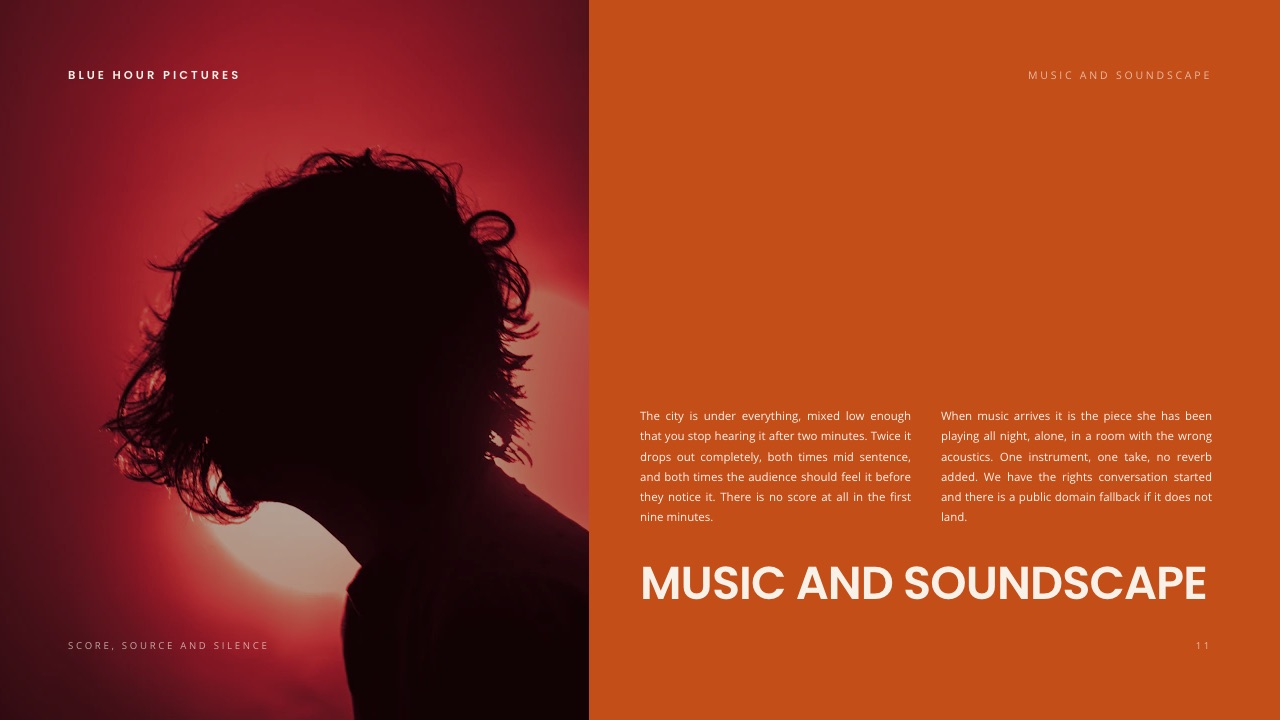
Rendered. The slide images come from four Framekit templates, none of which is a music video template: Night Shoot Film Treatment, Director's Treatment with Storyboard, Director's Treatment for a Bid and Short Film Proposal.
The projects inside them are samples written for the templates.
Not claimed. We found no published, sourced data on music video budgets that we could verify, so the budget section describes tiers by what changes on the page rather than by dollar figure.
The carried example. Paradise Hours is the sample inside Framekit's Director's Treatment with Storyboard: a woman leaves a club at four in the morning with an unfinished demo on her phone and walks home across a city that gives her back the song piece by piece.
In the template it is a 90-second piece. Below, it is stretched into a full music video for a 3:36 track, so every section of the template has something concrete to hold.
For the step before the treatment (finding the concept inside the song, breaking it into shots and scheduling around the track), Storyflow's guide on how to plan a music video walks through the process.
This guide is about the document you send.
Music Video Treatments by the Numbers
Six numbers shape the template below, each either published by the platform that sets the rule or worked out from the song itself, so any of them can be checked before it goes into a treatment.
- 2 seconds. The length of one bar at 120 BPM in 4/4 time. Sixty divided by the tempo, times four beats. Every timing in the song map starts here.
- 216 seconds. The example track: 108 bars at 120 BPM, which is 3 minutes 36 seconds of picture to account for.
- 3 minutes. On an Official Artist Channel, a square or vertical video up to three minutes long uploaded since 8 December 2025 is categorised as a Short, according to YouTube's help page on three-minute Shorts.
- 3 to 8 seconds. The length of a Spotify Canvas loop, vertical 9:16 and between 720 and 1,080 pixels tall, per Spotify's Canvas guidelines.
- 12 sections. The template below, from cover to contact page.
- 0 of 63. Framekit Slides templates labelled "music video". Four of its film treatment templates carry the pages a music video needs, and one sample already treats an unreleased track.
The 12-Section Music Video Treatment Template
In one linea music video treatment template needs twelve sections of roughly 660 words in total, because the pictures carry most of the pitch and every paragraph you add is one the artist reads instead of watching the frames.
Word budgets are ceilings, not targets. The images column is the number of frames that should do the talking on that page. The last column is the question each section exists to answer for an artist or commissioner.
| # | Section | Words | Images | The question it answers |
|---|---|---|---|---|
| 1 | Cover | 15 | 1 | Whose song, whose idea, which version of the treatment |
| 2 | Director's note | 120 | 0 to 1 | Why this director hears this song this way |
| 3 | The idea | 80 | 1 to 3 | What happens in the video, in a sentence and a paragraph |
| 4 | Song map | 90 | 0 to 8 | What we see in each part of the track, and when |
| 5 | Look and feel | 20 | 3 to 6 | What it looks like |
| 6 | Camera and light | 50 | 1 to 3 | How it will be shot, in nouns |
| 7 | Performance and casting | 60 | 2 to 4 | How much of the artist, and who else |
| 8 | Storyboard | 40 | 6 to 8 | The key sequence, frame by frame |
| 9 | Locations, wardrobe and design | 60 | 2 to 4 | Where, and what everyone wears |
| 10 | References | 45 | 3 | Three videos, one reason each |
| 11 | Deliverables and schedule | 60 | 0 | What cuts come out, and when |
| 12 | Next step and contact | 20 | 1 | What the artist decides, and who to call |
| Total | 660 | 20 to 42 |
Why 660 and not 2,000. Many music video treatments circulate as long, image-heavy PDFs, but the reader is usually an artist on a phone and a commissioner with several rival treatments for the same song.
Six hundred words is about three minutes of reading, roughly the length of the song, and the frames do the rest.
The Song Map: The Page That Wins the Job
In one linethe song map is a table that ties every section of the track to what the viewer sees and for how long, and it is the page that proves a director has listened to the song rather than written a mood board and pasted a title on it.
Artists know their song as a sequence: the hook lands at 0:48, the drop at 2:10, the quiet bridge before the last chorus. A treatment that tells them "the video moves through the city at night" gives them nothing to hold.
A treatment that tells them the underpass scene starts on the first chorus, with the song coming up clean for the first time, lets them play the track and see the video in their head.
How to build it. Find the tempo (your DAW, the stems or the artist's producer will have it) and count the bars in each section. Seconds per bar is 60 divided by the tempo, multiplied by the beats in a bar.
At 120 BPM in 4/4, that is 2 seconds a bar; at 90 BPM it is about 2.67 seconds. Add up the bars and you have the timestamp of every change.
The worked example. Paradise Hours stretched to a full video, on a 3:36 track at 120 BPM.
The timings are arithmetic; the scenes come from the template's own three locations (outside the club, the underpass, the bridge at first light), with connecting scenes added for the full length.
| Song section | Bars | Starts | Length | What we see | Performance |
|---|---|---|---|---|---|
| Intro | 8 | 0:00 | 16 s | Outside the club at four, long lens from across the road, the crowd cutting her off | None |
| Verse 1 | 16 | 0:16 | 32 s | She walks; the street swallows her at the corner | Artist mouths the verse walking, handheld behind her shoulder |
| Pre-chorus | 8 | 0:48 | 16 s | Other people's nights through lit windows | None |
| Chorus 1 | 16 | 1:04 | 32 s | The underpass, one strip light, no cuts | First full lip-sync, straight to lens |
| Verse 2 | 16 | 1:36 | 32 s | Wet road, traffic smeared into the dark | Fragments only |
| Chorus 2 | 16 | 2:08 | 32 s | Back through the city at speed, hard cuts on the beat | Lip-sync intercut with the walk |
| Bridge | 8 | 2:40 | 16 s | She stops walking and takes the headphones out; the city sound drops out | None, the one still moment |
| Final chorus | 16 | 2:56 | 32 s | The bridge at first light, held on her face | Full performance, one take |
| Outro | 4 | 3:28 | 8 s | Cut to black on the last bar | None |
| Total | 108 | 3:36 | Four locations, one night | Three performance passes |
What the table tells an artist at a glance. Where their face is on screen (three passes, heaviest in the final chorus), where the story carries the song without them, and where the one still moment falls.
The bridge line borrows the template's own ending: the character stops, the headphones come out, and the finished song arrives. That is a choice about the song, not about the pictures, which is exactly what an artist wants to see.
How much of the map goes in the deck. For a first pitch, one page with the table is enough. If the label asks for more, the storyboard section expands the key sequence frame by frame.
Section by Section: What Goes on Each Page
In one lineeach of the twelve sections has one job, and the Framekit film treatment templates show how the best ones do it in fewer words than you would expect, usually a single sentence and three frames.
1 to 3: Cover, Director's Note and the Idea
The cover carries the song title, the artist, the director and a version number. Version numbers matter more than they look: treatments go through two or three rounds, and "v2" on the cover stops a manager forwarding the wrong one.
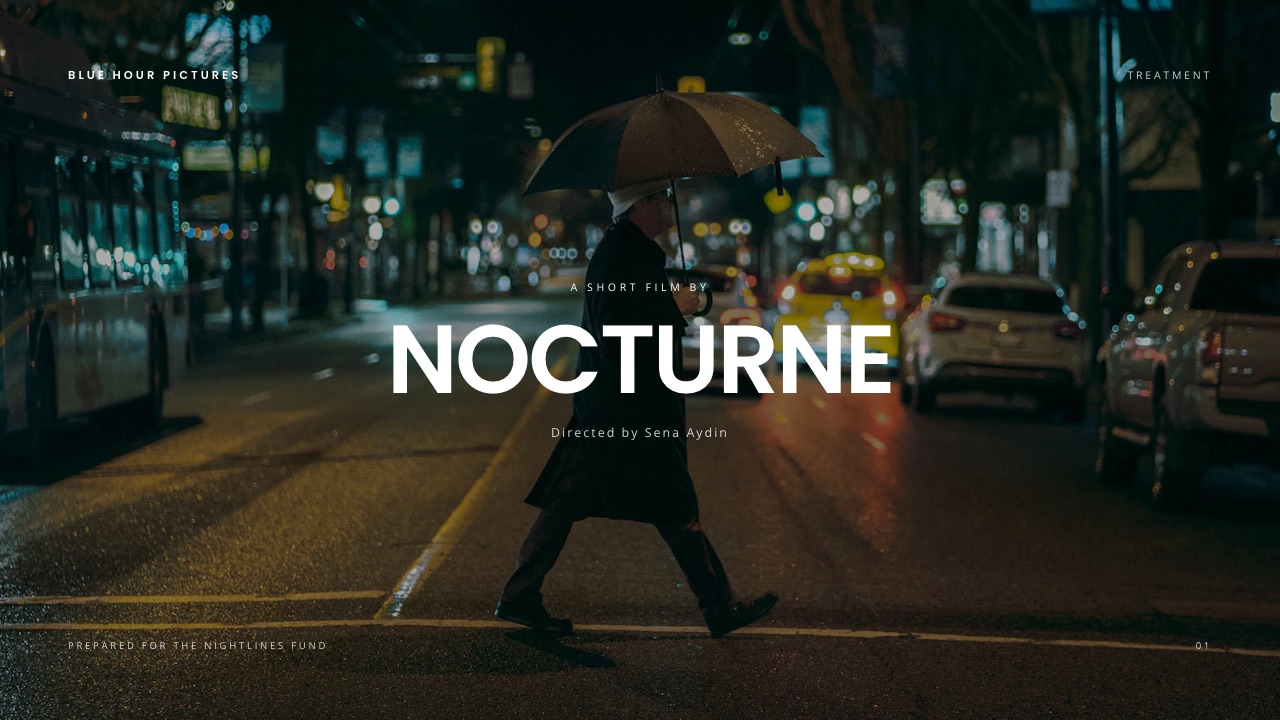
The director's note is the only page written in the first person, and the Night Shoot Film Treatment shows how personal it can be.
Its sample director played in a pit orchestra for four years and has "never seen a film get the hours right": not the concert, but the walk home after it. That is a reason to hire someone that no rival treatment can copy.
Paradise Hours takes a different route, two short paragraphs and a list of past clients, with a speaker note saying nobody reads that page, they weigh it.
The idea page is a logline and a paragraph. Paradise Hours: a woman leaves a club at four in the morning with a demo she has listened to nine times and still cannot finish, and every place she passes gives her back a piece of the song.
The template's version ends on the smartest line in the set: the video cuts before the chorus lands, so the audience has to go and find it. In a pitch, a line like that is a marketing idea as well as a creative one.
4 to 6: Song Map, Look and Feel, Camera and Light
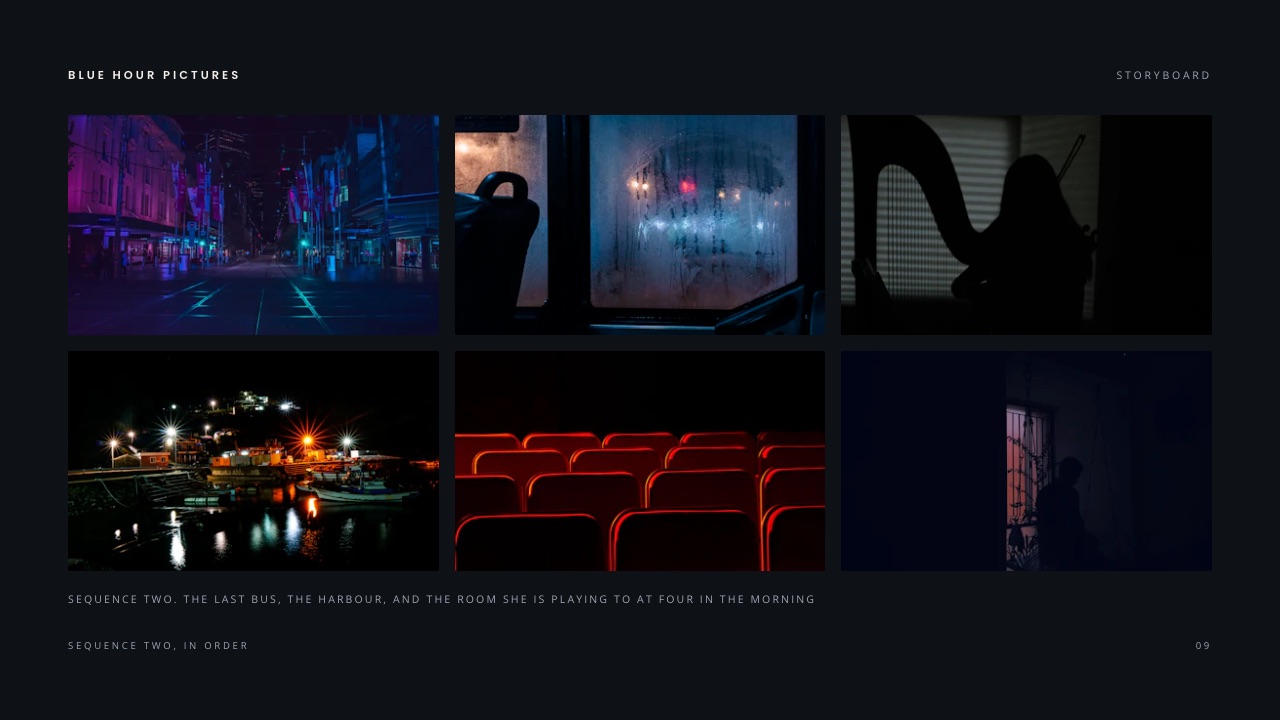
The song map is covered above. Look and feel follows it, and the Night Shoot Film Treatment's version at the top of this page is the model: three stills, captioned opening, middle and last shot, and no paragraph. Three frames that agree beat twelve that argue.
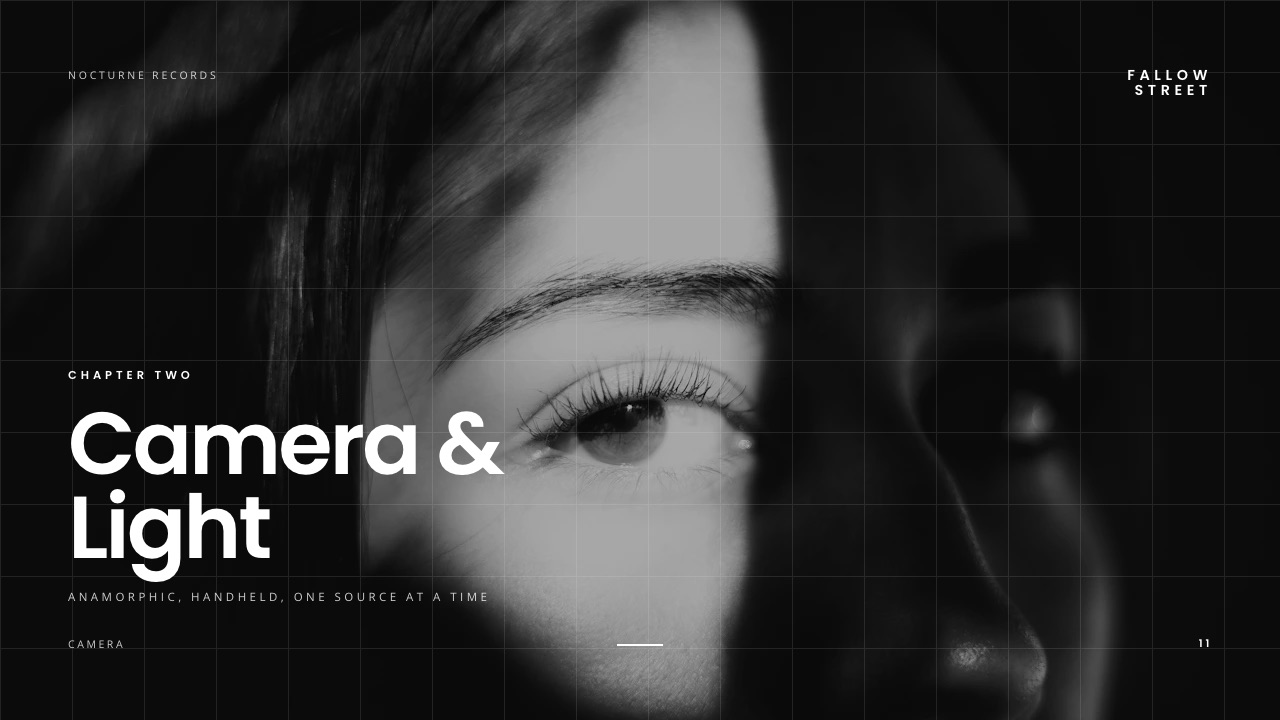
Camera and light is a spec sheet with one rule. Paradise Hours says anamorphic, handheld, one source at a time, and the speaker note says to name the format, the lens and the one lighting rule, then stop.
The Director's Treatment for a Bid makes the rule even plainer: no lamp appears in the film that a person in the film could not have switched on.
7 to 9: Performance, Storyboard and Locations
Performance is the page that separates a music video from a short film. Say how much of the video the artist is on camera, where they lip-sync and where they do not, and whether they are playing a character.
The Night Shoot Film Treatment's casting page includes the kind of line an artist respects: the lead's hands must be hers in the two performance scenes, and that requirement adds four weeks to the schedule.
If the artist has to learn something, say so here.
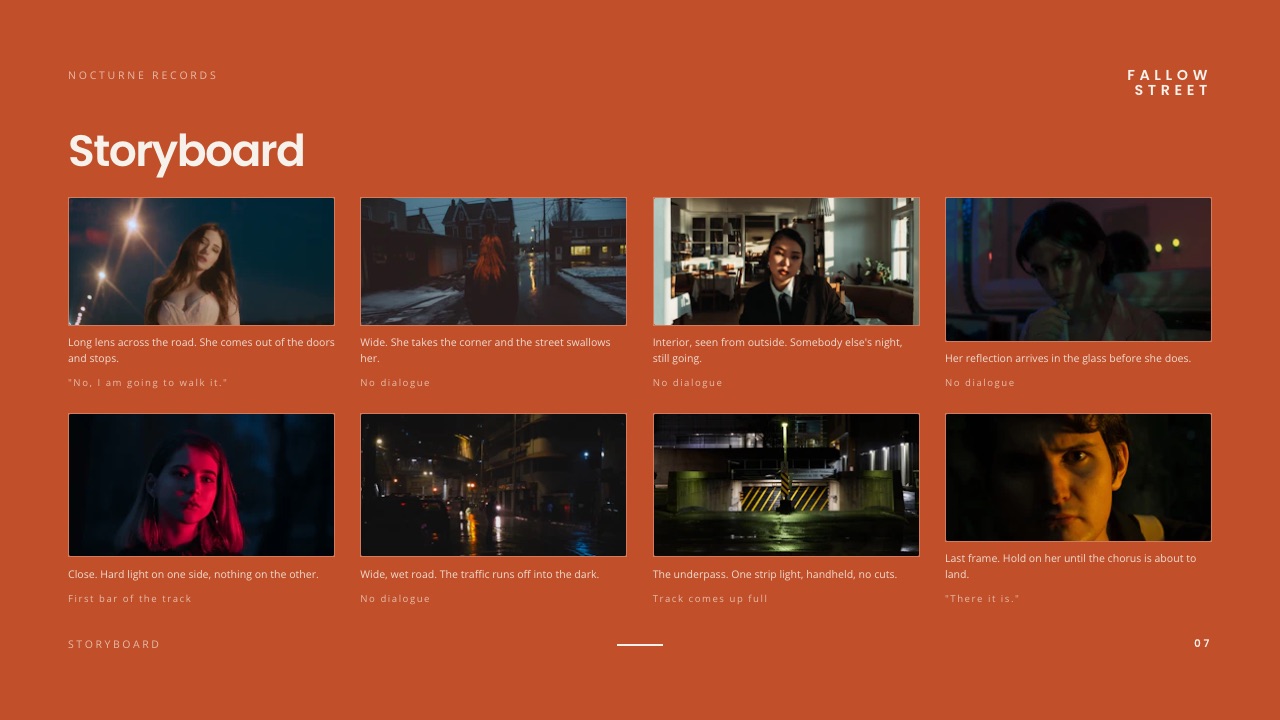
The storyboard is the key sequence, not the whole video. Paradise Hours boards eight frames across two rows, and its speaker note says not to talk over the second row because it is the part they will remember.
The Night Shoot template boards six frames of one sequence and suggests letting the reader take them in while you talk about how many nights the shoot takes.
Locations, wardrobe and design name the places and their status.
The Night Shoot template is a good model of honesty: four places within two kilometres, all scouted, three permitted, and the one that is not permitted is the one the film cannot be made without.
An artist's manager would rather read that sentence in the treatment than discover it in pre-production.
10 to 12: References, Deliverables and the Next Step
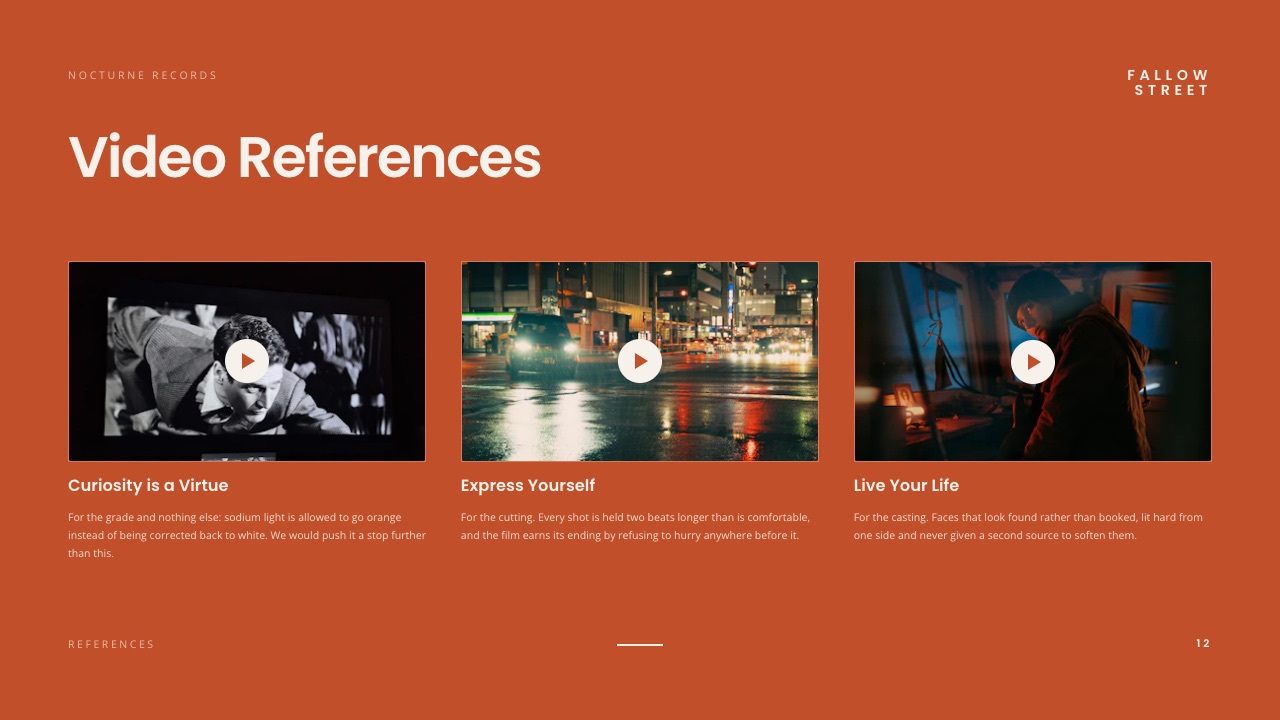
References are three videos, one reason each. Paradise Hours cites three, one for the grade, one for the cutting and one for the casting, and embeds each as a playable clip on the page.
The speaker note is the rule to keep: a reference page with four reasons per film is a page about your taste rather than about this job.
Deliverables and schedule get their own section below, because they are where most music video treatments are thinnest. The next-step page ends the document with a decision rather than a thank-you.
Paradise Hours lays out eight weeks: recce and casting, pre-production with the track cleared so the edit is cut to the real thing, two nights of shoot from dusk to first light, then edit, grade and delivery with one round of notes on the offline and one on the grade.
The Deliverables Page Most Treatments Forget
In one linea music video in 2026 ships as several cuts for several screens, so the treatment should list them before the shoot, because a vertical cut and a streaming loop need to be framed for on the day and cannot be rescued from a 16:9 master afterwards.
The platforms publish the rules, and they shape what you shoot.
On YouTube, a square or vertical video of up to three minutes uploaded to an Official Artist Channel since 8 December 2025 is categorised as a Short rather than a long-form video.
YouTube's same help page says that from 24 September 2026, new Shorts between one and three minutes with an active Content ID claim will no longer be blocked automatically and may stay playable.
On Spotify, a Canvas is a 3 to 8 second vertical loop, and Spotify advises choosing footage without talking, singing or rapping, because a loop that short will not sync with the lyrics.
| Deliverable | Shape | Length | What to plan on set |
|---|---|---|---|
| Master | 16:9, the director's cut | Full track, 3:36 in the example | The film as treated |
| Vertical or square cut | 9:16 or 1:1 | Full track or an edit; up to 3 minutes counts as a Short on an Official Artist Channel | Frame key performance shots with vertical safe areas in mind |
| Teaser cutdowns | 9:16 | Set by the label's release plan | One or two moments that work without context |
| Spotify Canvas | 9:16, 720 to 1,080 px tall, MP4 or JPG | 3 to 8 seconds, looping | A few seconds of non-lip-sync footage that loops cleanly |
| Stills | Portrait and landscape | Not applicable | A stills photographer or frame grabs from a high-resolution source |
The line for the treatment. Two or three sentences are enough: the master, a vertical edit framed on set rather than cropped, a set of short cutdowns, and a Canvas loop drawn from the bridge.
Listing them shows a label you have thought about release week, not only shoot day.
The notes rounds belong here too. Paradise Hours promises one round of notes on the offline and one on the grade. A number of rounds written into the treatment is easier to hold later than a number agreed on a call.
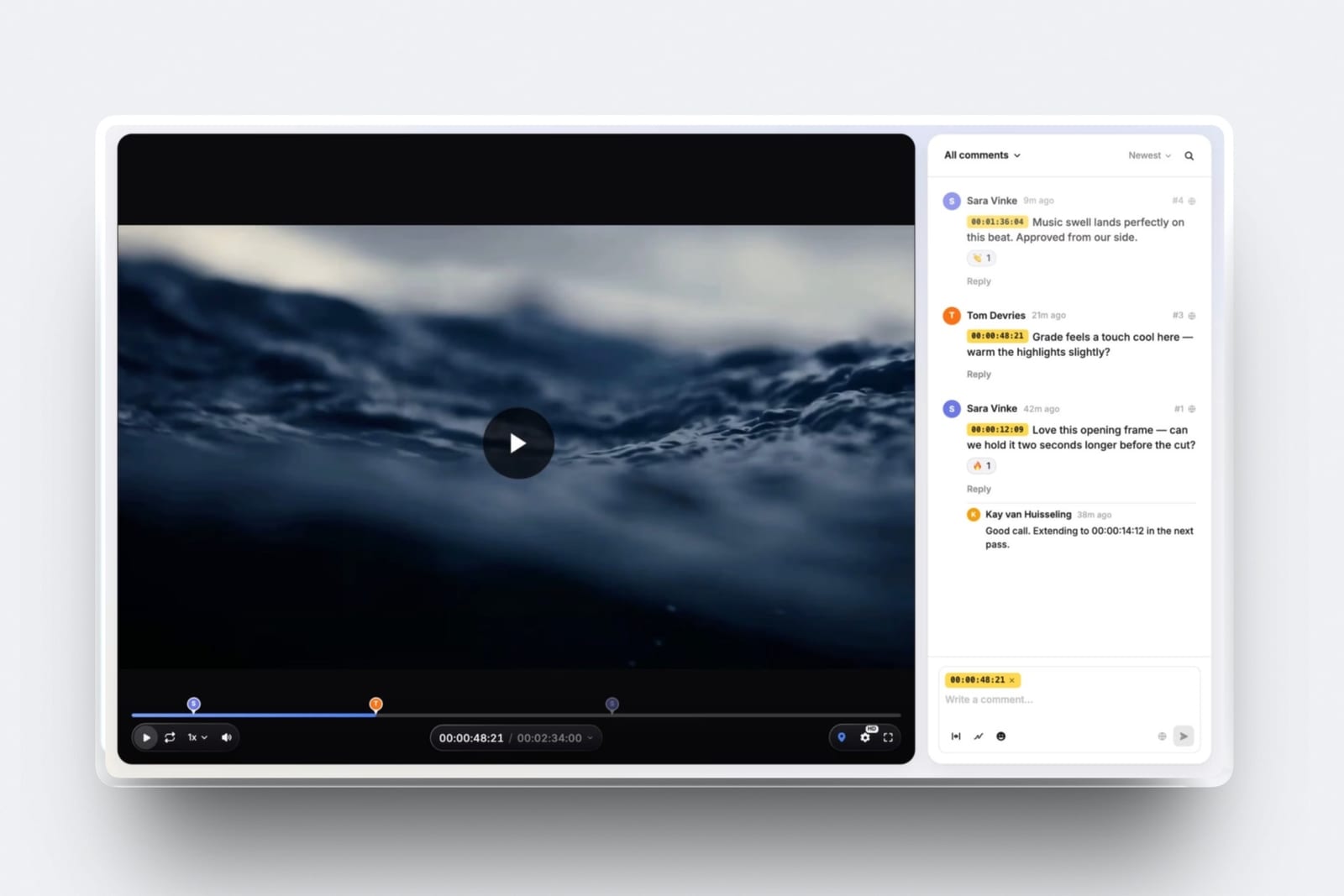
If the artist and label will review cuts online, a review tool with timecoded comments keeps notes tied to the exact bar; our comparison of video review tools covers that step.
Budget Levels: How the Treatment Changes
In one linewe could not find published, verifiable music video budget figures, so instead of quoting numbers this section describes what a treatment promises at each budget level, which is the part a director actually controls.
Budgets in music video vary enormously with the artist, the label and the market, and most are never published. What changes from level to level is visible on the page, and a treatment that promises more than the money can buy loses trust quickly.
| Budget level | Locations | Performance | Crew and kit | What the treatment should promise |
|---|---|---|---|---|
| Self-funded or artist-funded | One, maybe two | Performance-led, one or two setups | A few people, available light | One strong idea, one rule, one look |
| Independent with a small budget | Two to four | Performance plus a light narrative | Small crew, a key light or two, a day or a night | A song map with three or four scenes, like Paradise Hours |
| Label commission | Several, sometimes with builds | Narrative, choreography or both | Production company, full crew, possibly VFX | Full storyboard, casting, art direction and a delivery schedule |
The honest move at every level. Say what the budget buys in the treatment. Paradise Hours promises two nights, one crew, no second unit and no cover day. That sentence tells a label exactly how much risk they are carrying.
How Artists and Labels Read a Treatment
In one lineartists read a treatment for how they will look and whether the idea is theirs, while labels and commissioners read for whether it can be delivered on the money and on time, so every treatment has to answer both readers at once.
The artist reads for self-image. How much of them is in it, how they are lit, whether they are playing a character, and whether the idea sounds like the song they wrote. The performance section and the song map answer those questions directly.
The label reads for risk and release. Can it be shot on this budget and schedule? Are the locations real? Is there a vertical cut? Is the track cleared for the edit? The locations, deliverables and next-step pages carry that load.
The manager reads for fit. Does this director's previous work make the treatment believable? That is why the director's note and a short list of past work matter, and why a link to your reel belongs on the last page.
Our guide to website builders for music video directors covers where that reel should live.
Six Mistakes That Lose the Pitch
In one linemost music video treatments that lose do so because they describe a mood without a structure, ignore the artist's screen time, or skip the practical pages a label needs to say yes.
- A mood board with a title on it. Without a song map, the artist cannot see the video, only the vibe.
- No answer on performance. If the artist cannot tell how much they are on screen, they will assume the worst.
- Twenty references. Three, one reason each, as the Paradise Hours template insists.
- Promising a location you do not have. Say which are permitted and which are not.
- Forgetting vertical. A 9:16 cut framed on set looks designed; one cropped afterwards looks like an afterthought.
- Writing the edit as a script. Scene-by-scene prose reads slowly. A table against the song reads in seconds.
For planning the pictures before they go into the treatment, see our comparisons of mood board tools and storyboard software.
Adapting Framekit's Film Treatment Templates for a Music Video
In one lineFramekit has no template labelled "music video", but four of its film treatment templates already hold most of the twelve sections, so the job is to pick the closest one, rename two or three pages and add a song map.
Deck templates are part of Framekit's paid template library, from Starter at $9 a month or $7 billed yearly. The table shows what each template already covers and what to add.
| Framekit template | Slides | Sample inside | Already has | Add for a music video |
|---|---|---|---|---|
| Director's Treatment with Storyboard | 15 | Paradise Hours, a night walk for an unreleased track | Concept, scenes, 8-frame storyboard, camera and light, embedded video references, team, next steps | Song map, performance, deliverables |
| Night Shoot Film Treatment | 12 | Nocturne, a 21-minute short about a musician | Director's note, look and feel, casting, storyboard, locations, music and soundscape | Song map, deliverables; retitle Music and soundscape as Performance |
| Director's Treatment for a Bid | 12 | A 55-second commercial | Approach, light, casting, palette, references | Song map, performance, deliverables |
| Short Film Proposal | 12 | The Undertow, an 18-minute short | Opening note, story, visuals, casting, storyboard, music and soundscape | Song map, performance, deliverables |
The pick for most music videos is the Director's Treatment with Storyboard, because its sample already treats an unreleased song and its reference page embeds playable clips.
The Night Shoot Film Treatment is the better choice for a moody, performance-heavy video, and its Music and soundscape page carries a useful speaker note: say the budget line for the composer on that page, not on the numbers page.
Adding the song map. Describe the page to Framekit's AI slide writer (a table of song sections with bars, timestamps, what we see and performance) and it writes and lays out that one slide in the deck's fonts and colours.
Then check every timestamp against your own arithmetic.
Where to Build a Music Video Treatment
In one linesix tools can hold a music video treatment, and the choice turns on whether references play on the page, how much the look depends on design, and whether the idea is still a pile of images or already a sequence.
Prices were read on each vendor's page on 19 September 2026. Pitch and Canva served European list prices in euros, quoted as listed.
| Tool | Starting point for a music video | Clips play on the page | Best stage | Yearly cost for one person |
|---|---|---|---|---|
| Framekit Slides | Four film treatment templates to adapt | Yes, YouTube and Vimeo embeds | Finished treatment | $0 on Free; $84 on Starter for templates |
| Canva | Film and TV treatment decks | Canva lists video among its template elements | Finished treatment on no budget | EUR 0, or EUR 110 for Pro |
| Google Slides | Blank | Not checked for this guide | Writing with a co-director | $0 |
| Keynote | Apple themes | Not checked for this guide | Mac-only teams | $0; Creator Studio $129 optional |
| Milanote | Filmmaking boards: moodboard, storyboard, shot list | Links and uploads on a board | Gathering references | $0 for 100 items; $119.88 on Pro |
| Pitch | General templates plus a free film pitch deck | Video uploads on Plus | Tracked sends to a label | EUR 120 on Plus |
1. Framekit Slides: Best for a Finished Treatment With Playable References
Framekit is an AI website builder for music video directors, filmmakers and photographers, and its Slides tool is where the treatment gets built and sent from the same account as the reel it points to and the review page where the artist will later leave notes on the cut.
What you get. Unlimited decks on every plan, including Free, with the AI slide writer, speaker notes, full-screen presenting, a share link and PDF export.
YouTube and Vimeo clips play inside the slide, which is what a reference page wants.
The film treatment templates in this guide are in the paid library, from Starter at $9 a month or $7 billed yearly, which also removes the Framekit byline and allows uploaded fonts.
After the pitch. If you win the job, the same account includes Frame.io-style video review: the artist and label comment on the exact timecode of the offline, draw on the frame, and reply without creating an account, and each new version stacks with its old notes kept.
For a song map built on bars, notes pinned to a timestamp save a lot of "about a minute in" emails.
The gotchas. No template is labelled music video, so you adapt one, and the adaptation (song map, performance, deliverables) is your work. Share links have no password and no per-viewer analytics, only a total view count.
PowerPoint export is Pro and up and arrives as pictures, one full-bleed image per slide with speaker notes intact.
Skip it if you only need a quick reference board for your own thinking, or a manager insists on an editable PowerPoint.
Verdict: the best place to finish and send a treatment that should look directed, with the honest cost that you start from a film template, not a music video one.
2. Canva: Best Free Treatment Builder
Canva's TV and film template section includes treatment and pitch decks, and its free plan is enough to build and export a complete music video treatment. On the European list, Pro costs EUR 110 a year for one person.
The appeal is speed: drop in stills, swap fonts, export a PDF by the deadline.
The catch. Film treatment templates are built for stories, not songs, so the song map, performance page and deliverables all have to be added by hand.
Popular layouts also recur, which matters when a commissioner is comparing several treatments for the same track.
Skip it if you want the treatment to look unlike anyone else's.
Verdict: the best free way to get a treatment out the door this week. Our Canva alternatives guide covers the step up.
3. Google Slides: Best for Co-Writing With a Co-Director
Google Slides is free for anyone with a Google Account and suits a director and a producer, or two co-directors, writing the song map and the performance notes together, with live editing and comments.
It imports PowerPoint and Canva files, so the treatment can move to a design tool later. The trade-off is the look: themes are plain, and a treatment is judged on its frames. Skip it if nobody on the team will do a proper design pass.
Verdict: a good writing room and a weak showroom.
4. Keynote: Best Free Option for Mac-Only Teams
Keynote stays free on Apple devices, and Apple's optional Creator Studio subscription ($12.99 a month or $129 a year) adds premium templates and a first-draft generator from an outline, per Apple's January 2026 announcement.
Its type and image handling suit a frame-heavy treatment. The limit is sharing: most artists and managers will open a PDF on a phone, so export and check it before sending. Skip it if anyone on the team is on Windows.
More options in our Keynote alternatives guide.
5. Milanote: Best for Gathering References Before the Treatment
Milanote is a visual board tool rather than a deck tool, and it is the better home while the idea is still forty screenshots and a voice note.
Its filmmaking templates include a moodboard, a storyboard and a shot list, though no music video treatment template.
The free plan allows 100 notes, images or links and 10 file uploads; Pro is $9.99 a month billed annually or $12.50 monthly, per Milanote's plans page.
The 100-item ceiling arrives quickly on a reference-heavy project. Skip it for the finished document: a board is a place to think, not a pitch an artist reads on a phone.
Verdict: the right tool for the week before the treatment, not for the treatment itself.
6. Pitch: Best for Tracked Sends to a Label
Pitch's Plus plan, EUR 10 a seat a month paying yearly on the European list, includes video uploads and PowerPoint export, and the Team plan at EUR 15 adds advanced links that show visits, slide views and time on each slide, according to Pitch's pricing page.
For a director pitching several labels at once, knowing who opened the treatment is useful. For a single artist and manager, it is rarely worth the seat. Skip it if you are pitching one song to one team.
Which Tool for Your Treatment? A Decision Guide
In one lineanswer three questions in order, about where the idea is, who will read the treatment, and whether you need to know they opened it, and the right tool falls out without a feature comparison.
- Is the idea still a pile of references? If yes, gather it in Milanote or a similar board first, and come back when you can write the song map. If no, go to question 2.
- Do you need to know which label opened the treatment and which pages they read? If yes, send it from Pitch on the Team plan. If no, go to question 3.
- Should the treatment look directed, with references playing on the page? If yes, adapt Framekit's Director's Treatment with Storyboard. If budget is zero, build it in Canva. If a co-director is writing with you, draft in Google Slides and design later.
Frequently Asked Questions
What should a music video treatment include?
A music video treatment should include a cover, a director's note, the idea, a song map tying each section of the track to a scene, look and feel, camera and light, performance and casting, a storyboard of the key sequence, locations and wardrobe, three references, deliverables and schedule, and a next step with contact details.
The song map is the section most often missing.
How long should a music video treatment be?
A music video treatment is usually 8 to 15 pages and reads best at roughly 600 to 700 words, with the frames doing most of the work. The template in this guide budgets 660 words across twelve sections.
Longer treatments are common, but the artist often reads on a phone, so every extra paragraph competes with the pictures.
What does a music video treatment look like?
A music video treatment looks like a short, image-led deck or PDF: mostly full-bleed stills and reference frames, one or two sentences per page, a table or storyboard for the structure, and a final page with the schedule and next step.
Framekit's Night Shoot Film Treatment and Director's Treatment with Storyboard templates show the format.
How do I write a music video treatment for a song I did not write?
To write a music video treatment for someone else's song, start from the track's structure rather than its lyrics: count the bars, map the sections, and decide what the viewer sees in each.
Then write one sentence on why you hear the song that way. Storyflow's planning guide covers finding the concept inside the song before you write.
Is a music video treatment the same as a music video pitch deck?
A music video treatment and a music video pitch deck are usually the same document. "Treatment" is the term directors and commissioners use; "pitch deck" is how many people search for it.
Some directors send a one-page idea first and the full treatment once the artist is interested.
Should a music video treatment include a budget?
A music video treatment usually states what the budget buys rather than a line-item budget: the number of shoot days or nights, locations, crew size and deliverables. The detailed budget goes to the label or production company separately.
Paradise Hours, for example, promises two nights, one crew, no second unit and no cover day.
Should I plan a vertical version of the music video?
Yes. On YouTube, a square or vertical video of up to three minutes uploaded to an Official Artist Channel since 8 December 2025 is categorised as a Short.
Framing a 9:16 version on set, rather than cropping the 16:9 master later, is easier to plan in the treatment than to fix in the edit.
What is a Spotify Canvas, and does it belong in the treatment?
A Spotify Canvas is a 3 to 8 second vertical loop, 9:16 and 720 to 1,080 pixels tall, that plays in place of the album artwork in Spotify's Now Playing view.
Spotify advises avoiding footage of singing or rapping because a loop that short will not sync with lyrics. One line in the deliverables section naming the moment you will use is enough.
Is there a free music video treatment template?
Free options include Canva's film and TV treatment decks, Milanote's free filmmaking boards for the reference stage, and building the twelve sections in this guide in Google Slides or Keynote.
Framekit's Free plan includes unlimited decks and the AI slide writer; its film treatment templates need Starter, at $7 a month billed yearly.
Can I put playable song and video references inside a Framekit treatment?
Yes, and it is the main reason a music video treatment works better as a link than a PDF.
Reference videos embed and play in the deck, so the commissioner watches the two shots you are actually citing instead of squinting at a grid of stills with URLs underneath.
Two honest limits: no template is labelled music video, so you adapt one and the song map, performance and deliverables sections are your work, and the share link has no password and no per-viewer analytics, only a total view count.
Send the PDF instead when the artist's label is strict about circulation.
Final Verdict
The music video treatment template that wins is built around the song, not the mood: twelve sections, about 660 words, a song map that tells the artist what they will see in every part of the track, and a deliverables page that plans the vertical cut and the streaming loop before the shoot.
Framekit Slides is our pick for building and sending it, because its film treatment templates already hold most of those sections and play reference clips on the page.
Where Framekit loses: it has no music video template, so the song map and deliverables are yours to add, its share links carry no password or per-viewer analytics, and its PowerPoint export is pictures.
A director still gathering references is a better fit for Milanote, and one pitching several labels who needs read receipts is better served by Pitch.
Related readingfilm treatment software for the wider tool field, how to write a film treatment for the craft behind longer treatments, and the best website builders for music video directors for the reel your treatment links to.
Moving into brand work?
The commercial treatment template shows how an agency triple bid changes the document, and how to make a demo reel turns the finished video into your next job.